
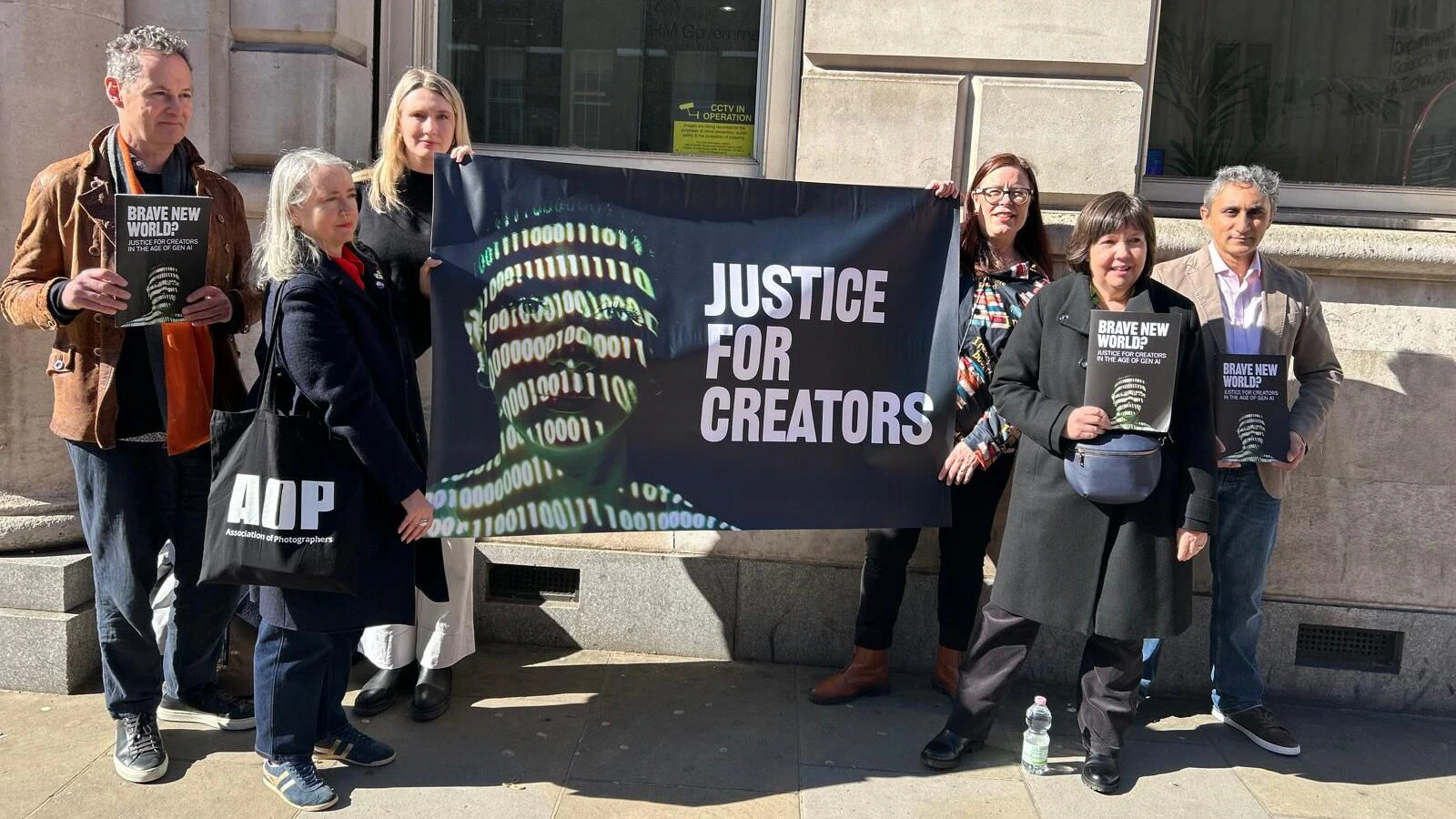
The UK Government has said it will not introduce any reforms to copyright law following lengthy consultation with the creative industries and AI developers.
It originally proposed introducing a data mining exception with opt-out and transparency measures that would allow AI developers to train models on lawfully accessed content without a license – effectively putting the onus on creators to “opt out” and explicitly reserve their rights.
Since it launched in December 2024, the consultation has received 11,520 responses from a range of respondents, including cultural heritage organisations and developers of AI models, but mainly reflecting the views of right holders and creative industries.
“In light of the strong views from the consultation, the gaps in evidence and the rapidly evolving AI sector and international context, a broad copyright exception with opt-out is no longer the government’s preferred way forward,” the long-awaited Report on Copyright and Artificial Intelligence confirmed last week.
“We propose to gather further evidence on how copyright laws are impacting the development and deployment of AI across the economy. We will consider and engage stakeholders on other potential policy approaches. We will also continue to monitor developments in technology, litigation, international approaches, and the licensing market.”
What does AI mean for your museum?
Join our online event on 9 December to discover how to get ahead of the curve
Advertisement
The consultation sets out four options for copyright and AI policy:
- Do nothing/copyright and related laws remain as they are.
- Strengthen copyright requiring licensing in all cases.
- A broad data mining exception.
- A data mining exception with opt-out and transparency measures (the government’s originally preferred proposal).
Many responses from the creative industries expressed concern that a broad exception would allow generative AI to learn from their works, without compensation, and in direct competition to them.
In contrast, many AI developers and technology professionals said that exceptions to copyright would support AI innovation in the UK, support the use of AI in the wider economy, including universities, researchers and scientists.
The report states: “We must take the time needed to get this right. We will not introduce reforms to copyright law until we are confident that they will meet our objectives for the economy and UK citizens.
“This means protecting the UK’s position as a creative powerhouse, while unlocking the extraordinary potential of AI to grow the economy and improve lives.
Advertisement
“Any reform must ensure that right holders can be fairly rewarded for the economic value their work creates, and that they are protected against unlawful and unfair use of their work. It must also ensure that AI developers can access high quality content. It is clear through the consultation and our subsequent engagement that there is no consensus on how these objectives should be achieved.”
Calls for transparency measures
The consultation report reveals strong, cross-sector backing for statutory transparency measures that would oblige AI developers to disclose what material has been used in training, which would help creators license their work effectively.
Bodies such as the Society of Authors, an advocate for such measures, said it would continue to petition the government for copyright protection, full transparency and fair compensation.
Also responding to the report, Christian Zimmermann, the chief executive officer at DACS, said: “Copyright is a fundamental principle allowing artists control and fair pay for the use of their work.
“It is vital that our government does not open the door to tech companies to train AI models on artists’ works without permission and pay.
Advertisement
“We are pleased the government has announced […] that no new copyright exceptions will be introduced, which the UK's visual artists and creators welcome. DACS will continue to engage with government to work towards solutions for control, fair remuneration and transparency.”
In a statement confirming the release of the report, Liz Kendall, secretary of state for science, innovation and technology, set four key areas where it will focus the next phase of its work:
- A consultation will launch this summer to seek views on addressing harms caused when someone’s likeness is replicated without their permission, while protecting legitimate innovation.
- The establishment of a new taskforce to put forward proposals for government on best practice for labelling AI-generated content, with an interim report to be published in autumn.
- A review of the mechanisms available for creators to control their works online. This will include standards, technical solutions and best practice on input transparency. This review will inform where there are gaps and whether there is an appropriate role for government in addressing them.
- A new working group on independent and smaller creative organisations to explore whether there is a role for government to support their ability to license their content.
In April, the government will launch the Sovereign AI Unit to build new UK AI businesses, and in the summer an AI Adoption Summit will explore how big companies can work with tech firms ready to adopt and scale AI to grow their businesses.