
The UK Government last week named 12 cultural organisations that will take place in the pilot phase of a digital marketplace where digitised cultural and creative assets can purchased by AI developers.
The Creative Content Exchange offers AI developers the opportunity to access high-quality data from public bodies like museums that they can use to train their models.
It aims to “explore how digitised content can be used by consumers, technology companies and AI developers, while respecting the rights of creators and copyright owners”.
What does AI mean for museums?
Our new event explores the impact and opportunities of AI on different aspects of museum practice
Intelligent Futures: Understanding the Impact of AI takes place online on 9 December 2026.
An operational pilot platform is expected to launch this summer, initially involving 12 cultural institutions:
- Historic England
- Imperial War Museums
- National Library of Scotland
- Natural History Museum
- The National Archives
- National Portrait Gallery
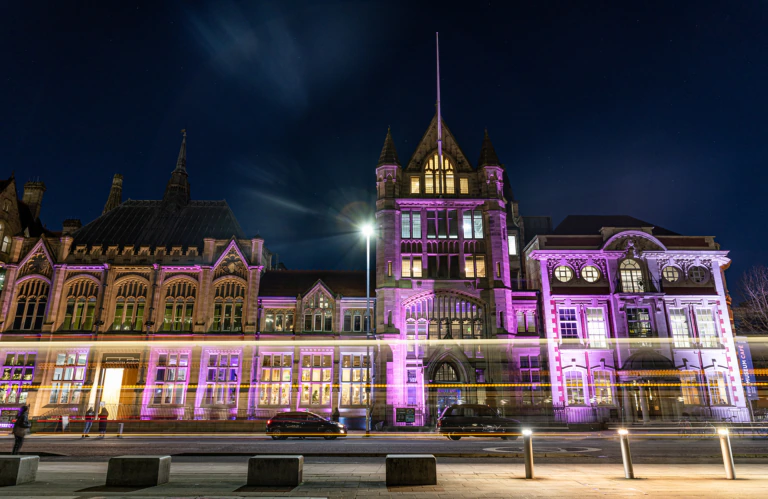
- Oxford University, Gardens, Libraries and Museums
- Royal Armouries
- Royal Botanic Gardens, Kew
- Royal Museums Greenwich
- Science Museum Group
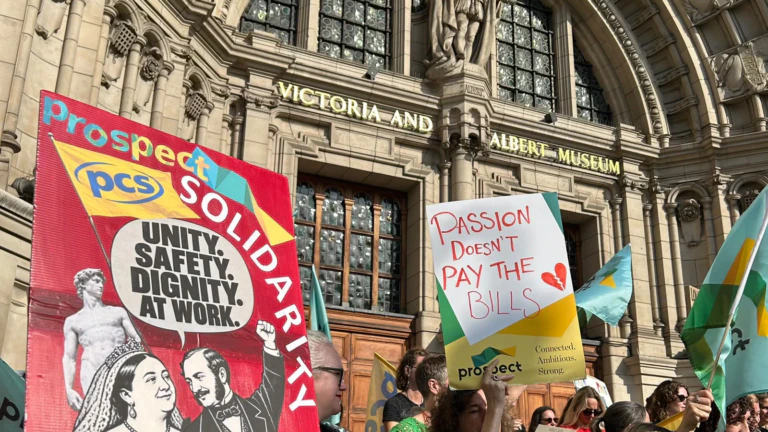
- Victoria and Albert Museum (V&A)
Advertisement
Responding to the launch, Doug Gurr, director of the Natural History Museum, said the platform would open up collections and help museums share stories with wider audiences.
“The programme enables meaningful collaboration across the cultural sector and helps us explore new ways of creating advocates for the planet,” he added.
Richard Deverell, the director of Royal Botanic Gardens, Kew, said: “Leveraging the vast breadth of Kew’s collections to help generate value via various commercial models will ultimately help to support research that accelerates efforts to address biodiversity loss and create a thriving planet for all.”
The marketplace, which is part of the government’s R&D Missions Accelerator Programme, was first announced in June 2025 as one element of a £380m investment package and Industrial Strategy.
Last week, the government confirmed further details including five kickstarter projects to test how public sector data can “improve lives” and tackle everyday problems.
One of these projects will look at how authoritative legal data from the National Archives could be made AI-ready to provide small and medium-sized businesses such as cafes and shops with easy to access legal support.
Advertisement
This could help with admin like employment contracts or procurement from abroad, helping businesses to invest and grow.
The government also announced that it is investing a further £16m in the AI Research Resource supercomputing capacity at the University of Cambridge.
Ian Murray, the minister for digital government and data, said: “Technology is at the heart of our mission to build better public services – from making sure vulnerable people get the support they are entitled to without needless admin, to backing businesses with tools they need to grow.
“By taking a common-sense approach to public sector data and investing in our world class AI base, we are seizing the UK’s potential, unlocking opportunities for growth and delivering for working people.”
Creators’ concerns
Last week also saw five sector creator-led organisations express serious concerns that generative AI – and what they called the “industrial-scale theft of the UK’s cultural riches” – would lead to the collapse of the UK’s creative industries and its creators.
Advertisement
The Association of Photographers, the Independent Society of Musicians, the Society of Authors, Equity, and the Association of Illustrators collectively launched a new report that highlights the risks facing individual creators from AI, including job losses and declining income to the “diminishing visibility of human-created work” in a generative AI-driven marketplace.
The report, Brave New World? Justice for Creators in the Age of Generative AI, also called for new protections for the UK’s creative industries, creators and performers.
“In 2026, the UK stands on the brink of losing the core of an entire sector; a sector that brings not just jobs, money and global prestige, but also cultural currency, soft power and societal benefits,” the Association of Photographers said in a statement.
“Generative AI services have been unleashed into the UK without regulation, safeguards or guardrails… The result is an intellectual property free-for-all with overseas tech firms profiteering from creators’ works while creators see their livelihoods disappear.”