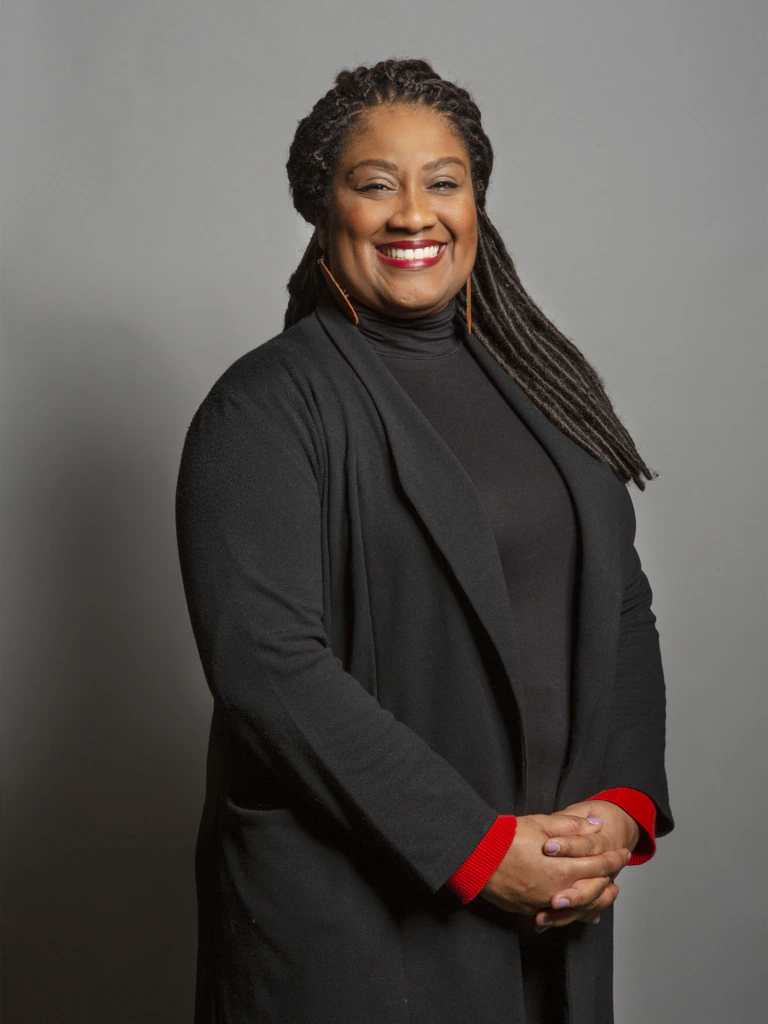
The All-Party Parliamentary Group for Afrikan Reparations (APPG-AR) is calling for a ban on the public display of human remains without consent.
The group, which is chaired by the Labour MP for Clapham & Brixton Hill, Bell Ribeiro-Addy, also recommended the establishment of a framework for museums to transparently audit their collections of human remains across the country as part of a briefing at the House of Commons last week.
Ribeiro-Addy urged the UK museum sector and the Department for Culture, Media and Sport (DCMS) to come up with “a genuinely ethical and accountable way forward” to resolve the issue of human remains in British museums.
The group wants to see ancestral humans remains repatriated, particularly when explicit requests have been made by descendants or source communities.
Labour peer Paul Boateng said the continued failure to fulfil such requests was “an affront to humanity and an affront to basic human dignity which has got to end”.
Advertisement
Dan Hicks, the curator of world archaeology at the Pitt Rivers Museum, University of Oxford, said: “We need museums which value people more than they do things, and those people include the dead.”
He added that the continued retention of human remains in British museums represents a fundamental issue of consent.
“This is the transformation of subjects into objects. This is dehumanisation,” he said.
An estimated 50% of all human remains in the UK are held in orphaned collections or warehouses throughout the country, the briefing heard, with much of their provenance unknown.
Many of the remains kept by museums would have been obtained by “theft and deceit” – removed from cemeteries, claimed from colonial battlefields, or taken from relatives under duress – according to Janet Ulph, the emeritus professor of law at the University of Leicester.
Advertisement
Current DCMS guidance states that “the laws of England and Wales do not recognise the concept of property, ie a right of ownership in human bodies and tissue, except where remains have been treated or altered through the application of skill”.
Ulph explained that this clause stems from legal rulings specifically regarding the use of human body parts in anatomical studies.
However, the exception has been historically used by archaeologists and museums to claim that human remains taken as part of Britain’s wider colonial project have been modified in some way, and can therefore be classed as artefacts.
The briefing followed up the points outlined in the Laying Ancestors to Rest report, published earlier this year. The report called for museums to remove distinctions “between the return of human remains, modified human remains and cultural material”.
It also called for the amendment of the 2004 Human Tissue Act, which regulates the removal, storage and use of human tissue, to “expressly make an offence of the public display of human remains, except if appropriate consent is obtained or for religious or funerary purposes”.
Advertisement
Since 2020, many museums have removed their human remains from display. Led by Hicks, the Pitt Rivers Museum recently began the process of repatriating human remains. The APPG-AR is urging other museums across the UK to follow suit.
The potential development of a new Museums Bill could include guidance on human remains, the briefing heard, following a meeting between the heritage minister Fiona Twycross and the minister for health and social care Wes Streeting earlier this year.
The Laying Ancestors to Rest report received a cautious welcome from the museum, heritage and archaeology sectors. However several archaeology bodies warned that some of its proposals could have “unintended consequences”.
The report was backed by delegates at the World Archaeological Congress in July, where a resolution was passed expressing “full and unambiguous support” for the report's recommendations, including a ban on the sale of human remains; full transparency on ancestral remains in collections; proactive working towards returns of ancestors where requested by descendant communities; working towards dignity for ancestors while they are housed in museums and collections; and initiating new public conversations about the public display of ancestral human remains.
Where are these figures coming from about orphaned collections?
I was puzzled by this comment in the article and I would like to know more too!
The phrase “orphaned collections” will refer to collection items where ownership is unknown. It is a problem in relation to repatriation for items (other than human remains) because there is a risk that someone could step forward and provide evidence that it is a loan object.
But this worry is normally irrelevant in relation to human remains. This is because the standard legal rule is that no-one can own human remains.
This has been the law for over 400 years.
An exception is made in very limited circumstances: where remains have been altered through the application of skill by medical professionals (authorised by the Human Tissue Act 1832 etc.) and where the work carried out is of a permanent nature so that it can be used for teaching or exhibition purposes as part of medical research.
This means that very few museums will own any human remains. At best it appears that there is some form of non-legal physical custodianship. And there is no-one who can step forward and claim ownership (unless the skill exception explained above applies). This consideration should mean that (subject to charity law, if it is a charity museum) it is much easier to deaccession and repatriate human remains.
Professor Janet Ulph, University of Leicester
p.s. it appears that the reason why no-one can own human remains is that they are not commodities.