
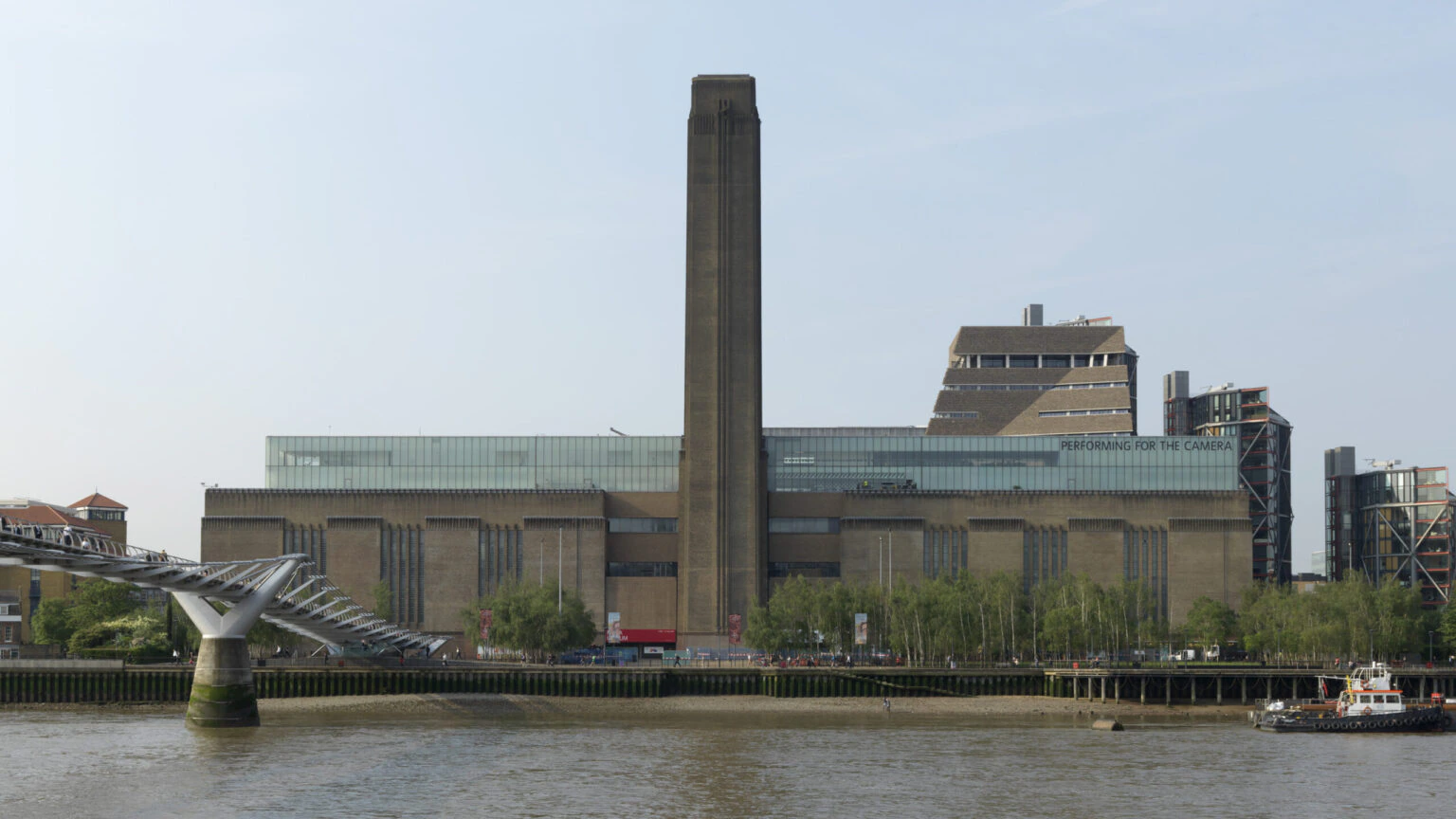
Some of the workers involved in the recent strike at the Tate group say Maria Balshaw’s replacement as director must address what they feel is a “clear existential crisis” at the institution.
One staff member, who requested anonymity in order to speak freely on behalf of some of the workers, highlighted tensions at Tate between senior management and the institution’s lowest-paid staff.
The Tate group has undergone two major staff restructures in the past five years due to financial pressures. This year it cut around 40 roles across its four galleries, primarily through voluntary redundancies and a hiring freeze
Over 150 members of the Public and Commercial Services (PCS) at Tate took part in industrial action from 26 November to 2 December in response to consecutive below-inflation pay rises, as well as what the worker described as “austerity-style” cuts to staff benefits.
These include the loss of the subsidised staff canteen, which was scrapped to save £300,000 a year, and the erosion of benefits such as the Civil Service Pension Scheme, which new starters lost access to in 2021.
The worker said that, due to this approach, there was a feeling among some junior staff that Tate's outward image as a “progressive and inclusive” organisation was at odds with its internal working culture and “hierarchical” management structure.
Advertisement
The staff member said there was dissatisfaction and low morale among some members of the workforce, with a feeling that “staff at the bottom are paying for” the mistakes of the senior team, which some believe have contributed to the Tate group’s financial issues.
The worker said that, following Tate’s two redundancy programmes, remaining staff had been asked to take on additional responsibilities without recognition or compensation for their greater workload.
There is also a feeling among some in the workforce that Tate has made missteps in its exhibition programming, with too much focus on spotlighting lesser-known artists at the expense of more commercially viable shows, and that this had affected attendance levels.
Another worker described a “lack of foresight and commercial awareness” in this area.
There is a feeling that Tate’s senior management team are relying on the “trusty shield of Covid and Brexit to explain the galleries’ shortcomings”, the first staff member said.
There is also anger over the remuneration of Tate’s highest paid directors, who received total packages ranging from £195,000 to £320,000 in 2024, including one bonus that exceeded £28,000.
Advertisement
Some workers are unhappy with the gallery’s other spending priorities too. “Tate can afford to put on free cocktail parties at the biennale but can't give hot food to staff,” said the worker.
It is hoped that whoever is chosen to fill the directorship will “address Tate’s clear existential crisis”, the worker said. “People are glad to finally see some sort of accountability taken.”
A Tate spokesman said any changes to working conditions and benefits had “affected all staff in the same way”.
The spokesman told Museums Journal: “Tate has made careful savings this year in order to invest in staff pay and still achieve a balanced budget. This includes a 3% salary increase for most roles – including all employees on the lowest three pay bands – while directors are taking a 0% increase to help balance the overall costs.
“Two of the three unions at Tate have accepted this offer. It is only by creating and maintaining a sustainable financial model that we can continue to invest in our staff in the long term.”
Negotiations between Tate and PCS over pay are ongoing, but workers have not ruled out another strike. The pay offer has been accepted by members of Tate's other two unions.
Advertisement
The spokesman said claims that Tate’s exhibition programme was underperforming were inaccurate.
“Tate receives as many visitors to its exhibition programme now as it did in the years before the pandemic,” he said.
Tate is among a number of London art galleries that have experienced a sluggish post-Covid recovery.
However, in 2024, the Tate group welcomed 6.4 million visitors across its four galleries, a growth of approximately 6% compared to the previous financial year.
According to a statement from Balshaw earlier this year, the number of UK visitors to Tate’s galleries has returned to 95% of pre-pandemic levels, while attendances at paid-for exhibitions at both Tate Modern and Tate Britain are also back up to pre-Covid levels.
Almost all of the remaining shortfall in visitors is accounted for by international tourists’ visits to the free collections, Balshaw said. The closure of Tate Liverpool for redevelopment in 2023 has also affected the group’s overall visitor figures.

One of the problems is that in any corporate business which the Tate now is, the higher echelons see themselves as superior human beings, never in the wrong and expect their pay to be more than the PM…