A new study has shown that viewing original art has an immediate and measurable effect on the human body, with the ability to reduce stress and increase excitement simultaneously.
The research was initiated by the national art charity Art Fund, and co-funded by the Psychiatry Research Trust, a mental health charity.
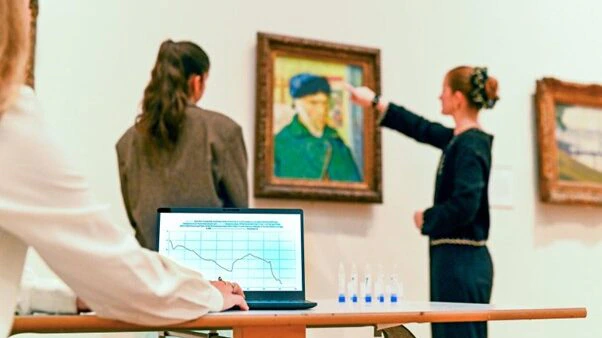
Undertaken by King’s College London, and thought to be the first of its kind, the study measured the physiological responses of participants while viewing masterpieces by artists including Manet, Van Gogh and Gauguin in a gallery.
The research found that art activates three different body systems all at once – the immune, endocrine (hormone), and autonomic nervous systems – something that has never previously been recorded.
Tony Woods, a researcher at Kings College London, said: “The research clearly shows the stress-reducing properties of viewing original art and its ability to simultaneously excite, engage and arouse us.
“From a scientific perspective, the most exciting outtake is that art had a positive impact on three different body systems – the immune, endocrine and autonomic systems – at the same time. This is a unique finding and something we were genuinely surprised to see.”
Advertisement
The study involved 50 volunteers aged 18-40, who either viewed original artworks at the Courtauld Gallery in London or reproductions of the same paintings in a matched, non-gallery environment.
It took place between July and September 2025. Participants were monitored for heart rate variability and skin temperature using research-grade digital watches to track levels of interest and arousal. Their cytokines and cortisol levels were also measured through saliva samples, providing a clear indication of stress levels.
The study found that cortisol levels – the key stress hormone – fell by an average of 22% in the gallery group, compared to 8% for the reproduction group. Those viewing original art also had more dynamic heart activity, indicating that art engages the body through both emotional arousal and stress regulation.
Pro-inflammatory cytokines (IL-6 and TNF-α) – which are linked to stress and a number of chronic diseases – dropped by 30% and 28% respectively for those viewing original art, with no change observed in the reproduction group. This suggests art has a potential calming effect on the body’s inflammatory responses, according to the study.
Woods said: “Stress hormones and inflammatory markers like cortisol, IL-6 and TNF-alpha are linked to a wide range of health problems, from heart disease and diabetes to anxiety and depression. The fact that viewing original art lowered these markers suggests that cultural experiences may play a real role in protecting both mind and body.”
As well as appearing less stressed, participants also showed physiological signs of excitement whilst viewing art, including dips in skin temperature (-0.74C) and more variation in heartbeat patterns, as well as higher overall heart rates – indicating bursts of emotional arousal.
Advertisement
The findings suggest that art can “arouse, deeply relax and reduce stress levels” at the same time when viewed in a gallery, according to the study.
Woods added: “In short, our unique and original study provides compelling evidence that viewing art in a gallery is ‘good for you’ and helps to further our understanding of its fundamental benefits. In essence, art doesn’t just move us emotionally – it calms the body too.”
The research also found that neither personality traits nor emotional intelligence influenced responses, suggesting the broad health benefits of art on the body are universal.
While previous studies have linked regular gallery visits to long-term wellbeing, Art Fund said that this was the first time research had captured the real-time physiological benefits while viewing art.
Art Fund's director, Jenny Waldman, said: “This study proves for the first time what we've long felt at Art Fund – that art really is good for you. What’s particularly exciting is that the findings show these benefits are universal – they can be experienced by anyone.
“We want to encourage everyone to make time to visit their local museum or gallery and experience these powerful effects for themselves.”
The chair of the Psychiatry Research Trust, Carmine Pariante, said: “We are delighted to have worked so collaboratively with the Art Fund. The trust funds research and education in mental health and this type of interdisciplinary research, relevant to both science and wellbeing, is exactly the type of studies that are needed to understand how arts influences both mind and body.”