Norwich Castle Keep has reopened to visitors following a five-year redevelopment that has seen new accessibility measures introduced as well as new galleries and interpretation.
Made possible with more than £13m from the National Lottery Heritage Fund, as well as £12m from Norfolk County Council, all five floors of the newly dubbed People’s Palace are open to visitors for the first time ever.
The Grade-1 listed castle was commissioned by William the Conqueror 900 years ago, and completed by his son Henry I in 1121.
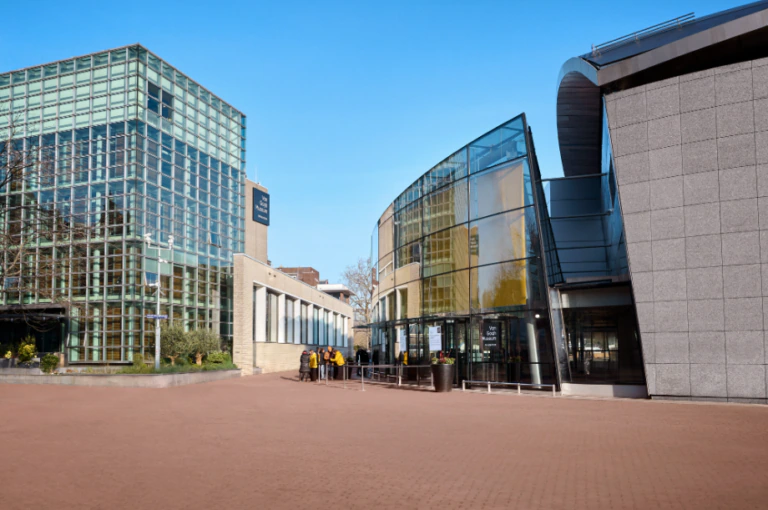
The castle’s new light-filled atrium adjacent to the Keep opened in phase one of the redevelopment in July 2024. There is also a new cafe, gift shop and additional toilets to accommodate visitors.
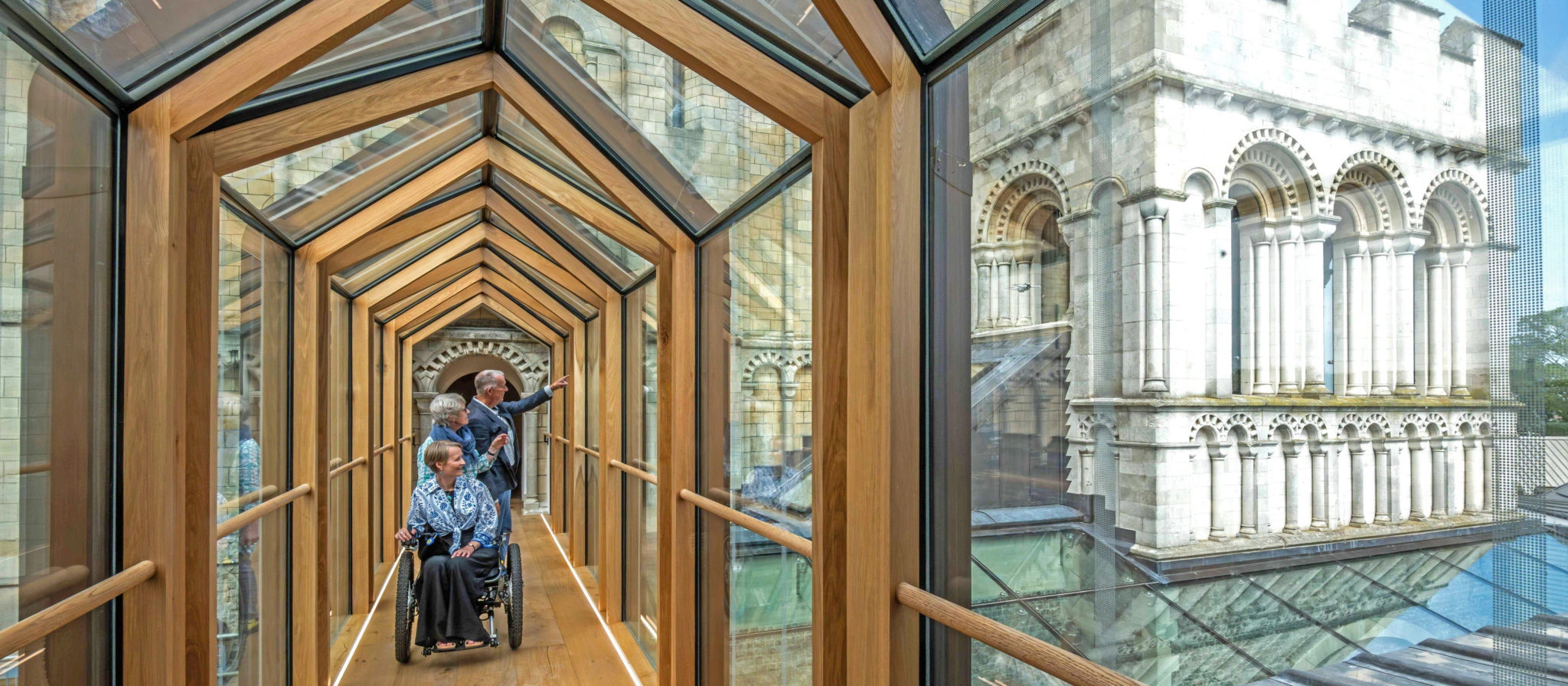
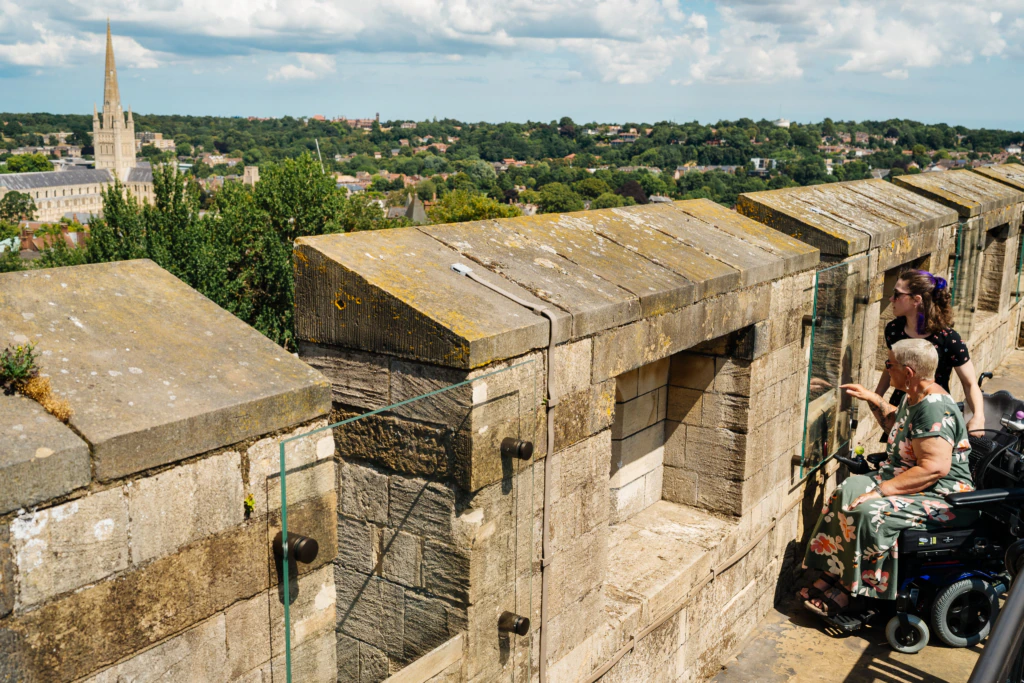
A lift has been installed to ensure wheelchair accessibility throughout the keep, from basement to battlements, offering access to views across Norwich.
A tactile map supports blind and partially blind visitors to explore the spaces. Multisensory elements have also been built in, allowing visitors to interact with spaces, such as dressing up and sitting on a restored throne as a Norman king or queen, to experiencing the sounds of medieval life.
Advertisement
Visitors also have the chance to get to know some of the people who lived in or visited Norwich Castle in the 1100s via character panels that bring each individual’s story to life.
The keep’s new displays comprise original artefacts and architecture, as well as new interactive and immersive experiences throughout the castle’s five floors.
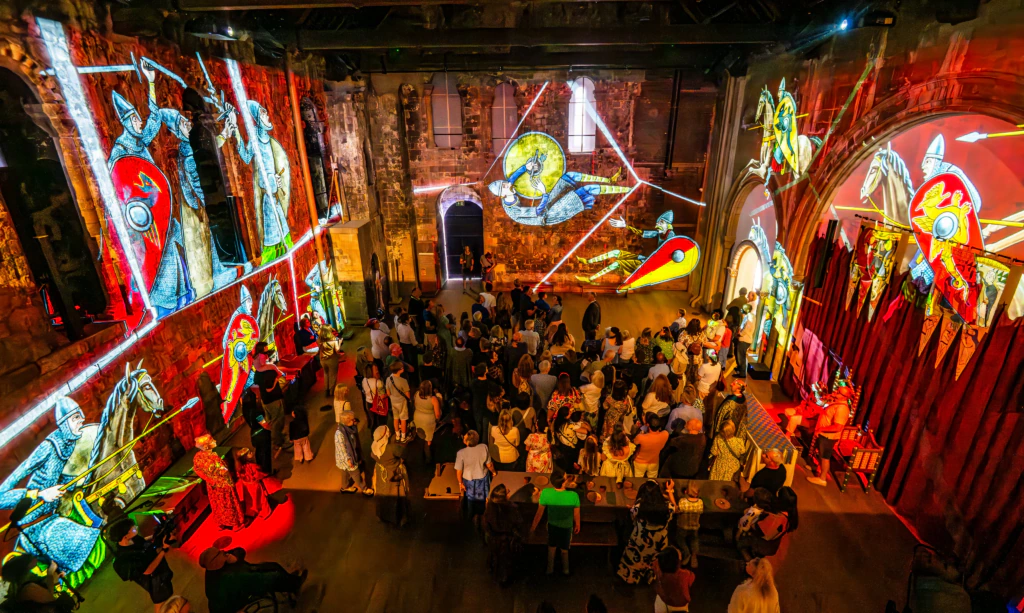
Audio visual projections in the Great Hall draw on the drama and imagination of medieval art to bring the walls alive; a bespoke early years space will support the youngest visitors’ learning for pre-booked groups; and a range of digital displays allows visitors to explore various aspects further.
Original features brought back to life
Architects Feilden + Mawson have restored the original Caen limestone – shipped from Normandy in the 11th-12th centuries – of the keep. Alongside engineers, contractors and conservation experts, this castle’s recreation comprises original medieval floors and rooms reinstated and furnished to create a sense of what Norman life was like in a royal castle.
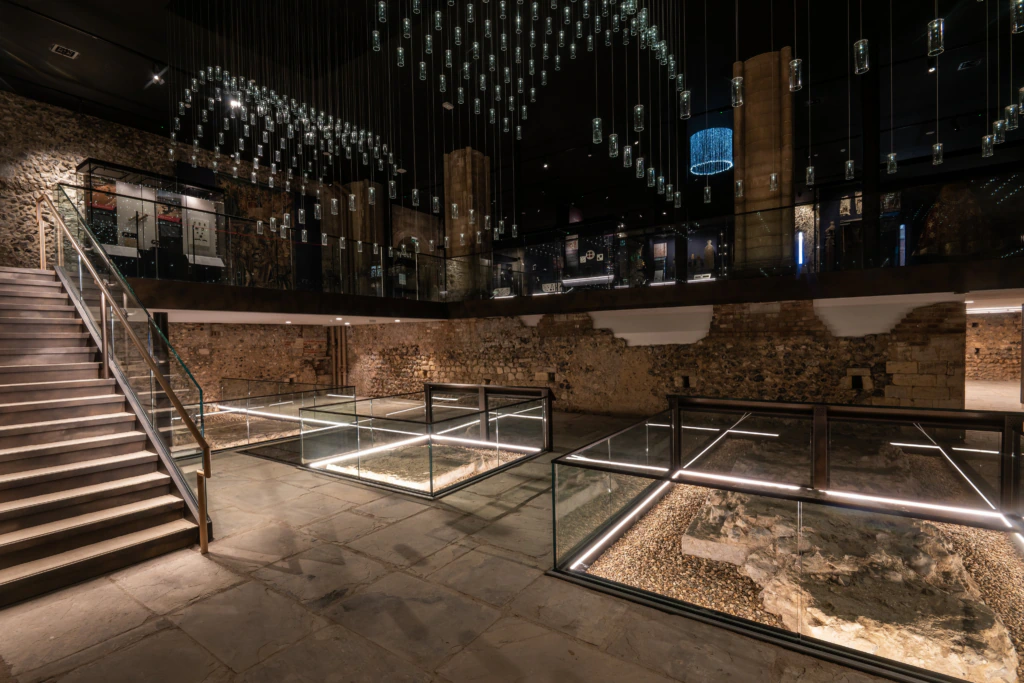
In the basement, the remains of the impressive medieval pier bases – on which the arcade of arches that supported the principal floor above once rested – have been newly interpreted with a light sculpture installation outlining these lost arches.
Advertisement
Another highlight is the Norwich Friends’ Tapestry, which has been inspired by the Bayeux Tapestry. The 19-metre-long tapestry hangs in the King’s Chamber and narrates two rebellions in the East of England against William the Conqueror.
It was been created by a team of 50 dedicated local volunteers. Other hand-crafted textiles – including banners, wall hangings, costumes and other textiles – have been produced by volunteers during the redevelopment.
The Gallery of Medieval Life: A British Museum Partnership
A new medieval gallery takes in artefacts dating from the Norman Conquest (culminating in the 1066 Battle of Hastings) to the reign of Henry VIII (1509-1547).
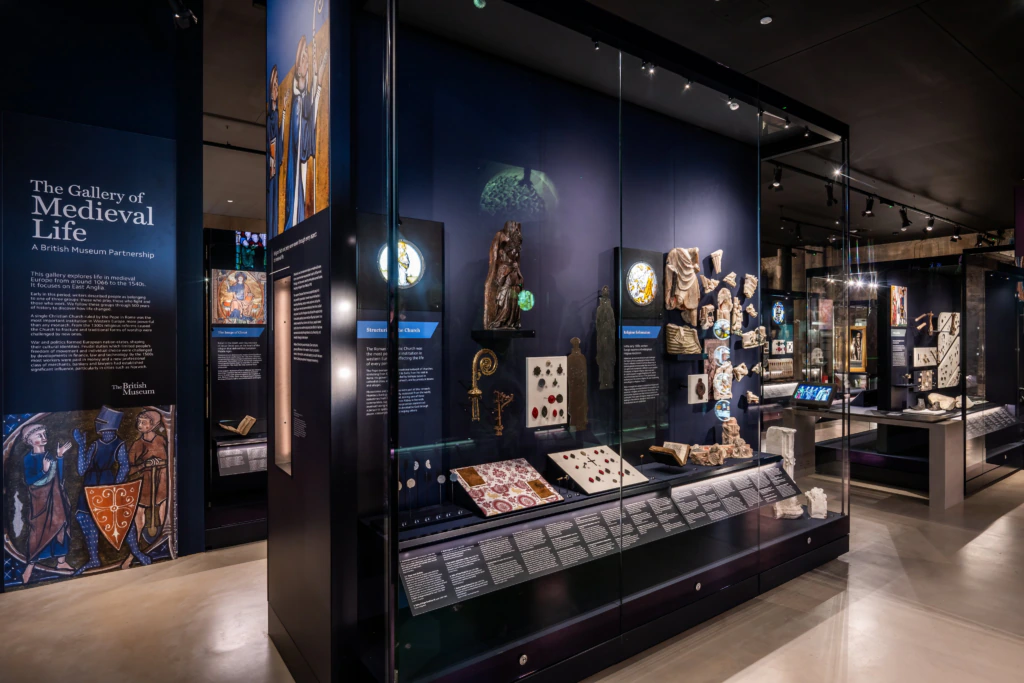
Developed in partnership with the British Museum, the permanent Gallery of Medieval Life explores three key aspects of medieval society – workers, the nobility and the Church. More than 900 treasures, with more than 50 on long-term loan from the British Museum, bring visitors closer to the experiences of those who lived during this period.
Advertisement
From personal items such as a carved ivory bobbin discovered in the castle’s drains, to scientific objects such as an astrolabe, which was used to make astronomical and time-based measurements. There are also Treasure finds on display that have recently discovered by local metal detectorists and recorded through the British Museum’s Portable Antiquities Scheme, as well as specially conserved artefacts that were previously too fragile to display.
Norwich Castle is the British Museum’s first medieval gallery outside of London and its seventh Partnership Gallery to open around the UK.
Kay Mason-Billig, leader of Norfolk County Council, said: “Anyone who has visited the Keep at Norwich Castle previously and now comes to see this wonderful redevelopment will be amazed.
"It now looks and feels like the medieval castle it once was following a painstaking and authentic redevelopment. Multisensory elements and interactive exhibits also bring medieval Norwich to life, fostering a deeper connection to the past for visitors of all ages.
"We are so proud to have created such an accessible visitor attraction offering spectacular views across our wonderful city, and to have worked with so many supportive partners to launch the largest heritage development project opening in the UK this year.”
Norwich Castle Museum & Art Gallery is part of Norfolk Museums Service (NMS), comprising 10 museums and a study centre. NMS is a partnership between Norfolk County Council and Norfolk's district councils, funded through council tax, earned income and grants.
A documentary made by Eye Film and narrated by Stephen Fry, The Castle Rebuilding History, will air on Channel 4 on 24 August at 1930 and is showing in Cinema City Norwich until 23 August