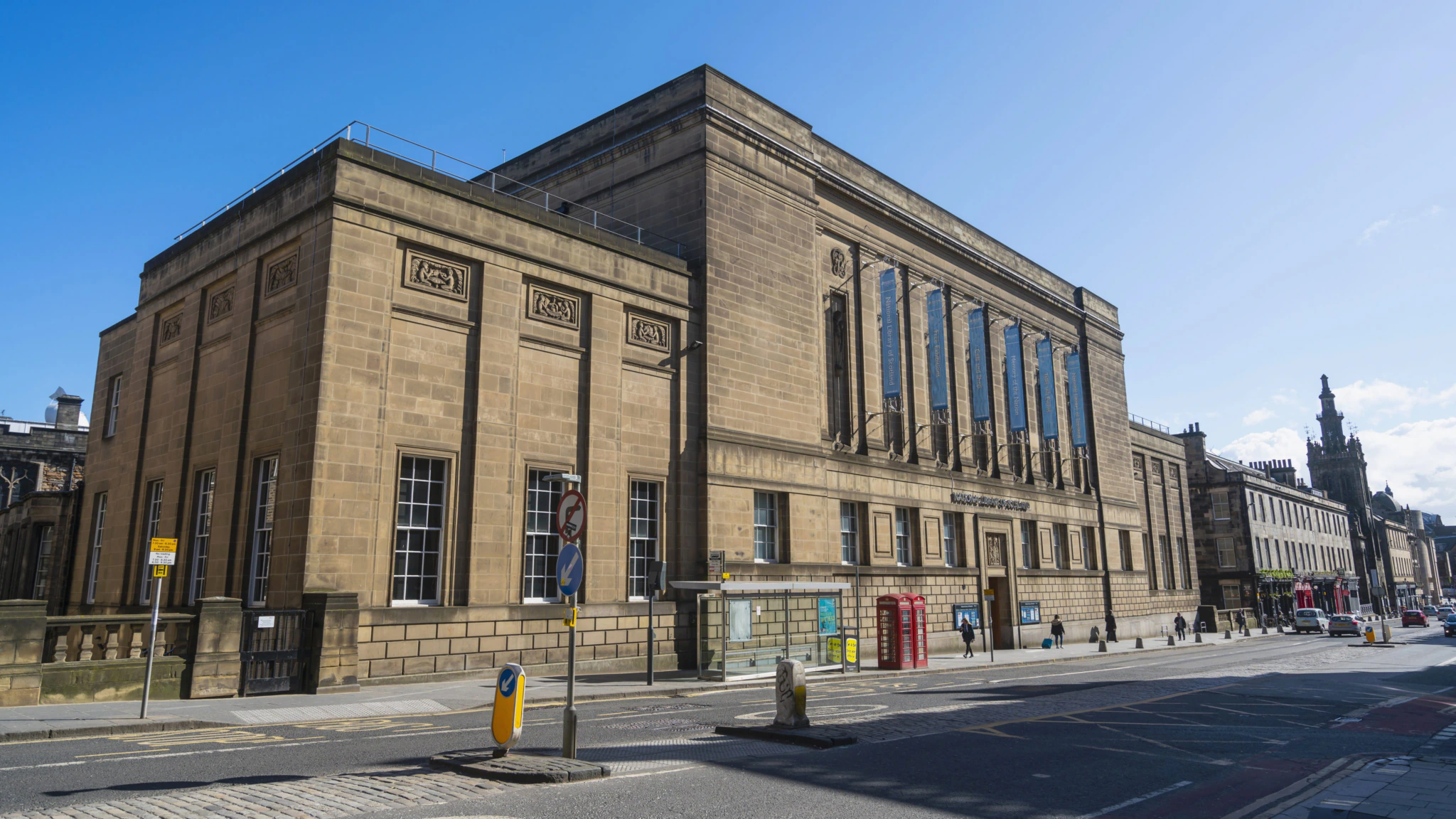
The National Library of Scotland (NLS) is conducting an internal inquiry after facing complaints that it excluded a book by gender-critical feminists from its centenary exhibition.
Billed as a love letter to libraries, the Dear Library! exhibition opened in June to celebrate the 100th birthday of the NSL, and runs until April 2026. Members of the public were invited to recommend books for display in the exhibition, and 200 titles were chosen out of 523 nominations.
Four people nominated The Women Who Wouldn’t Wheesht, a collection of essays by some of the women involved a five-year campaign against the Scottish Government’s Gender Recognition Reform (Scotland) Bill, which they argued would adversely affect women’s rights under the Equality Act. Contributors to the book include the author JK Rowling, former MSP Joanna Cherry and poet Magi Gibson.
The library has been accused of censorship after Freedom of Information requests showed that the national librarian, Amina Shah, reversed a decision to select the book for display following concerns raised by the library’s LGBT+ staff network.
Internal emails sent during the decision-making process, obtained by the online publication The Frontline, show that the library initially confirmed that the book would feature in the exhibition alongside books that “represented trans and queer identities”.
A staff member stated that its inclusion in the exhibition was “not an endorsement of the book’s views by NLS”.
Advertisement
A member of the LGBT+ network subsequently expressed concern that “the publication itself and the group behind it are explicitly exclusionary in nature”, and questioned “what would have happened if a democratic selection had included a non-fiction work advocating for racist, homophobic or other discriminatory and exclusionary viewpoints?”.
The network also warned that the book’s inclusion would cause “severe harm to staff” and that “they would ‘have no choice’ but to notify LGBT+ partners of the library’s endorsement of the book”.
Following these exchanges, the NLS carried out an Equality Impact Assessment on the book choice before eventually deciding not to feature it in the exhibition.
In a paper produced for the NLS board, Shah wrote that this decision was “not due to the content of the book itself or the views expressed, but to the potential impact on key stakeholders and the reputation of the library. There is a risk that they will withdraw their support for the exhibition and the centenary”.
She added that the aim of the exhibition was “to bring people together” and warned that the issue could “overshadow the celebratory nature of the exhibition”.
Criticism
The u-turn has been criticised as censorship by the book’s co-editors, Lucy Hunter Blackburn and Susan Dalgety, who have written to the institution seeking a meeting with Shah and chairman Drummond Bone. The co-editors reject claims that the book is trans-exclusionary, and are demanding an apology and for the title to be reinstated in the exhibition.
Advertisement
The library has now launched a stage two complaint investigation into the incident, which will be completed within 20 working days.
However, according to The Times, Hunter Blackburn and Dalgety have further criticised the library for treating their concerns as a complaint, saying that they are “censored authors, not unhappy library users”.
In response, the NLS told the newspaper it wanted to do “due diligence in response to the authors’ letter, and an investigation is the most robust way for us to do this. Once the investigation is completed, we will welcome a meeting with the authors”.
Some commentators have defended the NLS. Laura Webster, editor at The National and Sunday National newpapers, said it was misleading to claim the book had been banned.
“The truth is it was one of over 200 books nominated for one exhibition at the library that didn't get selected,” she wrote in a post on X.
In a statement to Museums Journal, the NLS said the book was available to anyone visiting the library. A spokesperson said: “Anyone can visit our reading rooms and access this book as well as the 200 other titles that were not selected for display. A full list of those publications is available as part of the exhibition.
Advertisement
“Libraries are vital places where people can access all kinds of publications for free, and form their own opinions.”
Hunter Blackburn said in response: “The suggestion that the book is no different from any of the other books nominated but not put on display is disingenuous. It omits the key fact, that the national librarian and the chair reversed the initial decision to include it in the exhibition, after staff complained.
“The inclusion of the book in the national copyright collection is beside the point, as is belied by the scale of internal communications involved in the decision and the library's own references in those to censorship being an issue.
“The line that anyone can access the book in the reading room is also misleading. The book was not in fact available for library members to order up, when the line was first given to the media last week.”
The NLS has been warned by the gender critical group Sex Matters that excluding the book on ideological grounds could leave it open to legal claims for discrimination and harassment based on a protected belief.
Further debate
The controversy has led to further debate about freedom of speech in the UK’s culture sector this week. In a comment piece titled When Curation Becomes Censorship, Index on Censorship author Jemimah Steinfeld wrote that “books must be a space where ideas – even deeply uncomfortable ones – can be explored”.
She continued: “Some say the book in question promotes ‘hate’. They’re entitled to that view and indeed entitled to protest its inclusion. It’s also important to acknowledge that for many LGBTQ+ readers and staff, this isn’t just a political disagreement. It’s personal and painful.
“In a liberal democracy though, even speech that offends or unsettles us deserves protection, especially in books, where the whole point is to wrestle with complex, often conflicting, ideas.”
This response has been criticised as “meek” by the campaign group Freedom in the Arts. In a statement published by the group, the poet Jenny Lindsay, one of the book’s contributors, said: “It is insulting to read that Index on Censorship believe [the book] to be possible, on any fair reading, to be deemed ‘hateful and worthy of protest’…
“That a freedom of expression organisation is so equivocal, seeing the chief librarian’s role as to even consider the censorious demands of the handful of staff who opposed our inclusion, is risible. This is a clear-cut case of purposeful exclusion of over 32 Scottish writers, for ideological not literary reasons.
“The ramifications for those of us who make their living as writers... are that we have been very publicly and privately treated as worthy of censorship, worthy of that label 'hateful', the ripple effects of which are highly damaging on a professional level too.”
A Scottish Government spokesperson said: “While ministers have no role in booking or curation decisions taken by individual venues or institutions, the Scottish Government supports individuals’ rights to freedom of expression and we are clear that there is no place for any form of discrimination in Scotland.”
The National Library of Scotland is funded with a direct grant from the Scottish Government, and is responsible for collecting, preserving and sharing the nation's written, printed and digital heritage.