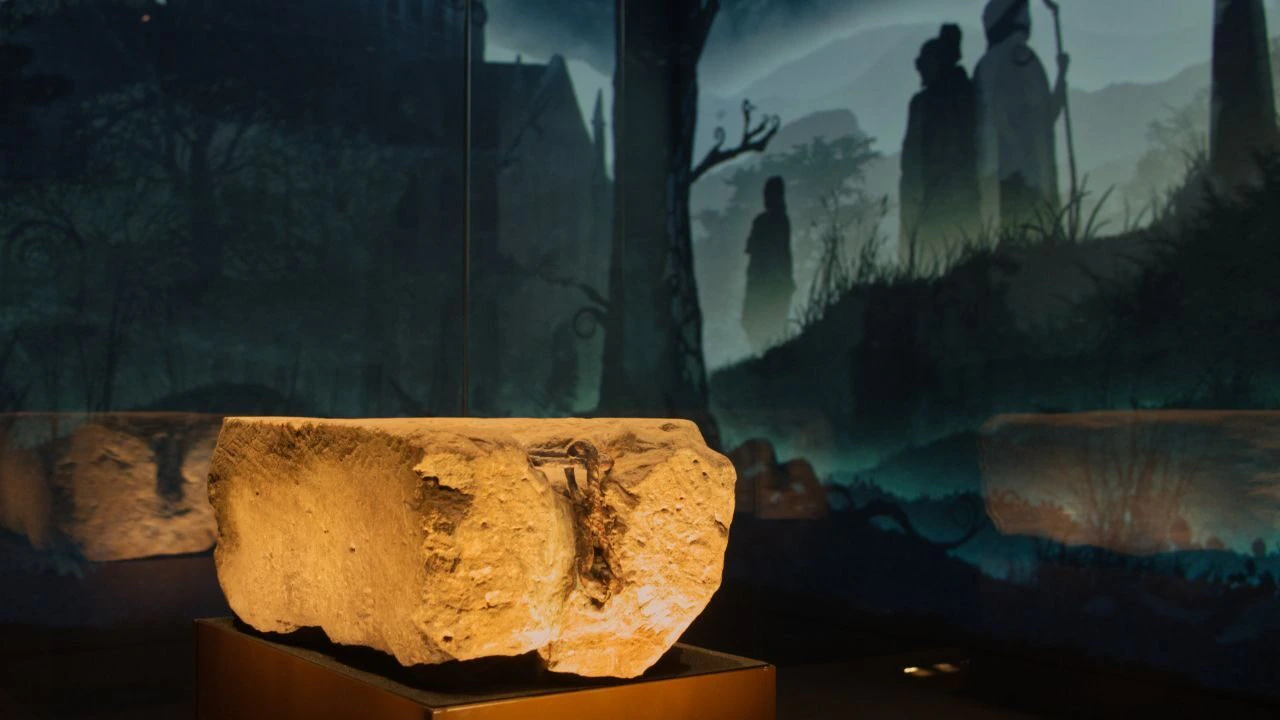
A man has been charged with malicious mischief after allegedly smashing the glass case holding the Stone of Scone at Perth Museum.
The museum was forced to temporarily evacuate visitors following the incident at around 1400 on Saturday afternoon.
Police were called to a disturbance at the museum after visitors reported a man wearing a kilt attempting to break the display case. The museum has since reopened but its Stone of Destiny Experience remains unavailable due to the incident.
A 35-year-old man, Arnaud Harixcalde Logan, appeared at Perth Sheriff Court on Monday in Scotland to face the charge. His address was listed as Sydney, Australia.
He did not enter a plea and was ordered to be detained until next week.
A spokesperson for Culture Perth and Kinross said there had been no damage to the artefact.
Advertisement
The spokesperson said: “We can confirm there was an incident at Perth Museum on Saturday 12 July 2025, where a man was arrested. Perth Museum was evacuated as a precaution and there was no damage to any artefacts on display. We are assisting Police Scotland with their enquiries so it would be inappropriate to comment further.”
The Stone of Scone, also known as the Stone of Destiny, is one of Scotland’s most important artefacts, used in the coronation of Scottish monarchs until the 13th century. The stone was taken from Scotland during the Wars of Independence and lodged in King Edward's coronation throne at Westminster Abbey.
It remained there for 700 years and was used in the coronation of English and later British monarchs.
The sandstone artefact was notoriously stolen by four Glasgow University students in 1950 and taken to Scotland, before being retrieved.
It was brought back to Scotland permanently in 1996 and displayed at Edinburgh Castle, returning briefly to England in 2023 for the coronation of King Charles III. It has been on display at Perth Museum since the venue opened in March 2024.
Government files released last week show that civil servants at what was then the Department of National Heritage strongly disagreed with prime minister John Major's decision to return the stone, fearing it would set a “precedent to mass restitution”.