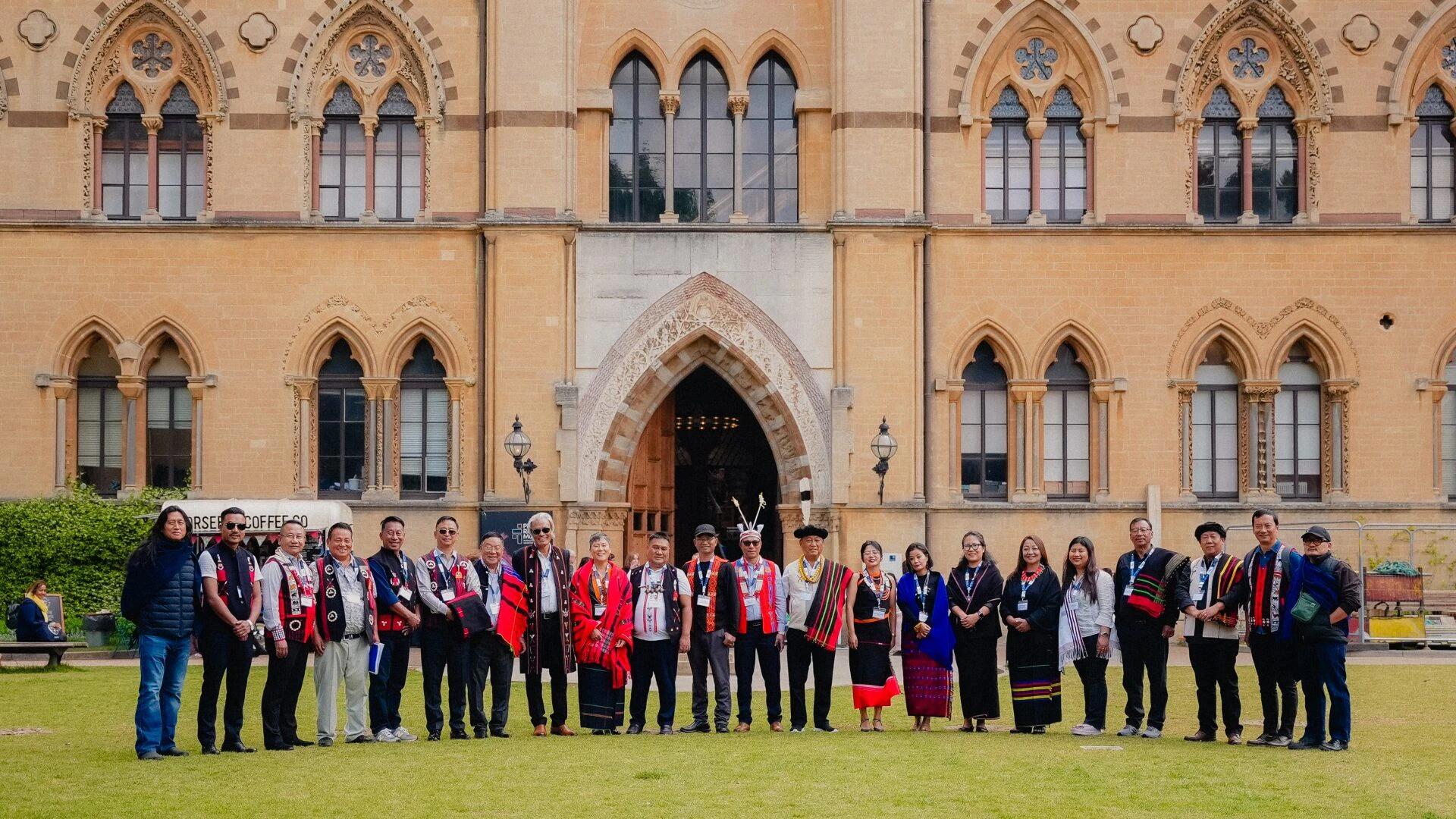
The Pitt Rivers Museum, part of the University of Oxford, has met with elders and leaders from various Naga Tribe Hohos to discuss the repatriation of Naga ancestral human remains and the future care of museum's wider Naga collections.
The Pitt Rivers holds the largest collection of Naga material in the world, much of which was collected by colonial administrators in the early 20th century.
The first Naga ancestral human remains were donated to the museum more than a century ago by John Henry Hutton, an English-born anthropologist and an administrator in the Indian Civil Service during the period of the British Raj, with further donations given in later years.
Last week’s meeting focused on the return of 41 Naga ancestral remains held in the museum’s collections, and 178 objects that contain or may contain human hair.
The delegation, which also included members of the Forum for Naga Reconciliation and members of the Recover, Restore and Decolonise Group, had the opportunity see the ancestral remains in a private room.
A closing ceremony on Friday included prayers and song, and a reception supported by the Centre of South Asian Studies, University of California Santa Cruz, as part of its international engagement on Indigenous justice and care initiative.
Advertisement
The discussions build on community dialogue and participatory research done in the Naga homelands by the Recover, Restore and Decolonise Group team, assessing community responses on the ancestral remains held in Oxford.
Naga anthropologist Dolly Kikon contacted the Pitt Rivers Museum’s director, Laura Van Broekhoven, after reading widespread press reports about the museum's decision in 2020 to remove all human remains from the exhibition floor unless and until consent could be obtained to display them.
"This is not just a visit for the Naga delegation,” Kikon said. “It is an act of healing, of returning sovereign decision making, and reclaiming the dignity of our ancestors and the Naga people.
“For the Naga people, this partnership with the Pitts Rivers Museum is crucial to address the colonial violence and rewrite the labels museums have imposed on the Naga’s past as primitives, savages and head-hunters.
“Our ancestral remains, including the material artefacts at this museum, must move beyond institutional understandings of property and conservation. It is through such partnerships grounded on mutual trust and respect to listen and dialogue between museums and Indigenous communities that we can work towards healing and restoring the task of redress, care, custodianship.”
In a keynote address, Thejao Vihienuo, president of the Angami Public Organisation, said: “We have embarked on this historic journey, not only for the repatriation of our ancestors but also as a journey towards the process of decolonisation. Nagas are aware we cannot undo the past. But… we are confident that this process of repatriation will go a long way in healing the wounds of all the people involved.”