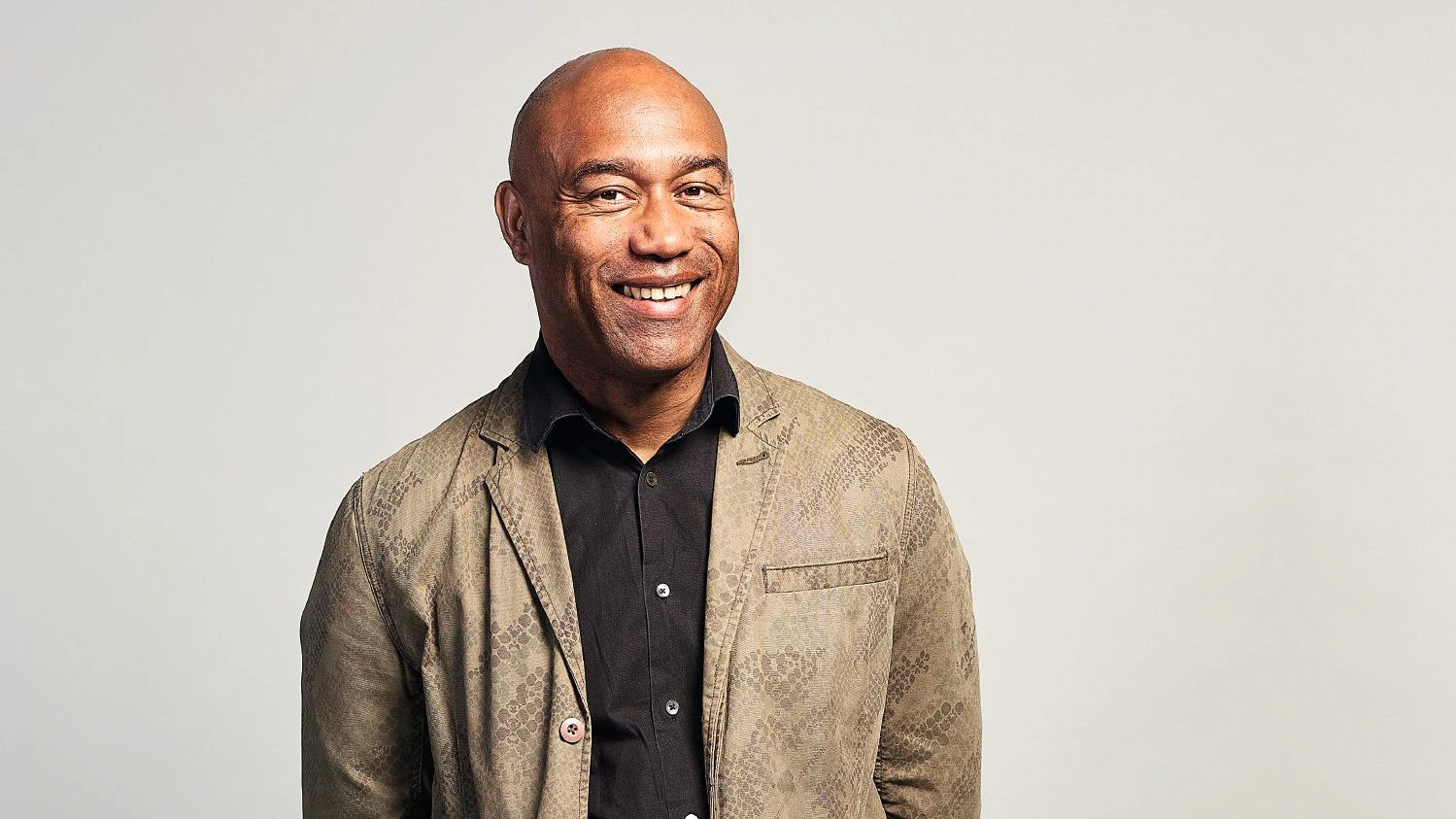
Cultural institutions must have the “moral courage” to stand by their principles and back diversity and inclusion in the age of Trump, the director of London’s V&A East Museum has said.
In a column in The Guardian, Gus Casely-Hayford said cultural institutions must “simply, continually, work to be ever more universal, inclusive and open”.
“I would have thought that seeking to give value back to a greater number of the population is uncontroversial,” he said.
Casely-Hayford’s comments come in response to the apparent dismissal of the Kim Sajet, the director of the Smithsonian Institution’s National Portrait Gallery in Washington, DC.
In a Truth Social post on Friday 1 June, president Trump wrote that he was terminating Sajet’s employment because she is a “a highly partisan person, and a strong supporter of DEI, which is totally inappropriate for her position”.
It is unclear whether the president has the authority to dismiss Sajet, however; as of 5 June the institution had confirmed to the press that she was still reporting to work.
Advertisement
Casely-Hayford expressed solidarity with his former colleagues at the Smithsonian, where he worked as director of the National Museum of African Art from 2018 to 2019.
The institution, which runs 21 museums in the US, has also been subject to an executive order from the US president to remove “improper ideology” from its content.
Casely-Hayford said the arts had “become the terrain for a brutal proxy battle for hearts and minds” where “not just reputations are at stake, but institutions, whole sectors and ways of thinking”.
However he said he hoped that “even Trump’s support base have begun to grow a little bored with these attacks on figures and institutions in the cultural sector”.
Casely-Hayford said the Smithsonian was “a fish in a barrel”.
“[It’s] easy to bully, its financial destiny in significant part tied to public funding, with limited scope to defend itself,” he said. “This contrived political theatre damages critical institutions, threatens the careers of talented, dedicated people, and its repercussions will be deep and long-lasting.”
Advertisement
The V&A East director said diversity and inclusion “isn’t some new-fangled indulgence”, saying the drive to be inclusive was what “good museums were created to deliver”.
“The British Museum was created in the mid-18th century around an inclusive imperative, around the idea that we might all hope to find ourselves reflected in its spaces and concerns,” he said.
Casely-Hayford said it was clear that the move to fire Sajet was designed to “demoralise” Smithsonian workers.
“That’s why, directing a different museum now, across the Atlantic, I feel moved to write,” said. “We in the cultural sector everywhere need to stand up and be counted, we need to celebrate Kim Sajet, we need to not retreat from diversity here in Britain.
“To my former colleagues, I say that speaking the truth and having the courage to do so when it is difficult does not make you unsuitable for your roles in a demographically complex democracy; it is probably the most important aspect of what we are called upon to do. It is easy writing the diversity action plan, but having the moral courage to stand up for those principles when they are needed – that is heroic.”
Sharon Heal, the director of the Museums Association, welcomed Casely-Hayford’s comments. “This is a timely reminder of why we need to be committed to equality and that the history of museums in the UK is steeped in the concept of being open for all,” she said.
“Our new Code of Ethics will reinforce this commitment to equality and diversity and being inclusive organisations where many stories can be told and explored.”
Casely-Hayford has been the director of the V&A East Museum in Stratford, London, since 2019. The new museum is scheduled to open to the public in spring 2026.