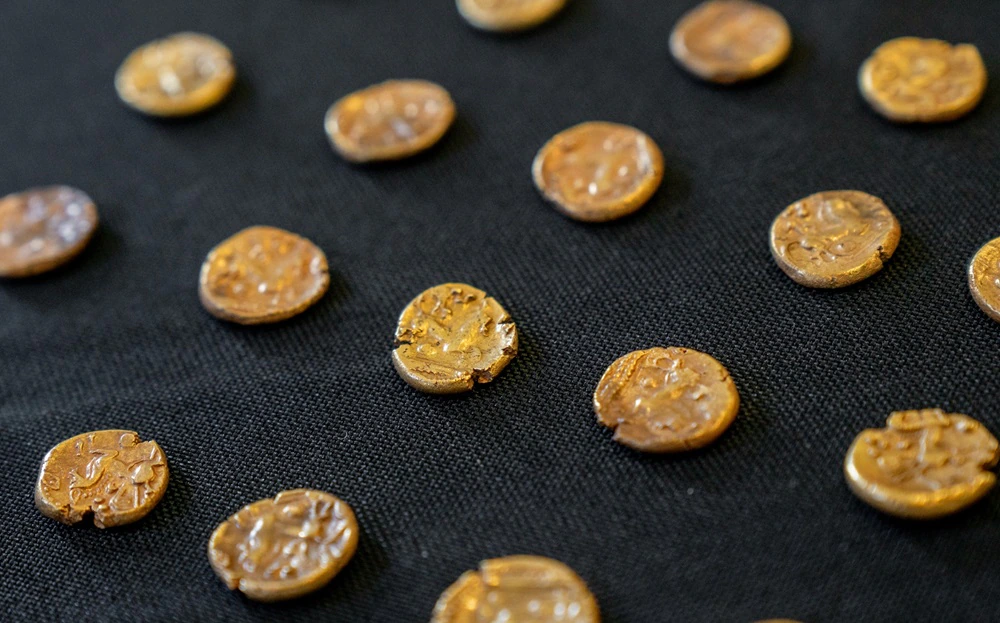
The Museum of Chelmsford has acquired a collection of gold coins from the Great Baddow Hoard, which was discovered in 2020.
The museum bought the collection of 933 coins, which are believed to date from 60-20BC, with £250,000 from the National Lottery Heritage Fund.
The collection of iron age gold will be on show in a dedicated temporary exhibition from summer next year before being permanently displayed in spring 2027.
The hoard of iron age gold coins was discovered by a metal detectorist in 2020 and is the largest recorded in Britain. It was found alongside the fragments of what may have been a vessel for the collection of coins.
They are notable in originating during the early use of coins in iron age tribes who struck these small gold disks with metal stamps specific to the region. Previous to this, Celtic coins were imported from overseas.
The coins feature designs that may have originally been used for coins from the Whaddon Chase Hoard in Buckinghamshire, discovered in 1849. The principle design of the coin features an abstract wreath while the reverse shows a running horse facing right.
Advertisement
What is perhaps most exciting about the hoard’s discovery is the archaeological backing it provides to what was previously only evidenced in written records. Roman sources note upheaval during Caesar’s second invasion of Britain in 54 BC, which appear to align with the coins’ discovery.
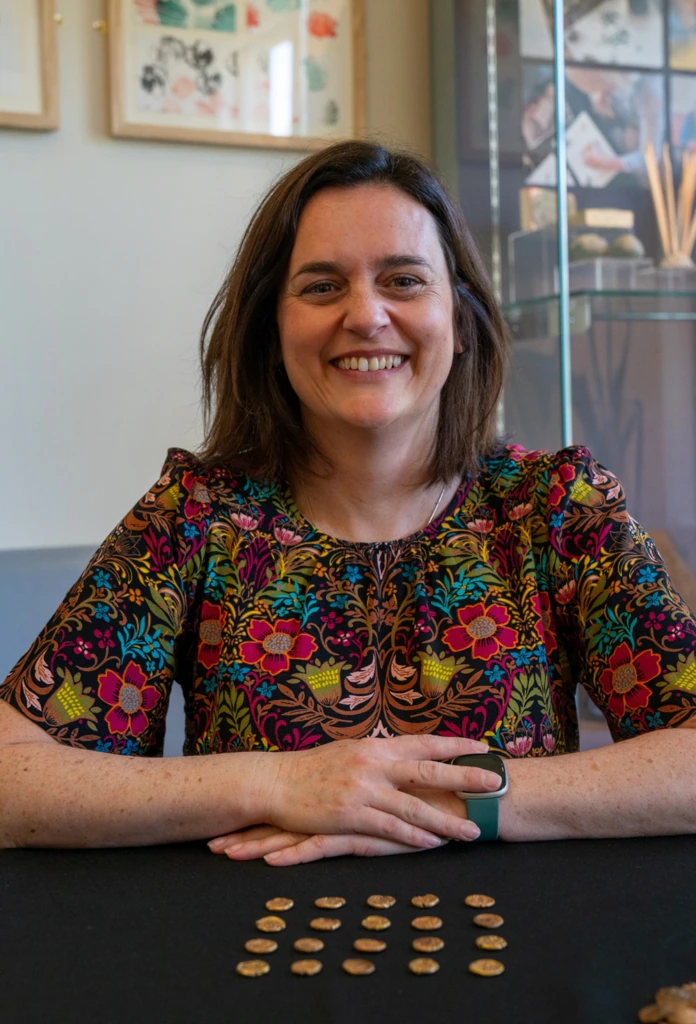
Curator Claire Willetts said: “Most of the coins in the Great Baddow Hoard are thought to have been produced in the region later associated with the so-called ‘Catuvellauni’ and it is theorised they could have been intended as a tribute payment to Roman general Julius Caesar.”
She explained that Great Baddow is “traditionally considered Trinovantian territory”, a neighbouring tribe to the Catuvellauni, so the coins’ appearance “may indicate movement or influence from western tribal groups into the east, making the Great Baddow Hoard a significant find for our understanding of eastern Britain in the late iron age”.
Funding from the Heritage Fund will help support further research into the hoard and facilitate a programme of community projects in the local area.
West Norfolk Hoard
Meanwhile Norfolk Museums has raised enough money to acquire the the West Norfolk Hoard, the largest collection of seventh-century gold coins found in Britain.
Advertisement
The museum service received £217,200 from the National Heritage Memorial Fund and £101,000 from Art Fund and the Wolfson Foundation towards the acquisition.
The Arts Council England Victoria & Albert Museum Purchase Grant Fund and the Friends of the Norwich Museums also helped to enable the purchase.
The internationally significant hoard contains 129 gold coins, most of which are Frankish tremisses – solid gold coins minted in the Merovingian Frankish Kingdoms that occupied much of modern-day France, Germany, Switzerland and the Low Countries. These are the first coins made and used in Europe after the fall of the Roman empire and predate the first gold coinage made in Anglo-Saxon England.
The hoard is on display now in the newly reopened Anglo Saxon and Viking Gallery at Norwich Castle Museum & Art Gallery.