
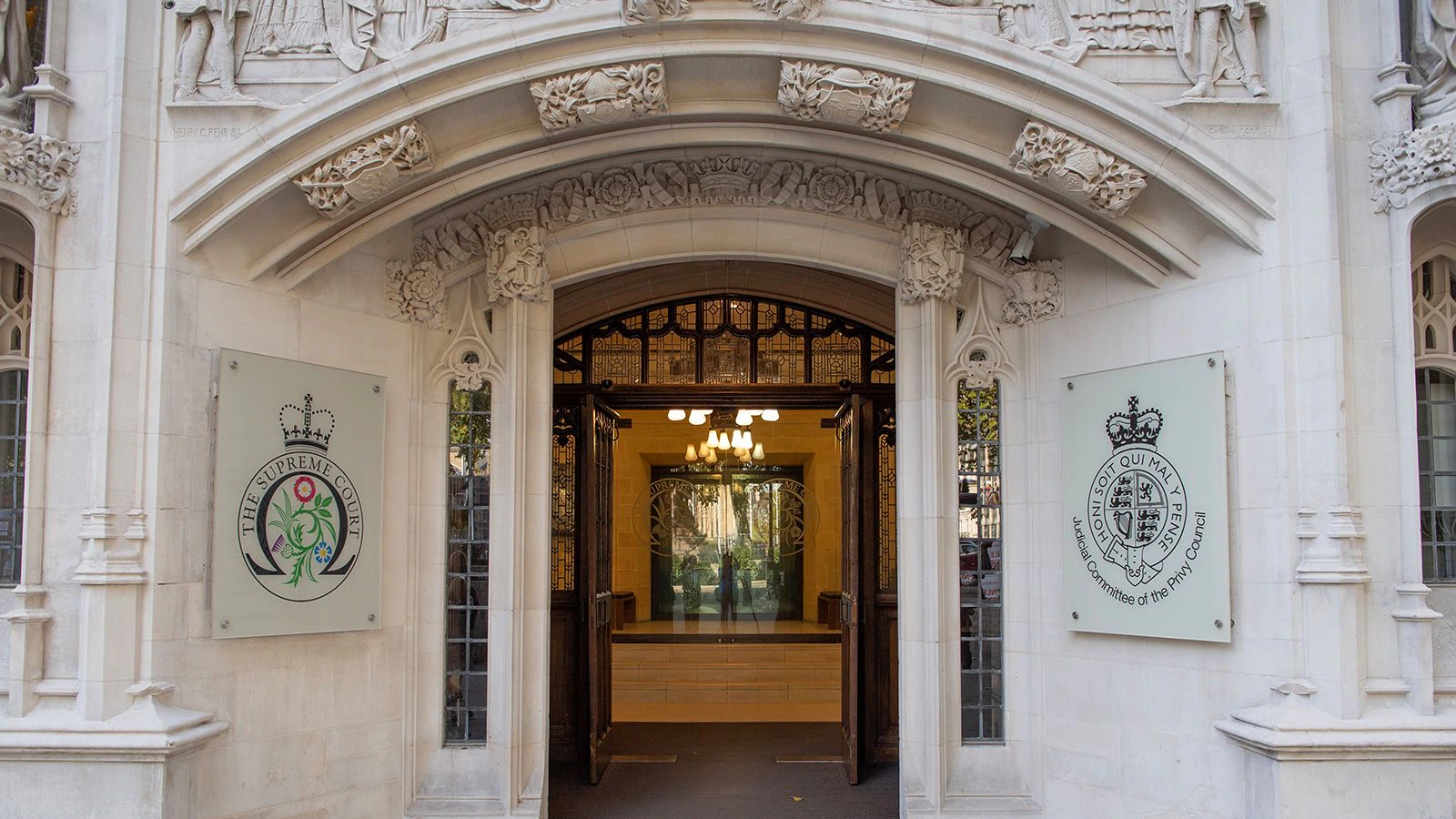
Museum and cultural institutions are considering the legal and ethical implications of the landmark Supreme Court ruling in For Women Scotland v Scottish Ministers on the definition of sex in equality law.
The five Supreme Court judges ruled on 16 April that the protected characteristic of sex in the Equality Act 2010 refers to biological sex, and that a Gender Recognition Certificate does not change a person’s sex for the purposes of the act.
The ruling came in response to a case brought by the gender-critical feminist group For Women Scotland against the Scottish Government over legislation on quotas for women on public boards.
The ruling is a clarification of existing law rather than new legislation. Trans people are protected from discrimination in the Equality Act under the protected characteristic of gender reassignment.
The Equality and Human Rights Commission (EHRC), the government watchdog that enforces the Equality Act, issued an interim update last week on the practical effects of the ruling, stating that it “has implications for many organisations”, including workplaces and services that are open to the public.
The update said: “In workplaces, it is compulsory to provide sufficient single-sex toilets, as well as sufficient single-sex changing and washing facilities where these facilities are needed.”
Advertisement
For services that are open to the public, the update said that “it is not compulsory for [these] to be provided on a single-sex basis or to have single-sex facilities such as toilets”.
Toilets in public services can be single-sex if it is a proportionate means of achieving a legitimate aim and they meet other conditions in the act, said the EHRC. However “it could be indirect sex discrimination against women if the only provision is mixed-sex”, it added.
The EHRC said that in workplaces and services that are open to the public, “trans women (biological men) should not be permitted to use the women’s facilities and trans men (biological women) should not be permitted to use the men’s facilities, as this will mean that they are no longer single-sex facilities and must be open to all users of the opposite sex”.
The commission wrote that “in some circumstances the law also allows trans women (biological men) not to be permitted to use the men’s facilities, and trans men (biological woman) not to be permitted to use the women’s facilities”.
However it said that “trans people should not be put in a position where there are no facilities for them to use”.
The EHRC is updating its Code of Practice and said this would be available by the end of June.
Advertisement
It said: “We know that many people have questions about the judgment and what it means for them. Our updated guidance will provide further clarity. While this work is ongoing, this update is intended to highlight the main consequences of the judgment. Employers and other duty-bearers must follow the law and should take appropriate specialist legal advice where necessary.”
Legal opinion
There has been some disagreement in the legal community over how the ruling should be interpreted.
Former Supreme Court judge Jonathan Sumption told BBC Radio 4 that organisations are potentially misinterpreting the Supreme Court’s decision and said the ruling means “that you are allowed to exclude trans women from [women only] facilities. But you are not obliged to do it”.
However Sumption's opinion has been rebutted by members of the EHRC, with commissioner Akua Reindorf writing in The Times that: “A service or competitive sport can be designated as single-sex if it meets conditions set out in the Equality Act.
“If that designation is made, then the service or sport must admit only people of one biological sex. Otherwise it ceases to meet those single-sex conditions, and must admit all members of the opposite sex.”
Advertisement
Reindorf also said that, contrary to some reports, employers and service providers did not need to justify excluding trans people from services for the opposite sex on a case-by-case basis.
“Operating a service or sport on a (biological) single-sex basis must be justified by showing that separating the biological sexes is a proportionate means of achieving a legitimate aim. Nothing further is needed to show that trans people should not be permitted to use the service in accordance with the sex in which they identify,” she wrote.
Legal experts have warned that a failure to follow the ruling could leave organisations open to sex discrimination claims, as well as affecting matters such as employers’ liability insurance and charitable status.
Culture sector reaction
There has been significant criticism of the Supreme Court ruling and EHRC update in the museum and culture sector. More than 1,500 arts professionals have so far signed an open letter to the EHRC expressing their “substantial concern” with the commission’s update.
The signatories say they believe that the update “has been rushed, will cause harm and that it is impossible to apply”.
The letter says the update “goes far beyond the recent Supreme Court judgement and overlooks the need to protect trans, nonbinary and intersex people from discrimination”.
“We believe that trans, nonbinary and intersex people should be free to use the bathroom that aligns with their gender identity,” says the letter.
“[The EHRC's] interim update will result in trans, nonbinary and intersex people feeling unable to work in or attend cultural events and public venues. This will erase a group of minoritised people from public life.”
Cultural institutions, often based in old or listed buildings, “are unable to magic up new toilet facilities”, adds the letter.
“As well as being profoundly unfair, this kind of segregation will have significant social, cultural and economic impact,” say the letter’s signatories, adding that they are “unable and unwilling to police the gender of people using our toilets”.
Laura Pye, the director of National Museums Liverpool and newly appointed chair of the National Museum Directors’ Council, said the “EHRC guidance raises several concerns”.
In a post on her personal LinkedIn page, Pye said: “Firstly, in its current form, it seems impossible for any cultural organisation or public building to comply.”
She added: “I fail to understand the problem we are trying to solve here. I hear comments about protecting women and girls, but statistically, I don't believe transwomen are the issue when it comes to violence against women and girls.
“Our trans communities include some of the most vulnerable and marginalised members of society. Where are their rights and protection in this guidance? Can't we all just be nicer to each other?”
The campaign organisation Freedom in the Arts, which was set up to challenge what it describes as an atmosphere of censorship and bullying in the culture sector over politically sensitive topics such as gender, welcomed the Supreme Court ruling.
The group’s co-founder Denise Fahmy, who won a tribunal against Arts Council England related to harassment over her gender critical views, said: “Freedom in the Arts welcome the Supreme Court's clarification that the meaning of sex in the Equality Act refers to, and has always referred to, biological sex.
“We have supported many artists and arts professionals who have experienced extraordinary levels of bullying and harassment for believing what has now been clarified at the highest level.
“Our research into freedom of expression in the arts, to be published in May, evidences the sector is now in a perilous state because those holding mainstream views such as the immutability of biological sex have been vilified, largely by their peers, and have become afraid to speak freely.”
Fahmy said the Equality Act “exists to protect people, including those with the characteristics of sex and gender reassignment, against discrimination, harassment and victimisation at work and when using public services” and said arts organisations and charities should “look to their policies and practices to implement the law as it is, not as they may wish it”.
“This may not be an easy process as in recent years some organisations have mistakenly ‘opted out’ of single sex provision or introduced policies that prioritise one group over another,” she said.
“That has contributed to bad feeling and leaves organisations liable to legal challenge. What is needed is good provision for all.”
Fahmy added: “What arts organisations cannot do is refuse to adhere to UK law. Doing so will be a breach of both their public funding and their employer’s/public liability insurance. More importantly, if arts organisations are really committed to reaching as wide an audience as possible, they must now work harder to ensure all views and people are welcome.”
Institutional response
Museums Journal understands that Arts Council England is planning to contact sector leaders shortly and ask them to follow the EHRC guidance that will be published this summer.
The arts council has said it aims to “work through these changes with sensitivity and care, and encourage sector organisations to do the same”.
A number of museums have released statements following the ruling, including the Vagina Museum and the Crab Museum.
The Thackray Museum of Medicine in Leeds said it is “a safe space where the trans community has always been, and will always be, a welcomed part of our family”.
It said: “The trans community have been excluded from consultation around the Supreme Court’s decision which in our eyes has increased ambiguity and not offered clarity. We will not exclude the trans community and our building and our facilities remain open to all.”
The director of London’s Museum of Homelessness, Jess Turtle, said she had written to government ministers to “ask for urgent clarification on trans rights in housing and homelessness services”.
Turtle said she believed “the think tanks and lobbyists funding and influencing the exclusion of trans people are the same bodies… that are pushing for criminalisation of homelessness and attacking museums and heritage organisations that support diversity, equality and inclusion”.
Turtle said: “UK government messaging has been misleading and escalated significantly. Statements that trans women should not use women’s toilets are extremely alarming.
Turtle said she believed that “press, politicians and policy-makers including the EHRC appear to be intentionally misleading the public on the legality of trans+ exclusion”.
In an email to museum supporters, she said: “It must be demonstrated that it is a proportionate means of securing a legitimate aim; that there is a real, lawful and justifiable objective to being trans+ exclusive relating to a specific risk; that it is the least discriminatory option with no less harmful option available and crucially – that the benefit to others must outweigh the negative impact on the person affected.”
The Museums Association (MA) said it is considering the legal and ethical ramifications of the ruling for the sector.
MA director Sharon Heal said: “Museums should be safe and welcoming places for all, including members of the trans community. Many museums in the UK have worked with trans people to ensure that their stories are told and their histories are captured.
“We will continue to support this important work within the sector and to champion museums that use their collections and buildings to be inclusive and equitable places for all.”

I’m not disabled but my legs have a problem with standing, if there is a queue to the ladies I’ll go to the disabled toilet which are for all sexes but, should be open to all without having to get a key, if there isn’t one and I’m desperate I’ll go to the mens toilet, as in our homes, toilets in many restaurants especially in other countries are for all sex’s, the important thing is that all toilets are kept clean.