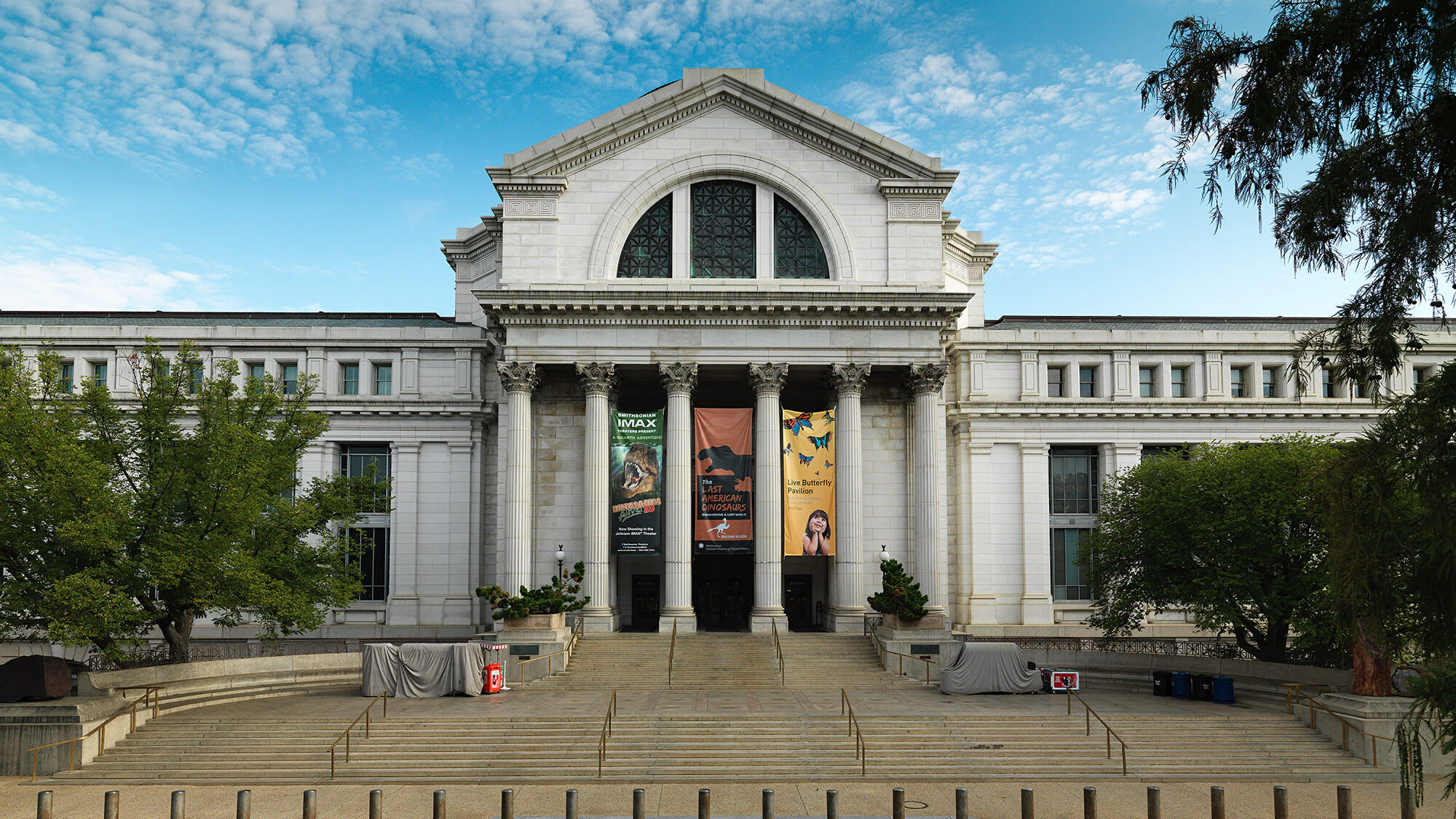
The Smithsonian Institution in the US is poised to introduce a new policy on human remains that centres around the guiding principal of "informed consent".
The institution has committed to providing resources to proactively trace descendants or communities of origin and empower them to make decisions on what should be done with ancestral remains.
The US museum complex, which oversees 21 national museums and a zoo, is hoping to speed up repatriation, with the aim of returning almost all of the Native American remains in its collections over the next few years.
The new approach comes after the institution established a taskforce last year to examine its policies on the treatment and care of the more-than 30,000 remains of individuals it currently holds.
Most of the remains were collected in the late 19th and early 20th centuries without the consent of the deceased or their families.
Many were collected from marginalised communities by curators and anthropologists of the time in a bid to “prove” theories of scientific racism and white supremacy. More than half came from Native American communities, while an estimated 2,100 came from Black populations.
Advertisement
Under the 1990 Native American Graves Protection and Repatriation Act, federally funded US museums are obliged to be proactive in returning Native American ancestral remains to descendants or descendant communities.
But some former Smithsonian staff told the Washington Post last year that they had faced internal obstruction in their efforts to repatriate Native American remains.
The Smithsonian has now removed all human remains, including prehistoric remains, from display at the National Museum of Natural History and the National Museum of the American Indian, the two museums that hold human tissue in their collections.
In a report published in February, the taskforce acknowledged that “historic inequities facilitated the expropriation, curation, and unconsented use of human bodies”.
“This is our unfortunate inheritance, a racist legacy that burdens the Smithsonian and prolongs this injustice,” said the taskforce report.
“The original intent of collecting these human remains was morally abhorrent, because it sought to prove the superiority of white people and their descendants to Native Americans, African Americans, and others through scientific means that are now thoroughly discredited.”
Advertisement
The taskforce recommended that the Smithsonian “should, with all practicable speed and consistent with applicable law, offer to return the remains of people who did not consent to being in Smithsonian custody to their descendants and descendant communities, organisations, and institutions”.
The taskforce recommended that human remains should not be collected, possessed or displayed without the “documented and informed consent” of descendants or descendant communities.
The report also said that “research on human remains in the custody of the Smithsonian should be restricted to specific purposes and subject to scholarly review and conducted only with clear informed consent of the deceased or, in appropriate circumstances, their descendants”.
The only exception is for research on "remains that, due to their antiquity, have no known unique relationship to a particular present-day population or community".
The taskforce outlined further recommendations for research on human remains: in addition to an informed consent approach, it said that destructive analysis of remains should not be permitted, nor should “any future research on remains that includes racial identification based on physical features, which perpetuates false ideas about typological variation in human biology”.
“The Smithsonian will go above the baseline of consent,” the report adds, and will commit to "respectfully engage, consult, and work collaboratively with descendants and communities represented in its collections”.
Advertisement
If family members or lineal descendants cannot be traced after reasonable efforts, the Smithsonian will "consult with the community, organisations, and institutions that best represent the interests of the deceased".
The recommendations are now being developed into an official policy.
“In the interim, we're not waiting for a policy to begin the process of working with descendant communities, which is the primary recommendation,” said Ellen Stofan, the institution’s under secretary for science and research.
The Smithsonian is setting up two separate teams to help identify the descendants or descendant communities of both Native American and non-native human remains, with the aim of expediting the process of repatriation.
“Our team right now is dedicated to speeding up that process and making sure that, within a reasonable amount of time, we have no native remains left in our collection unless a tribe specifically asks us to [keep them],” said Stofan.
Due to its global profile, the Smithsonian's approach is likely to be influential for other museums in the US and around the world.
A feature on human remains in museum collections will be published in the May/June issue of Museums Journal