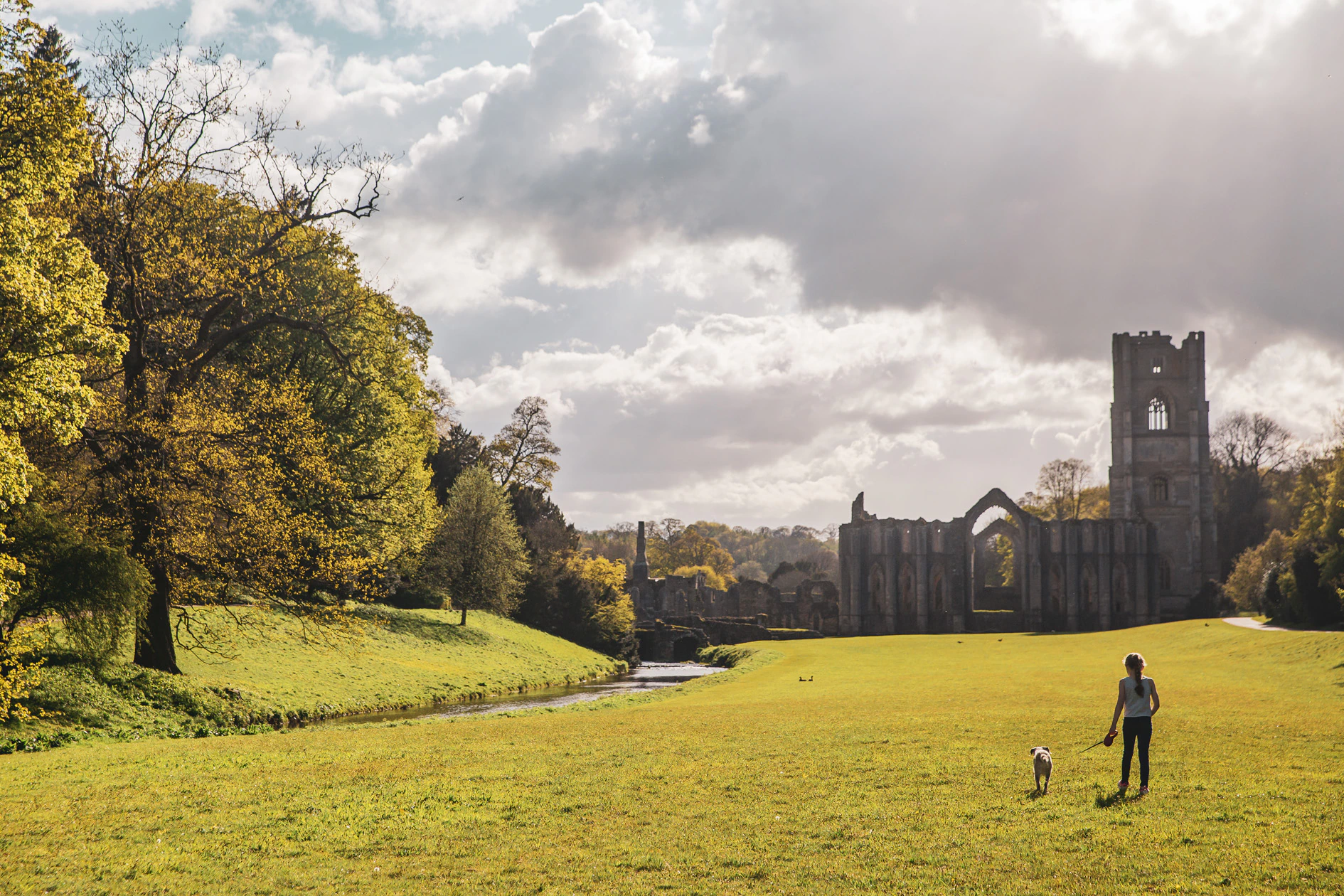
An industrial-scale medieval tannery has been discovered at Fountains Abbey in Yorkshire, with the help of cutting-edge archaeological technology.
Previously perceived as a quiet, reflective site populated by monks, the new discovery reveals that the abbey fulfilled more roles than once thought and was a lot noisier and smellier.
Discovered with the technology of ground-penetrating radar and other geophysical techniques, the tannery find solves the mystery of a baffling “bowling alley” space to the east of the abbey, the use of which having not been previously identified by archaeologists.
A medieval tannery would have produced materials for clothing, bedding, book bindings and vellum or parchment for reproducing religious texts, making its purpose central to monastic life. It would have served the needs of hundreds of people and been run by lay brothers.
The find shows the importance of lay brothers on the site. Not literate like the monks, they followed a different daily round of religious observance and were often recruited as mature men to bring crucial craft skills to the monastery, relieving the monks from most physical jobs so they could be free to dedicate more time to study, prayer and worship.
This is the largest tannery yet discovered at a monastic site in Britain. The archaeological research was carried out by the National Trust in partnership with the University of Bradford, Guideline Geo, Geoscan Research and Magnitude Surveys.
Advertisement
Mark Newman, a National Trust archaeologist, said: “The huge scale of the lay brothers’ accommodation (refectory and dormitory) we have already identified on the site shows how important they were to the economic model that Fountains adopted early on, laying the foundations for the abbey’s remarkable success.
“The tannery is especially linked to this as the lives of the lay brothers were distinguished from those of the monks in dress as in much else. While monks had woollen habits and cloth blankets to sleep under, lay brothers were provided with weatherproof animal skin capes for outdoor work and slept under sheepskins. Fountains recruited hundreds of lay brothers in its early decades all of whom needed to be equipped this way – and this tannery provided the means for that.”
Chris Gaffney, the professor of archaeological sciences at the University of Bradford, said: “Geophysical survey at Fountains Abbey continues to provide us with stunning, unexpected and intriguing glimpses into life in the past at the site. Each high-resolution dataset is of great interest in imaging the buried archaeology but visualising these with the digital model that we have created of the upstanding remains has provided a completely new ‘view’ of the site. As the technology advances, so does our understanding of the archaeology at Fountains Abbey.”
Hilary McGrady, the director-general of the National Trust, said: “For much of the 20th-century, many people believed there was no further archaeological research work to do at Fountains and that pretty much everything to be found had been found. The team’s work with the University of Bradford and our other partners shows the opposite – there is so much more still to discover there. Each project they undertake underlines the crucial importance of the sustained, innovative and imaginative conservation management of this World Heritage Site by National Trust and the English Heritage Trust.
“The discovery of the tannery buildings has provided a ‘missing link’ and represents some key named buildings the team wanted to identify on the site. But there’s plenty more to research and fascinate visitors and supporters. The site faces so many modern pressures, not least from climate change, that it has never been more crucial to map where its archaeology survives and what it looks like, so we can continue to curate and care for it.”
Conference 2021: Brave New World
How can museums change lives in a post-pandemic world? Our inspiring conference programme will explore the ideas and vision we need to not only survive, but to thrive in the future. Online places start from just £45, or attend in person for as little as £190.