The Museum of London has acquired 13 tweets created during the UK’s spring 2020 lockdown as part of its project documenting the Covid-19 pandemic.
It says the posts “lay bare people’s emotions and frustrations during this unprecedented year”.
The initiative focused on material that had gone viral, defined as content that was ‘shared’ or ‘liked’ more than 30,000 times.
In one of the posts, a user says they ordered tampons from Amazon but had instead been sent “a bag of 50 frozen sausage rolls” as the “closest appropriate thing”.
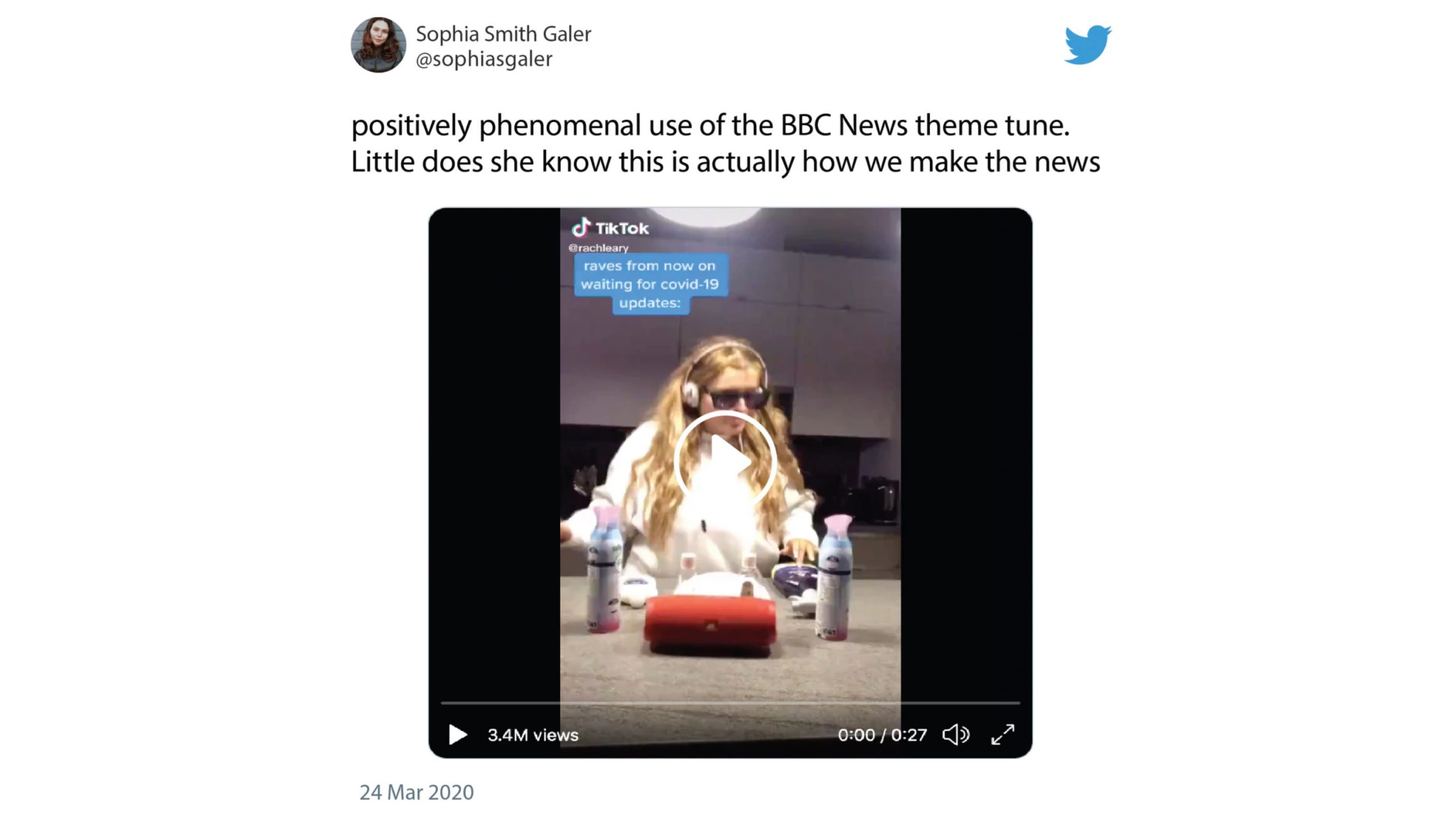
Another shares a TikTok video where a woman pretends to DJ to the BBC News theme music.
Additional tweets will be considered for acquisition later this year.
Advertisement
The initiative, called Going Viral, is part of the museum’s wider Collecting Covid project, which was launched in April 2020 to reflect Londoners’ lives during the Covid-19 crisis. Its work so far has included recording testimonies of people’s dreams and asking Muslim families and young people to document their experiences of Ramadan.
Foteini Aravini, the museum’s digital curator, said: “Humour and sarcasm have always been an inherent characteristic of Londoners, but especially employed as coping mechanisms throughout history in times of crisis and hardship.
“The Covid-19 pandemic has been no different with imagination, creativity and wit uniting us in ways never seen before while we’re physically separated by social distancing measures.”
Going Viral follows research from Twitter in August into behaviours that had emerged or accelerated during the lockdown. Findings included a 60% rise in usage of the crying face emoji, a 23% growth in terms like sunset, landscape and wildlife, and a 77% increase in tweets about recipes and food inspiration.
David Wilding, head of planning at Twitter UK, said: “In a year where we were forced to be physically distant, people came together virtually on Twitter. These tweets collected by the Museum of London capture how a sense of humour and a true sense of community helped people in London cope and help each other.”