The London Metropolitan Archives (LMA) has run the LGBT (Lesbian, Gay, Bisexual and Transgender) history and archives conference since 2003.
Ajamu, artist and activist, has been a significant contributor over the years and is a community historian, collecting and eventually depositing material relating to black LGBT histories at the archive.
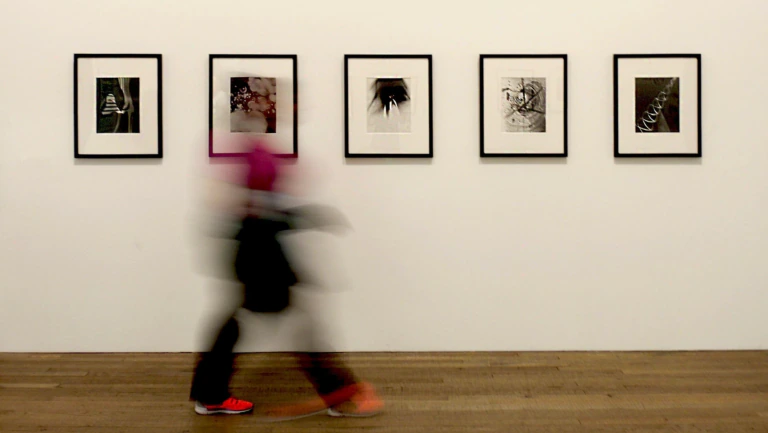
His exhibition, Fierce, is currently on at the Guildhall Art Gallery and is a series of photographic portraits of black British-born LGBT and queer people.
His beautiful portraits are created using 19th-century printing techniques, a symbolic counterpoint to the plethora of disposable digital images. The connection between Ajamu’s portraits and the significance of archives is obvious.
Archives care for the past, but can be powerful arbiters, alert to new movements and ideas, and the information they create a witness to history, caught moments in time.
Fierce is powerful because, it too, captures a moment in time. The challenging gaze of the subjects allows us to pause and consider the individual and their contribution to evolving histories.
Importantly, the portraits create a powerful presence – young representatives of black LGBTQ culture juxtaposed with Victorian paintings, representations of another world with roots in enslavement, colonialism and the criminalisation of queer.
Bringing Brave New World, the 10th LGBT history and archives conference to the Guildhall in February, to run alongside Fierce also seemed an obvious move.
The conference discussed policy, sociological debates, national collecting strategies, community initiatives and cultural identity. All well and good, but the real significance of the day was that the grand and formal Old Library space was occupied by people who are proud and aware of personal and collective LGBT histories and full of energy and enthusiasm for alternatives to dominant culture and the status quo.
The fact that these two events, as part of LGBT history month, were hosted in the heart of the City of London shows significant social progress, and the ways in which history can empower individuals and groups and how cultural expression is a powerful engine of change and new thinking.
But LGBT history doesn’t just happen in February. Although special events help raise awareness, the “months” can create a kind of cultural ghetto, where otherness is briefly acknowledged and another thing to tick on a list of professional obligations.
History is complex and interrelated and the relationships between particular areas of interest need to be seen clearly.
There is an obligation to integrate LGBT stories into the mainstream as part of the wider history. It will be interesting to see what happens next in our fierce, brave new world.
Jan Pimblett is the principal development officer at the London Metropolitan Archives.
Ajamu’s Fierce is at the Guildhall Art Gallery, London, until 14 April
Ajamu, artist and activist, has been a significant contributor over the years and is a community historian, collecting and eventually depositing material relating to black LGBT histories at the archive.
His exhibition, Fierce, is currently on at the Guildhall Art Gallery and is a series of photographic portraits of black British-born LGBT and queer people.
His beautiful portraits are created using 19th-century printing techniques, a symbolic counterpoint to the plethora of disposable digital images. The connection between Ajamu’s portraits and the significance of archives is obvious.
Archives care for the past, but can be powerful arbiters, alert to new movements and ideas, and the information they create a witness to history, caught moments in time.
Fierce is powerful because, it too, captures a moment in time. The challenging gaze of the subjects allows us to pause and consider the individual and their contribution to evolving histories.
Importantly, the portraits create a powerful presence – young representatives of black LGBTQ culture juxtaposed with Victorian paintings, representations of another world with roots in enslavement, colonialism and the criminalisation of queer.
Bringing Brave New World, the 10th LGBT history and archives conference to the Guildhall in February, to run alongside Fierce also seemed an obvious move.
The conference discussed policy, sociological debates, national collecting strategies, community initiatives and cultural identity. All well and good, but the real significance of the day was that the grand and formal Old Library space was occupied by people who are proud and aware of personal and collective LGBT histories and full of energy and enthusiasm for alternatives to dominant culture and the status quo.
The fact that these two events, as part of LGBT history month, were hosted in the heart of the City of London shows significant social progress, and the ways in which history can empower individuals and groups and how cultural expression is a powerful engine of change and new thinking.
But LGBT history doesn’t just happen in February. Although special events help raise awareness, the “months” can create a kind of cultural ghetto, where otherness is briefly acknowledged and another thing to tick on a list of professional obligations.
History is complex and interrelated and the relationships between particular areas of interest need to be seen clearly.
There is an obligation to integrate LGBT stories into the mainstream as part of the wider history. It will be interesting to see what happens next in our fierce, brave new world.
Jan Pimblett is the principal development officer at the London Metropolitan Archives.
Ajamu’s Fierce is at the Guildhall Art Gallery, London, until 14 April