The Museum of Liverpool has won the Council of Europe Museum Prize for 2013 for its contribution to the understanding of European cultural heritage.
This is third time the prize has been awarded to a UK museum in its 35-year history.
The Council of Europe praised the Museum of Liverpool’s “exemplary recognition of human rights in museum practice”.
"The museum traces the social, economic and political history of a city which is one of the most socially diverse in Britain,” it said in a statement. “It promotes mutual respect between ethnically and socially diverse parts of the society, addresses human rights through contemporary debates and dialogue and maintains an open and inclusive policy aimed at bridging cultures in every aspect of its work.”
The Museum of Liverpool’s work with a diverse audiences and local communities was also noted by the council.
David Fleming, director of National Museums Liverpool, said: "The story of Liverpool is a fantastic one, with all its highs and lows. Our aim was to create the best city museum in the world and this award gives us international acclaim."
The Museum of Liverpool, which opened last July, will receive a Joan Miro bronze statuette to display for a year.
The prize is decided by the Committee on Culture, Science, Education and Media of the Council of Europe Parliamentary Assembly from a shortlist of organisations put together by an independent jury of the European Museum Forum.
Previous winners include the Rautenstrauch-Joest-Museum, Germany (2012); Portimão Museum in Portugal (2010); and Zeeuws Museum in the Netherlands (2009).
Elsewhere, the Science Museum in London has won first prize in an exhibition competition for large displays for Codebreaker: Alan Turing’s Life and Legacy.
The British Society for the History of Science Outreach and Education Committee, which made the award, said the standard of entries was extremely high. Second place went to the Berlin Museum of Medical History at Charité for its exhibition Tracing Life.
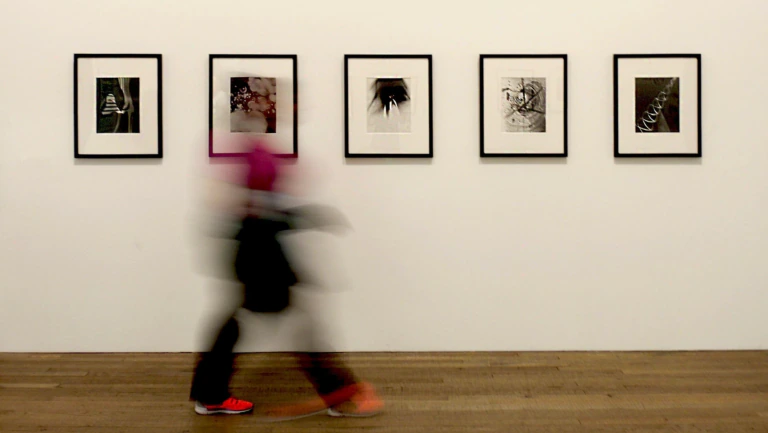
In the small exhibition category, the Royal College of Physicians in London won first prize for Curious Anatomys (ends 31 December), while joint second place went to National Museums Scotland in Edinburgh for Reconstructing Lives, and the Museum of Art at the University of Virginia for Making Science Visible: The Photography of Berenice Abbott.
This is third time the prize has been awarded to a UK museum in its 35-year history.
The Council of Europe praised the Museum of Liverpool’s “exemplary recognition of human rights in museum practice”.
"The museum traces the social, economic and political history of a city which is one of the most socially diverse in Britain,” it said in a statement. “It promotes mutual respect between ethnically and socially diverse parts of the society, addresses human rights through contemporary debates and dialogue and maintains an open and inclusive policy aimed at bridging cultures in every aspect of its work.”
The Museum of Liverpool’s work with a diverse audiences and local communities was also noted by the council.
David Fleming, director of National Museums Liverpool, said: "The story of Liverpool is a fantastic one, with all its highs and lows. Our aim was to create the best city museum in the world and this award gives us international acclaim."
The Museum of Liverpool, which opened last July, will receive a Joan Miro bronze statuette to display for a year.
The prize is decided by the Committee on Culture, Science, Education and Media of the Council of Europe Parliamentary Assembly from a shortlist of organisations put together by an independent jury of the European Museum Forum.
Previous winners include the Rautenstrauch-Joest-Museum, Germany (2012); Portimão Museum in Portugal (2010); and Zeeuws Museum in the Netherlands (2009).
Elsewhere, the Science Museum in London has won first prize in an exhibition competition for large displays for Codebreaker: Alan Turing’s Life and Legacy.
The British Society for the History of Science Outreach and Education Committee, which made the award, said the standard of entries was extremely high. Second place went to the Berlin Museum of Medical History at Charité for its exhibition Tracing Life.
In the small exhibition category, the Royal College of Physicians in London won first prize for Curious Anatomys (ends 31 December), while joint second place went to National Museums Scotland in Edinburgh for Reconstructing Lives, and the Museum of Art at the University of Virginia for Making Science Visible: The Photography of Berenice Abbott.