A new venue due to open at the Science Museum in London next June, which will showcase the photography collection from Bradford’s National Media Museum, has received a mixed reaction from photography specialists.
The project, entitled Media Space, comprises a 500 sq m exhibition area that will host two paid exhibitions annually, and a 290 sq m studio space that will accommodate a series of free installations.
The £4m project, a collaboration with the National Media Museum, which is part of the Science Museum Group, has been subject to delays and concerns over funding.
Earlier this year Charlotte Cotton, the project’s creative director, resigned leaving a question mark over the direction of the project.
Hannah Redler, the Science Museum’s head of arts programmes, has since been appointed head of Media Space.
Rodrigo Orrantia, an art historian and lecturer at Middlesex University, said: “Redler will be faced with the same conundrum as Cotton, having to cater for a wider audience and a demanding and specialised one at the same time, as well as meeting sponsors’ expectations.
“We will have to wait and see if this project can develop its own identity, and not just be a media pick’n’mix.”
Camilla Brown, former senior curator at the Photographers’ Gallery in London, said: “Media Space is a welcome addition to London’s photography scene. We don’t need more of the same types of photography shows in London, but informed and insightful explorations of the different sides of photography in a commercial, historic and contemporary context.”
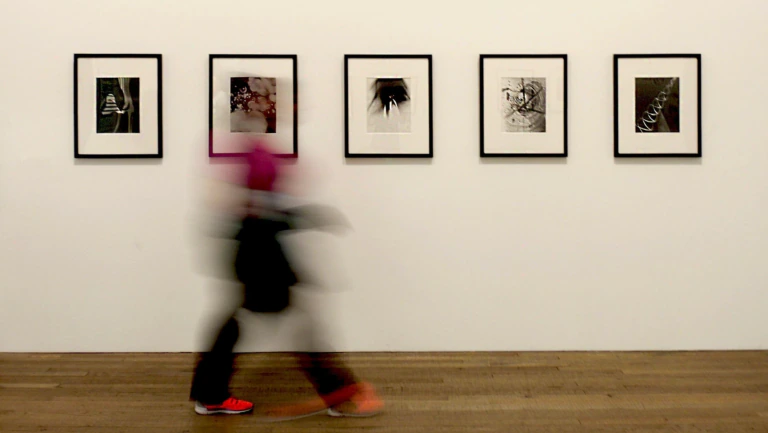
Media Space’s first exhibition, Revelations: Experiments in Photography, which opens in June, will feature historical photos from the collections of the National Media Museum and Science Museum.
The 80-piece exhibition includes works by contemporary photographers inspired by scientific photos taken between 1850 and 1920.
The £4m cost of the project has been met through corporate sponsorship, private donations and fundraising initiatives.
The Dana and Albert R Broccoli Foundation is one of the main benefactors, while Virgin Media will sponsor the studio space for three years.
The project, entitled Media Space, comprises a 500 sq m exhibition area that will host two paid exhibitions annually, and a 290 sq m studio space that will accommodate a series of free installations.
The £4m project, a collaboration with the National Media Museum, which is part of the Science Museum Group, has been subject to delays and concerns over funding.
Earlier this year Charlotte Cotton, the project’s creative director, resigned leaving a question mark over the direction of the project.
Hannah Redler, the Science Museum’s head of arts programmes, has since been appointed head of Media Space.
Rodrigo Orrantia, an art historian and lecturer at Middlesex University, said: “Redler will be faced with the same conundrum as Cotton, having to cater for a wider audience and a demanding and specialised one at the same time, as well as meeting sponsors’ expectations.
“We will have to wait and see if this project can develop its own identity, and not just be a media pick’n’mix.”
Camilla Brown, former senior curator at the Photographers’ Gallery in London, said: “Media Space is a welcome addition to London’s photography scene. We don’t need more of the same types of photography shows in London, but informed and insightful explorations of the different sides of photography in a commercial, historic and contemporary context.”
Media Space’s first exhibition, Revelations: Experiments in Photography, which opens in June, will feature historical photos from the collections of the National Media Museum and Science Museum.
The 80-piece exhibition includes works by contemporary photographers inspired by scientific photos taken between 1850 and 1920.
The £4m cost of the project has been met through corporate sponsorship, private donations and fundraising initiatives.
The Dana and Albert R Broccoli Foundation is one of the main benefactors, while Virgin Media will sponsor the studio space for three years.