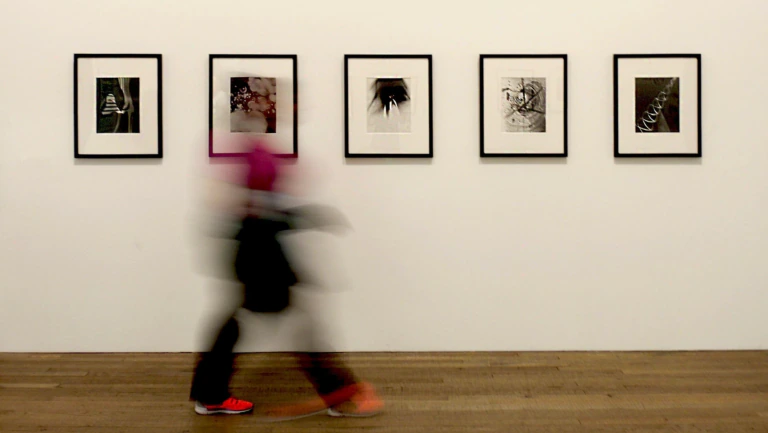
Tate Modern in London has announced a new programme of acquisitions of modern and contemporary African art as part of its wider moves to further broaden its collecting beyond Europe and North America.
The gallery has an annual acquisitions budget of £4m-5m, and has earmarked just under £2m on a number of international initiatives in Africa, Latin America, the Middle East and Asia.
At a briefing yesterday, Tate director Nicholas Serota announced a number of new acquisitions from Africa including a Portrait of a Man by Nigerian artist Aina Onabolu, who is considered the first modernist painter working in West Africa at the turn of the 20th century.
Next summer, Tate Modern will dedicate a wing of its galleries to two contemporary African artists, Meschac Gaba (b.1961, Benin) and Ibrahim El-Salahi (b.1930, Sudan).
A two-year project entitled Across the Board will consist of a series of events featuring emerging African artists, including performances in The Tanks and in three African cities – Accra in Ghana, Douala in Cameroon and Lagos in Nigeria.
The projects and acquisitions are part of a partnership between Tate and Guaranty Trust Bank. This has also created a new curatorial post focusing on African art.
Chris Dercon, director of Tate Modern, said: “Tate is committed to building a truly international collection, showing African artists as part of a global history of modern and contemporary art.”
Tate Modern has also announced new international networks in the Middle East, Latin America and Asia. This includes a curatorial partnership in Brazil and a museum training programme to support the National Museum of Oman.
Two new acquisition committees have also been launched; one will focus on Russia and Eastern Europe, the other on South Asia.
Serota said that new acquisitions will be integrated within displays rather than used to illustrate pockets of work. The gallery’s international acquisitions policy focuses on historically important work from the 20th century; collections of work around established artistic practice; and works from emerging artists.
Serota denied that acquiring artworks from Africa and elsewhere was about “removing” cultural heritage from its country of origin: “Art cannot be defined by national geographic boundaries.”
The gallery has an annual acquisitions budget of £4m-5m, and has earmarked just under £2m on a number of international initiatives in Africa, Latin America, the Middle East and Asia.
At a briefing yesterday, Tate director Nicholas Serota announced a number of new acquisitions from Africa including a Portrait of a Man by Nigerian artist Aina Onabolu, who is considered the first modernist painter working in West Africa at the turn of the 20th century.
Next summer, Tate Modern will dedicate a wing of its galleries to two contemporary African artists, Meschac Gaba (b.1961, Benin) and Ibrahim El-Salahi (b.1930, Sudan).
A two-year project entitled Across the Board will consist of a series of events featuring emerging African artists, including performances in The Tanks and in three African cities – Accra in Ghana, Douala in Cameroon and Lagos in Nigeria.
The projects and acquisitions are part of a partnership between Tate and Guaranty Trust Bank. This has also created a new curatorial post focusing on African art.
Chris Dercon, director of Tate Modern, said: “Tate is committed to building a truly international collection, showing African artists as part of a global history of modern and contemporary art.”
Tate Modern has also announced new international networks in the Middle East, Latin America and Asia. This includes a curatorial partnership in Brazil and a museum training programme to support the National Museum of Oman.
Two new acquisition committees have also been launched; one will focus on Russia and Eastern Europe, the other on South Asia.
Serota said that new acquisitions will be integrated within displays rather than used to illustrate pockets of work. The gallery’s international acquisitions policy focuses on historically important work from the 20th century; collections of work around established artistic practice; and works from emerging artists.
Serota denied that acquiring artworks from Africa and elsewhere was about “removing” cultural heritage from its country of origin: “Art cannot be defined by national geographic boundaries.”