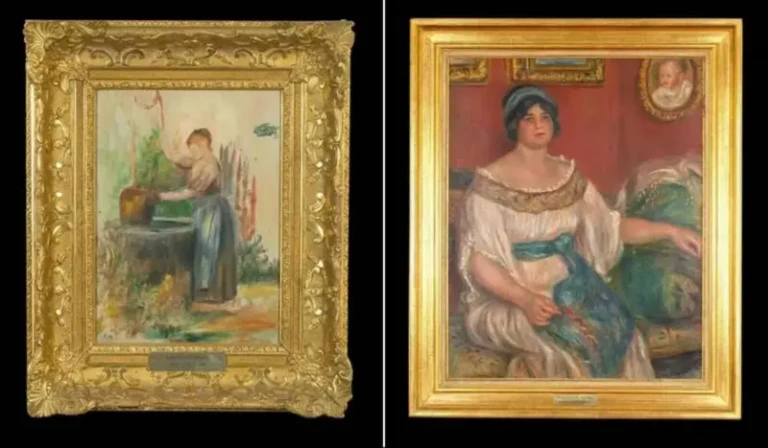
An artwork believed to be an Augustus Charles Pugin watercolour, being sold at auction by Bolton Council, has seen its estimate drop by more than £14,000 after it was reclassified as a print.
There is also a question over whether the artist had a hand in colouring the work, or whether the print was in fact produced after his death.
Bolton Council is selling 35 works from its museum collections through Bonhams auction house, in order to raise money to help fund new storage facilities. The sale includes what was originally thought to be a Pugin watercolour of the Royal Pavilion in Brighton, entitled The Yellow Drawing Room.
The work’s sale price was initially estimated by Bonhams at between £10,000 and £15,000. However, examination of the work by Brighton Museum revealed it was a coloured print and not an original watercolour.
As a result of the reclassification, the work's estimate has dropped to between £600 and £800.
A spokesman for Bonhams said the cataloguing of work had been amended to reflect this. He added: “After close comparison of this piece with works in the possession of Brighton Museum, it was established that the watercolour is over an etched outline, only discernible under strong magnification. In our view the possibility still remains that the watercolour itself was applied by Pugin."
The work itself has no print mark, making dating it difficult. But experts at Brighton Museum have suggested that it could have been produced in 1836 – four years after the artist’s death – as it has similar print marks to a non-coloured print in its collection.
A spokesman for Bolton Council said: “The picture came into our possession in 1947 and we had no reason to suspect it wasn’t a watercolour due to the provenance that accompanied it. We sought independent advice at the time and opinion was that it was a Pugin watercolour.
"The collection of paintings being offered for sale were studied by a group of auction houses bidding for the tender and often discrepancies do not come to light until further, detailed inspection.”
ETHICS COMMITTEE
Back in April, Bolton Council was forced to withdraw a painting by Bolton-raised artist Alfred Heaton Cooper from the sale after the Museums Association (MA) Ethics Committee expressed concerns that the painting did not fall outside the museum’s stated core collection of Egyptology, post-war 20th century British art and items documenting Bolton's history.
Overall, the committee ruled that Bolton’s disposal would significantly improve the long-term public benefit of the remaining collection. But it also highlighted several concerns about the processes Bolton followed – including that it had not undertaken adequate consultation.
Responding to the reclassification of the Pugin from a watercolour to a print, Maurice Davies, head of policy and communication at the MA, said: “The misattribution of this item suggests there may be other weaknesses in Bolton's processes. If Bolton has consulted properly – as we wanted – this could have been spotted earlier.
"You'd expect museums to take expert advice on anything they were going to dispose of. That would almost always mean external advice from someone independent.”
Davies said there was still time for Bolton Council to delay the sale of works from its collection. However, a council spokeswoman said it intended to continue as planned.
There is also a question over whether the artist had a hand in colouring the work, or whether the print was in fact produced after his death.
Bolton Council is selling 35 works from its museum collections through Bonhams auction house, in order to raise money to help fund new storage facilities. The sale includes what was originally thought to be a Pugin watercolour of the Royal Pavilion in Brighton, entitled The Yellow Drawing Room.
The work’s sale price was initially estimated by Bonhams at between £10,000 and £15,000. However, examination of the work by Brighton Museum revealed it was a coloured print and not an original watercolour.
As a result of the reclassification, the work's estimate has dropped to between £600 and £800.
A spokesman for Bonhams said the cataloguing of work had been amended to reflect this. He added: “After close comparison of this piece with works in the possession of Brighton Museum, it was established that the watercolour is over an etched outline, only discernible under strong magnification. In our view the possibility still remains that the watercolour itself was applied by Pugin."
The work itself has no print mark, making dating it difficult. But experts at Brighton Museum have suggested that it could have been produced in 1836 – four years after the artist’s death – as it has similar print marks to a non-coloured print in its collection.
A spokesman for Bolton Council said: “The picture came into our possession in 1947 and we had no reason to suspect it wasn’t a watercolour due to the provenance that accompanied it. We sought independent advice at the time and opinion was that it was a Pugin watercolour.
"The collection of paintings being offered for sale were studied by a group of auction houses bidding for the tender and often discrepancies do not come to light until further, detailed inspection.”
ETHICS COMMITTEE
Back in April, Bolton Council was forced to withdraw a painting by Bolton-raised artist Alfred Heaton Cooper from the sale after the Museums Association (MA) Ethics Committee expressed concerns that the painting did not fall outside the museum’s stated core collection of Egyptology, post-war 20th century British art and items documenting Bolton's history.
Overall, the committee ruled that Bolton’s disposal would significantly improve the long-term public benefit of the remaining collection. But it also highlighted several concerns about the processes Bolton followed – including that it had not undertaken adequate consultation.
Responding to the reclassification of the Pugin from a watercolour to a print, Maurice Davies, head of policy and communication at the MA, said: “The misattribution of this item suggests there may be other weaknesses in Bolton's processes. If Bolton has consulted properly – as we wanted – this could have been spotted earlier.
"You'd expect museums to take expert advice on anything they were going to dispose of. That would almost always mean external advice from someone independent.”
Davies said there was still time for Bolton Council to delay the sale of works from its collection. However, a council spokeswoman said it intended to continue as planned.