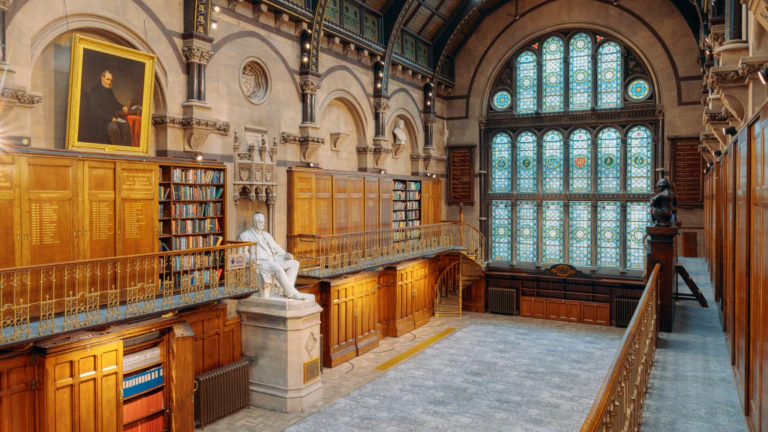
A £10m windfall for the Ulster Museum suggests that good times are ahead for museums in Northern Ireland. The allocation by the province's finance minister, Ian Pearson, is to upgrade the impressive 1920s neo-classical building in Belfast's Botanic Gardens, which is the most prestigious of the five facilities owned and managed by the Museums and Galleries of Northern Ireland (Magni) - the body responsible for the province's national collections.
The money is the first major sign of a reward for intensive and prolonged lobbying of ministers and the Department of Culture, Arts and Leisure (DCAL) by Magni for its development plan, which seeks to go far beyond merely renovating the now rather dilapidated Ulster Museum.
And the new funding does address the criticisms levelled by the Northern Ireland Museums Council that insufficient attention, and funds, had been given to the museum's buildings.
Magni is also currently responsible for the Ulster Folk and Transport Museum at Holywood; the W5 (who, what, where, when and why) science museum in Belfast's Odyssey centre; the Ulster American Folk Park, just outside Omagh; and the Armagh County Museum.
Magni - which declined to talk to Museums Journal - has long-harboured ambitions to create a sixth museum dedicated to Northern Ireland's involvement in sea and air travel. The planned location is the soon-to-be-created Titanic Quarter of Belfast, near the Harland & Wolff shipyards and the Shorts aircraft factory.
Such a facility would at last properly draw on Belfast's Titanic connection - the doomed ship was built there - and the hope is that it could become a major tourist draw. This might particularly appeal to American visitors, especially now that a direct air link between Belfast and the US is about to be created. Indeed, peace has opened up Northern Ireland as a tourism destination, in spite of 9/11, and visitor numbers are increasing rapidly.
But not everything is well in the broader museum and heritage sector. While there is a steady flow of new facilities opening, many have struggled and some have closed. Recently Omagh District Council gave up running the Ulster History Park, selling the site to a private developer to run. Derry City Council has closed its Foyle Valley Railway Museum and several more visitor centres are rumoured to be on the brink of collapse.
It seems that while Magni has been successful in attracting a healthy 762,000 visitors to its facilities in 2003, the smaller heritage centres have been over-optimistic in their visitor number projections. And Northern Ireland's 26 district councils - which have fewer responsibilities and less funds than their British equivalents - have had to reassess their ability to provide ongoing subsidies for heritage centres, which were expected to boost tourism.
Chris Bailey, the chief executive of the Northern Ireland Museums Council, believes it is essential to differentiate between museums and heritage centres. While he lobbies hard for more - and, he argues, more realistic - financial support for local museums, he seems less willing to defend the growth in the heritage centre sector.
'There is not yet a clear enough relationship between museums and heritage centres,' he says. Bailey adds that while £17.5m annually goes into support for museums in Northern Ireland, some £24m is spent on heritage centres.
It is easy to see why the economics here may not be right. Figures placed in the House of Commons' library as a result of a parliamentary question reveal that £125m was spent by the government on 115 visitor centres in Northern Ireland between 1990 and early 2004. Yet some of the centres had hardly any visitors.
The Burren Heritage Centre at Warrenpoint, near the southern border with the Republic of Ireland, came bottom of the list, with just 107 people visiting the exhibition in 1998, despite public funding of slightly under £100,000. Tyrone's Donaghmore Heritage Centre attracted 150 visitors in 2003, having been given £90,000 of state money.
Another four visitor centres had fewer than 40 people visiting each week, despite funding of between £100,000 and £250,000. According to the published statistics, more than half of total funds went to just two 'Northern Ireland' facilities - the Ulster Folk and Transport Museum and the Ulster Memorial Tower, which is actually in the Somme in France.
Despite many of the existing heritage centres being financial failures, there are plans to provide new facilities to capitalise on the province's successes. The largest number of visitors go to the Giant's Causeway, the only World Heritage Site in Northern Ireland. It is currently having its visitor centre rebuilt, following a fire. And there has been a steady growth in recent years in the number of 'Troubles tourists'.
It is widely expected that a 'conflict museum' will be announced in the near future, but there is no consensus on where this should be. Republicans want it based in the remaining H-Block in the old Maze prison, which is being redeveloped into a giant commercial centre with a new sports stadium at its centre.
The Maze has historical significance as the venue for the hunger strikes of Bobby Sands and others, stimulating equally strong but contrasting reactions among republicans and unionists. Consequently, unionists argue for Belfast's historic Crumlin Road jail to be the site for the new museum. A likely political fudge is that both locations will be given the go-ahead.
Already, places made famous during the 30 years of conflict - such as West Belfast and Derry's Bogside - have a steady flow of visitors from many countries. This has led to a Belfast entrepreneur buying old army vehicles, which, from the new tourist season, will take visitors around the former riot hotspots.
And in Derry there are well-developed plans to establish a museum about the self-proclaimed 'Free Derry' of the Troubles, which will also serve as a memory to the 14 people killed as a result of army gunfire on Bloody Sunday.
Derry City Council also wants to have its City Walls - the oldest intact city walls in the British Isles - declared a World Heritage Site. This should be a boost to the city's Tower Museum, sited on the edge of the walls and soon to reopen after months of refurbishment to include a major collection of artefacts discovered in Armada boats that sank just off the coast near Derry.
If the museums being developed in Derry prove successful, they will demonstrate that there is life for museums outside Greater Belfast. But the prospects for Northern Ireland's smaller heritage centres are nowhere near so bright.
The money is the first major sign of a reward for intensive and prolonged lobbying of ministers and the Department of Culture, Arts and Leisure (DCAL) by Magni for its development plan, which seeks to go far beyond merely renovating the now rather dilapidated Ulster Museum.
And the new funding does address the criticisms levelled by the Northern Ireland Museums Council that insufficient attention, and funds, had been given to the museum's buildings.
Magni is also currently responsible for the Ulster Folk and Transport Museum at Holywood; the W5 (who, what, where, when and why) science museum in Belfast's Odyssey centre; the Ulster American Folk Park, just outside Omagh; and the Armagh County Museum.
Magni - which declined to talk to Museums Journal - has long-harboured ambitions to create a sixth museum dedicated to Northern Ireland's involvement in sea and air travel. The planned location is the soon-to-be-created Titanic Quarter of Belfast, near the Harland & Wolff shipyards and the Shorts aircraft factory.
Such a facility would at last properly draw on Belfast's Titanic connection - the doomed ship was built there - and the hope is that it could become a major tourist draw. This might particularly appeal to American visitors, especially now that a direct air link between Belfast and the US is about to be created. Indeed, peace has opened up Northern Ireland as a tourism destination, in spite of 9/11, and visitor numbers are increasing rapidly.
But not everything is well in the broader museum and heritage sector. While there is a steady flow of new facilities opening, many have struggled and some have closed. Recently Omagh District Council gave up running the Ulster History Park, selling the site to a private developer to run. Derry City Council has closed its Foyle Valley Railway Museum and several more visitor centres are rumoured to be on the brink of collapse.
It seems that while Magni has been successful in attracting a healthy 762,000 visitors to its facilities in 2003, the smaller heritage centres have been over-optimistic in their visitor number projections. And Northern Ireland's 26 district councils - which have fewer responsibilities and less funds than their British equivalents - have had to reassess their ability to provide ongoing subsidies for heritage centres, which were expected to boost tourism.
Chris Bailey, the chief executive of the Northern Ireland Museums Council, believes it is essential to differentiate between museums and heritage centres. While he lobbies hard for more - and, he argues, more realistic - financial support for local museums, he seems less willing to defend the growth in the heritage centre sector.
'There is not yet a clear enough relationship between museums and heritage centres,' he says. Bailey adds that while £17.5m annually goes into support for museums in Northern Ireland, some £24m is spent on heritage centres.
It is easy to see why the economics here may not be right. Figures placed in the House of Commons' library as a result of a parliamentary question reveal that £125m was spent by the government on 115 visitor centres in Northern Ireland between 1990 and early 2004. Yet some of the centres had hardly any visitors.
The Burren Heritage Centre at Warrenpoint, near the southern border with the Republic of Ireland, came bottom of the list, with just 107 people visiting the exhibition in 1998, despite public funding of slightly under £100,000. Tyrone's Donaghmore Heritage Centre attracted 150 visitors in 2003, having been given £90,000 of state money.
Another four visitor centres had fewer than 40 people visiting each week, despite funding of between £100,000 and £250,000. According to the published statistics, more than half of total funds went to just two 'Northern Ireland' facilities - the Ulster Folk and Transport Museum and the Ulster Memorial Tower, which is actually in the Somme in France.
Despite many of the existing heritage centres being financial failures, there are plans to provide new facilities to capitalise on the province's successes. The largest number of visitors go to the Giant's Causeway, the only World Heritage Site in Northern Ireland. It is currently having its visitor centre rebuilt, following a fire. And there has been a steady growth in recent years in the number of 'Troubles tourists'.
It is widely expected that a 'conflict museum' will be announced in the near future, but there is no consensus on where this should be. Republicans want it based in the remaining H-Block in the old Maze prison, which is being redeveloped into a giant commercial centre with a new sports stadium at its centre.
The Maze has historical significance as the venue for the hunger strikes of Bobby Sands and others, stimulating equally strong but contrasting reactions among republicans and unionists. Consequently, unionists argue for Belfast's historic Crumlin Road jail to be the site for the new museum. A likely political fudge is that both locations will be given the go-ahead.
Already, places made famous during the 30 years of conflict - such as West Belfast and Derry's Bogside - have a steady flow of visitors from many countries. This has led to a Belfast entrepreneur buying old army vehicles, which, from the new tourist season, will take visitors around the former riot hotspots.
And in Derry there are well-developed plans to establish a museum about the self-proclaimed 'Free Derry' of the Troubles, which will also serve as a memory to the 14 people killed as a result of army gunfire on Bloody Sunday.
Derry City Council also wants to have its City Walls - the oldest intact city walls in the British Isles - declared a World Heritage Site. This should be a boost to the city's Tower Museum, sited on the edge of the walls and soon to reopen after months of refurbishment to include a major collection of artefacts discovered in Armada boats that sank just off the coast near Derry.
If the museums being developed in Derry prove successful, they will demonstrate that there is life for museums outside Greater Belfast. But the prospects for Northern Ireland's smaller heritage centres are nowhere near so bright.