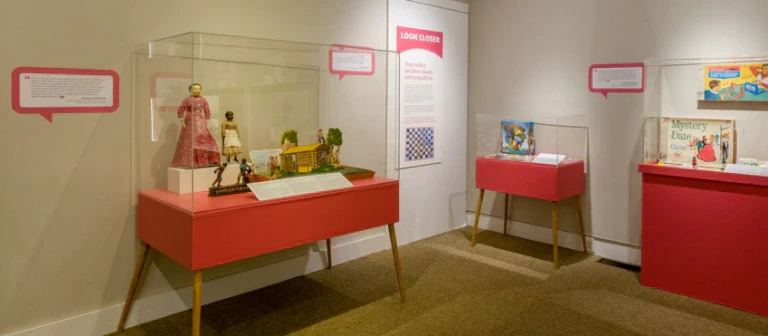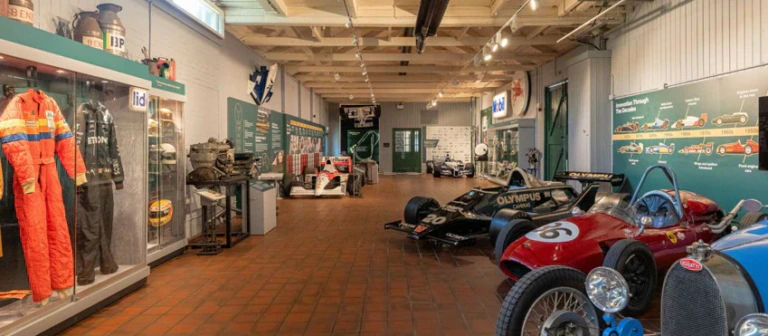
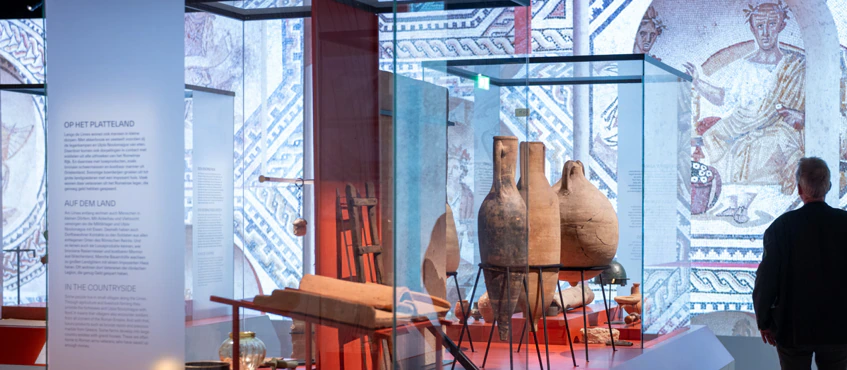
Display cases, whether heavy wooden Victorian cabinets or seamless glass boxes, are a crucial part of how we present, preserve and keep secure the objects and artworks in our care.
For our 125th anniversary edition, Museums Journal is taking a look at how these crucial tools of our trade have evolved in response to the changing purpose and mission of institutions.
One of the key developments is that display cases are no longer seen as merely “presentation furniture”, according to Christiane Düffort, the co-director of German-based display case manufacturer Vitrinen-und Glasbau Reier.
Today, cases offer museums active systems for preventive conservation, integrating climate stability, low-emission materials and lighting quality.
Sustainability
Display cases highlight a wider shift in museum practice and exhibition design, where it has become ever more necessary to demonstrate environmental leadership, says Gavin Ballantine, the managing director of Scottish display case manufacturer Click Netherfield.
Advertisement
“Our challenge is to deliver measurable environmental improvements, without compromising on the performance of the showcase systems,” he says. “It has become a central design principle, alongside performance, conservation, aesthetics and security.
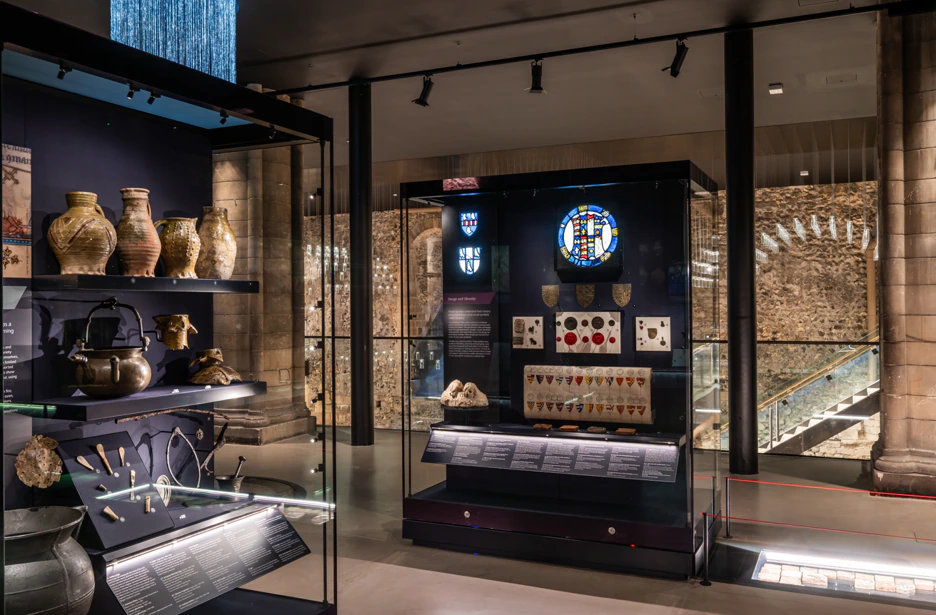
“It has pushed us to question established ways of working; from carbon-conscious material selection and designing for longevity, to reuse and recycling, or analysis of the impact of transportation or delivery.”
The firm recently launched a showcase carbon calculator, which aims to help museums understand the impact of displays and identify opportunities to reduce emissions.
At Bruns, an exhibition designer and maker of display cases based in the Netherlands, a Life Cycle Assessment tool allows the team to assess the environmental impact of different material choices and construction methods. The company is increasingly integrating bio-based and circular materials into display cases, with an ambition to develop display cases that are fully recyclable.
Düffort believes that sustainability begins with longevity. She says: “A well-developed display case should not be a short-lived product, but should be durable, maintainable, repairable and suitable for long-term museum operation. This requirement already influences the choice of materials, the construction, access to technical components, documentation, and cleaning, care and maintenance instructions.”
Advertisement
Protection
For museums, sustainability also means reducing conservation risks: stable conditions, low emissions, efficient LED lighting and durable construction help preserve objects for future generations.
For example, Bruns is developing display cases with advanced passive climate control, integrated lighting and specially designed opening systems for the Bayeux Tapestry Museum in France.
For Masks and Crowns: Court Festival Culture and Representations of Power – a new permanent exhibition at the Staatliche Kunstsammlungen Dresden in the Residenzschloss Dresden – Reier developed, manufactured and installed extensive display cases for a wide variety of sensitive materials. As a result, the display cases had to combine active air circulation, air filtration, anti-reflective safety glass, precise LED lighting and tested low-emission materials.
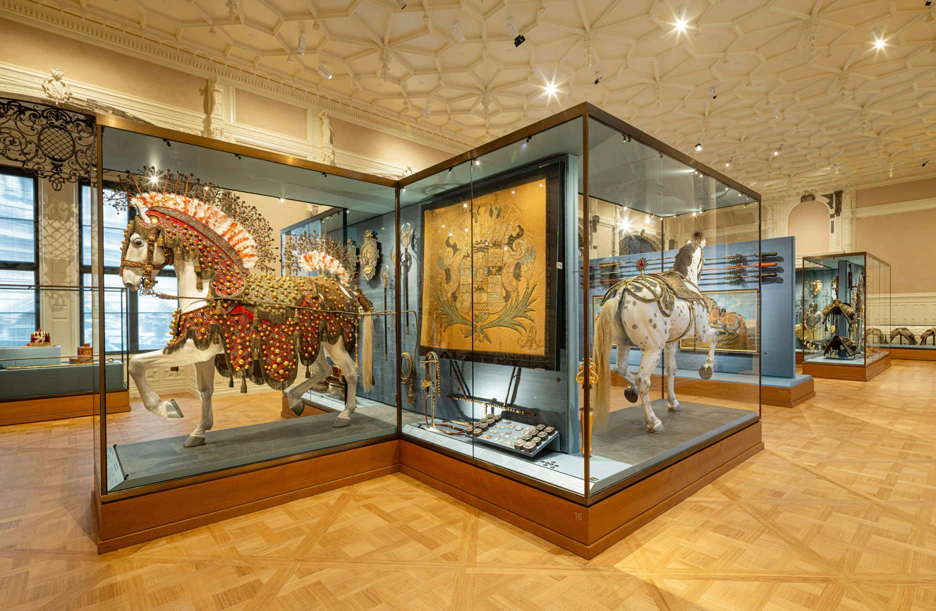
“For us, this project is a strong example of how display case construction, preventive conservation and historic architecture can work together convincingly,” says Düffort.
Advertisement
The team also worked on the redevelopment of Poole Museum in Dorset, which reopened in November 2025. It created a series of individually designed display cases, including some with drawers, others with sliding doors and 16 with hinged doors for archaeological finds and objects recovered from shipwrecks. One case even featured a hydraulic lifting system that raised the viewing hood.
“What makes this project particularly exciting is the interplay between the historic building, maritime cultural heritage and contemporary museum presentation to support an accessible and lively visitor experience,” says Düffort.
But as well as protecting objects from the elements, display cases also present the opportunity to keep precious or valuable objects safe from thieves.
“Following the major museum break-ins of recent years, insurers and museums are calling for more transparent, comparable and verifiable security standards,” says Düffort, who predicts that standards for burglary-resistant display cases published in Germany in 2023 will become increasingly relevant for museums globally.
Technology
Technological developments mean that display cases are increasingly a crucial part of the visitor experience, says Xavier van Houthave, the project director of display cases and lighting at Bruns. Interactive multimedia, applications and digital content are all embedded into cases to enhance the story surrounding an object.
As technology continues to develop at a rapid pace, new tools such as AI offer opportunities to make displays within cases more engaging and interactive.
Click Netherfield’s Ballantine says: “AI-driven content, immersive experiences and digital interpretation can be more dynamic, easier to update and better tailored to different audiences, while the showcase continues to provide a stable environment for the objects themselves.
“Combined with increasingly adaptable, sustainable showcase systems, this creates exciting opportunities for museums to use showcases as the foundation for more-flexible, immersive exhibitions that strengthen visitor engagement while supporting long-term collections care.”
Design
Case design is becoming increasingly minimalist, with conservation measures and technology “invisible” to the average visitor. “The challenge is to integrate these technologies seamlessly without distracting attention from the object itself,” says Van Houthave.
Bruns recently designed circular display cases to display collections of silver at the recently reopened Valkhof Museum in Nijmegen, in the Netherlands. Van Houthave says this “demonstrates how engineering and precision make the objects appear to float without compromising security or collection preservation”.
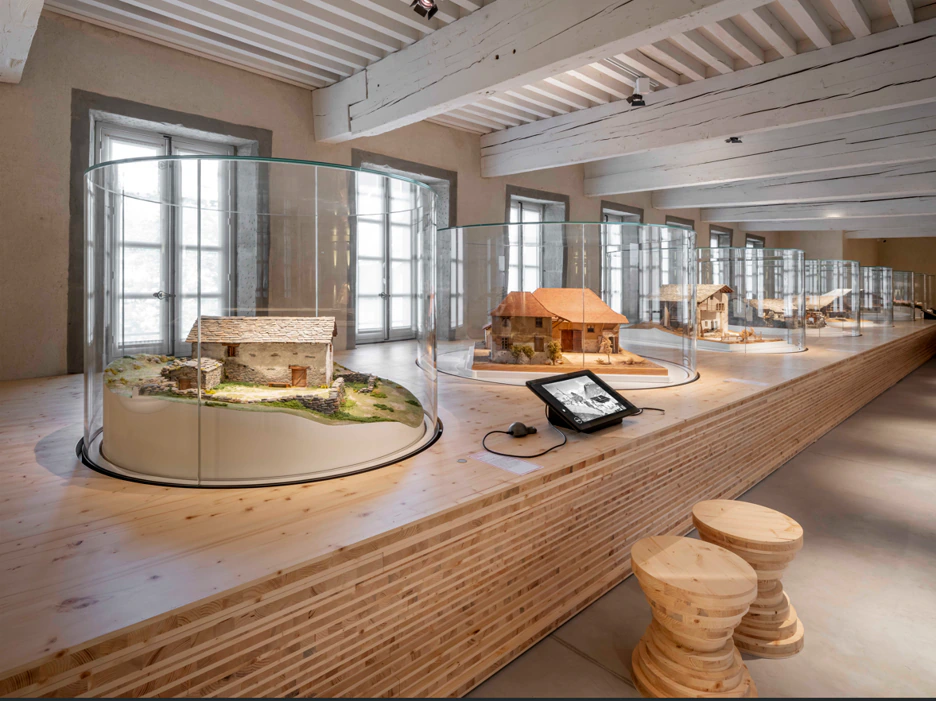
But every museum requires its own approach. An ongoing project at the Sisi Museum in Vienna will see Bruns develop minimalist display cases that provide optimum protection for the collection, while keeping the technology virtually invisible. At the Musée d’Histoire Naturelle de Lille in France, Bruns has been commissioned to develop new display cases while replacing historic ones without altering their original appearance.
Click Netherfield has created bespoke showcases for the Hunterian Museum (see image, p57) at the Royal College of Surgeons in London and Lindisfarne Priory Museum on Holy Island, as well as for the £27.5m redevelopment of Norwich Castle, in Norfolk, which was later shortlisted for the Art Fund Museum of the Year.
“Working closely with the Norwich Museums Service and Haley Sharpe Design, we developed practical installation solutions and precision-engineered showcases that maximise the display of nationally significant objects while remaining visually unobtrusive,” says Ballantine. “Seeing these showcases seamlessly integrated into such an iconic heritage setting, and contributing to the castle’s reopening, makes this one of our proudest recent projects.”
The move by museums towards energy-efficient and compact LED lighting has also influenced showcase design. Micro spotlights can be integrated almost invisibly into cases, ensuring the object remains the centre of attention, says Bruns’ van Houthave.
More-advanced systems incorporate digital controls, allowing light levels, colour temperature and focus to be adjusted to suit different objects and exhibitions, according to Ballantine.
The future
When the curators of the UK’s first museums commissioned showcases, they would have had little idea of how much this humble but practical display furniture would have evolved by 2026.
But what further developments can museums expect to see in the world of display cases in the coming years?
For a start, advanced climate control, continuous monitoring and precise humidity regulation will increasingly become the standard, says Van Houthave. But he also thinks the way in which museums perceive display cases will change.
“We expect display cases to become an even more integrated part of the overall museum concept,” he says. “Display cases, scenography, graphic design, multimedia, lighting and architecture will increasingly be developed together from the earliest design stage to combine storytelling, visitor experience and collection preservation.”
Sadly, it’s unlikely that security concerns will diminish, with cases’ robustness likely to become at least as important as their aesthetics.
“Recent trends – including physical attacks, theft, protests, civil unrest and financial pressures on cultural institutions – have made robust security planning more important than ever,” says Ballantine.
“As budgets for staff and physical security tighten, the showcase enclosure becomes an even more critical final layer of protection, making careful specification and trusted expertise essential.”
Van Houthave agrees: “We are convinced that the future lies in intelligent conservation solutions – low-emission construction, verifiable security, integrated filtration, precise lighting and better monitoring of the display case interior.
“The display case of the future must combine conservation, design and security requirements even more closely. It will protect not only against climate influences, pollutants and light, but also against mechanical attack, unauthorised access and theft risks.
“At the same time, the best display case should remain visually restrained. Its purpose is to protect the object, support the curatorial concept and allow visitors to experience cultural heritage clearly, safely and as undisturbed as possible.”
Best-case scenario
“I beg leave to remark that the incentive for occupying myself with the construction of tightly fitting museum cases was simply because of the filthy dust and greasy soot penetrating everywhere and spoiling everything in Dresden, due to the cheap, soft, coal smoke permitted to be burnt without smoke abatement.”
This was how AB Meyer described his motivation for being so interested in display cases in his article about the topic published in the January 1907 issue of Museums Journal.
While “cheap, soft coal” is less of an issue now, many of the concerns Meyer outlined about display cases will probably chime with today’s museum professionals – namely cost, performance, safety, appearance and security.
There was one key aspect on which Meyer was definite – metal was preferable to wood, despite the higher price. He left little doubt in the minds of the readers as to his view, writing that there were “no drawbacks whatever with metal cases, at least I do not see them”.
In light of his fervent commitment to them, Meyer seemed baffled by objections to metal cases, including arguments that they were ugly.
“No one who has seen the fine metal cases, for instance at Manchester museum and the Liverpool museum, will call them ugly,” he wrote. “With as much reason one could generalise that ‘wooden cases are ugly’, whereas we know that there exist handsome wooden cases, as well as ugly ones. Generally, as to wooden museum cases, I would say: ‘Wood should be expelled. It is clumsy, distracts the eye from the exhibits, constantly undergoes alterations, therefore, again and again requiring repairs, nor does it protect objects sufficiently.’”
Meyer, who went on to cover case sizes, fittings and lighting in his article, was proven right in his commitment to metal cases, with wooden ones a rare sight in museums today.
The article was one of many published on the topic in Museums Journal over the years, as museums have looked to improve how they care for and display artefacts.
Display case suppliers have also been the backbone of advertisers in Museums Journal for many years, which has provided crucial revenue for the publication.
Many suppliers have come and gone. Whatever happened to companies that have advertised their display cases in the journal over the years including Sage, Libraco, Edmonds and Curtis? We certainly appreciate the showcase companies still with us, such as Bruns, Armour and Glasshaus.
There will no doubt be many more articles on display cases in future editions of Museums Journal, but we hope that you find the ones in this issue useful.
I will leave the last word to Meyer: “Museum cases must not offend by poorness, bad taste or unpleasing forms, they must not obtrude by ornamentation or by clumsiness of their framework. They must not catch the eye in contrast to the exhibits, though, if carefully examined, should satisfy as to solidity of material, correctness of proportion and fineness of execution.
“Considering the price of such good work one must always keep in mind that the case is of permanence and that it is constructed to house valuable contents. The greatest plainness is at the same time the greatest effectiveness.”
Simon Stephens