It’s usual for museums to come across hazards in our working environment – but the way we handle these is not always aligned with general health and safety advice.
At the Museum of Gloucester, as part of our large decant project, we were processing and inventorying collection items, identifying more and more hazards as we were going through.
In the winter of 2025/26, we were able to take part in a training programme, Hazards in Collections: Reducing the Risk, offered by the Museum Development South West (MDSW) with thanks to funding from National Lottery Heritage Fund and Art Fund with support from Arts Council England.
The collaborative project aimed South West museums to identify, make safe, monitor and manage hazardous objects in their collections.
The training covered the following hazards:
- Lead
- Arsenic
- Mercury
- Mould
- Radioactive
- Substances
- Asbestos
- Controlled drugs
- Firearms
- Explosives
- Pressurised containers
- Kinetic objects
- Cellulose nitrate
Advertisement
Originally intended to assist an 40 museums, the amount of interest meant MDSW were able to stretch this to 61 museums.
Through the training programs we learnt a lot about how to identify and mitigate hazards. We were always aware there were potential hazards in the collections, and often use the helpful Hazards in Collections website.
However, the training gave some invaluable advice on how to identify hazards such as highlighting when certain hazardous materials were more popularly used, for example mercury used as a preservative predominantly in the 18th and 19th century for taxidermy and herbariums.
The training also enabled us to speak with other participating museums about the hazards that they encounter and how they handled these, giving us case studies and examples to work on as a team.
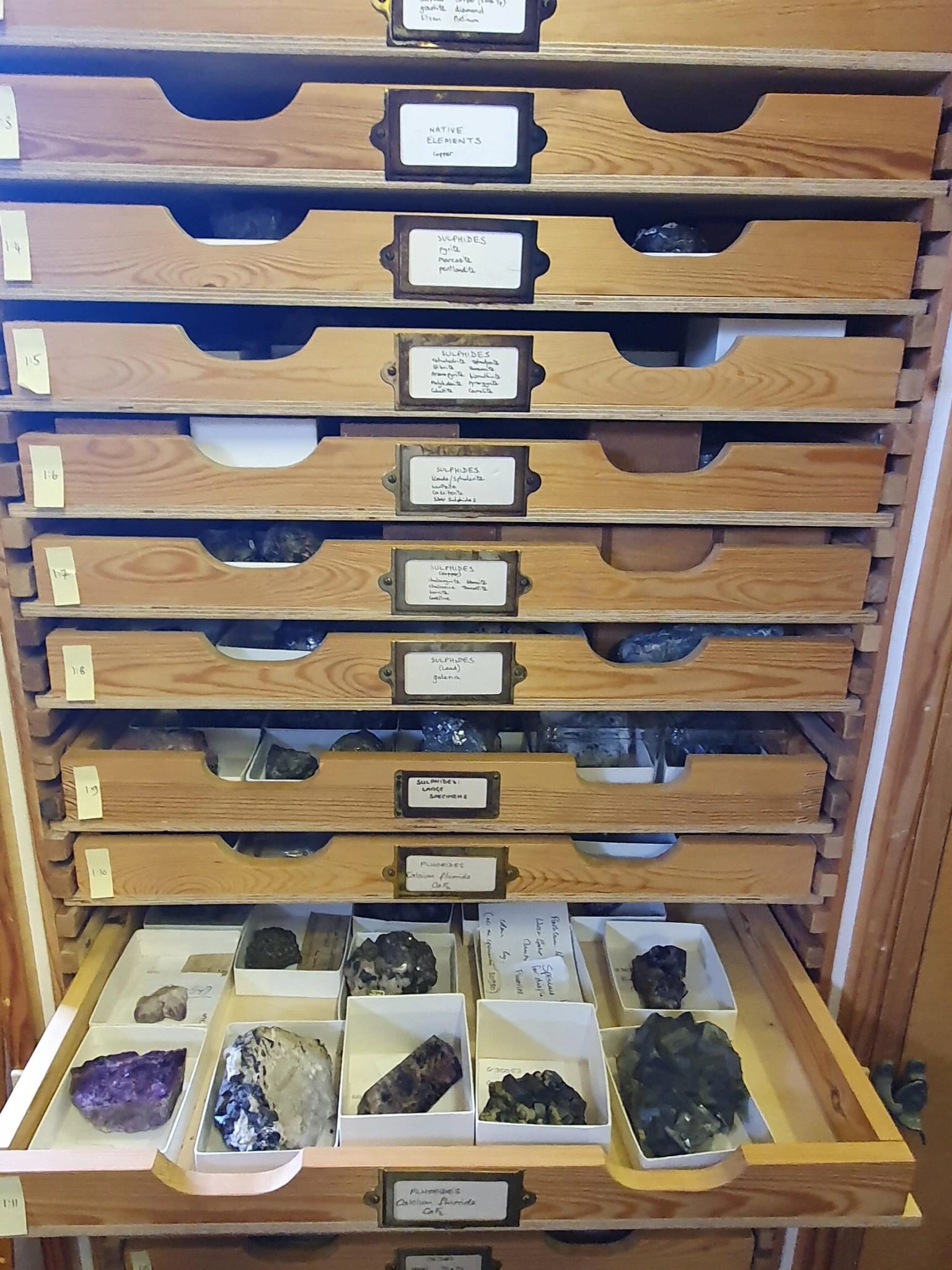
It was through this training that we realised one of our largest unknowns was the natural history store – a 66,000 strong collection of fossils, minerals, taxidermy, entomology and herbariums.
We successfully applied for a small grant offered by the MDSW which enabled us to commission Fran Coles, collections care manager at Bristol Museums to write a report on the hazards in the store and identify how to mitigate the risks and approach the collections move.
Advertisement
Key lessons
- Specific risk assessments for different types of hazards and different collection items are necessary for more detailed understanding of how to handle specific items such as taxidermy, minerals and herbarium, to name but a few.
- Asbestos can be a contaminant in some mineral samples, such as talc minerals and soapstone.
- An asbestos checklist can be used to help identify if there may be asbestos present in the material, identifying if the collection item needed to be heat-proof, thermally insulated, soundproof etc.
- Keep a logbook for the risk assessment to record who has read them and when.
- Have a hazards checklist, and a way of monitoring if an item has been logged as hazardous or in fact found to be non-hazardous. We had a system for potentially hazardous items but no record of whether it was found to be harmless.
- It is very important to continue to work on and add to your hazards register and make it work for your organisation. Adapting the way it is presented to suit needs– i.e. a list of the hazards at the top row of the spreadsheet with the collection items and location on the left so any evidence of hazards can be recorded as such.
- We were advised to ventilate our herbarium cabinets for at least half an hour before working with them due to risk of mercury vapours.
- Wear appropriate PPE when handling hazardous items, and items which may contain a hazard, specifying clearly the PPE requirement for each hazards type.
- Create a heat map of where radioactive materials are.
- Distribute the radioactive material evenly in the cabinet.
- A hazards audit is recommended for moving projects and any projects which involve greater handling. We are going to be auditing our minerals for hazards due to this.
- Be proactive with labelling: as soon as an item has been confirmed as having a hazard, you should be labelling this and adding it to your hazards register.
- Ensure the hazards are recorded on your collections management system.
Tilly Morton is the museum collections decant coordinator at the Museum of Gloucester