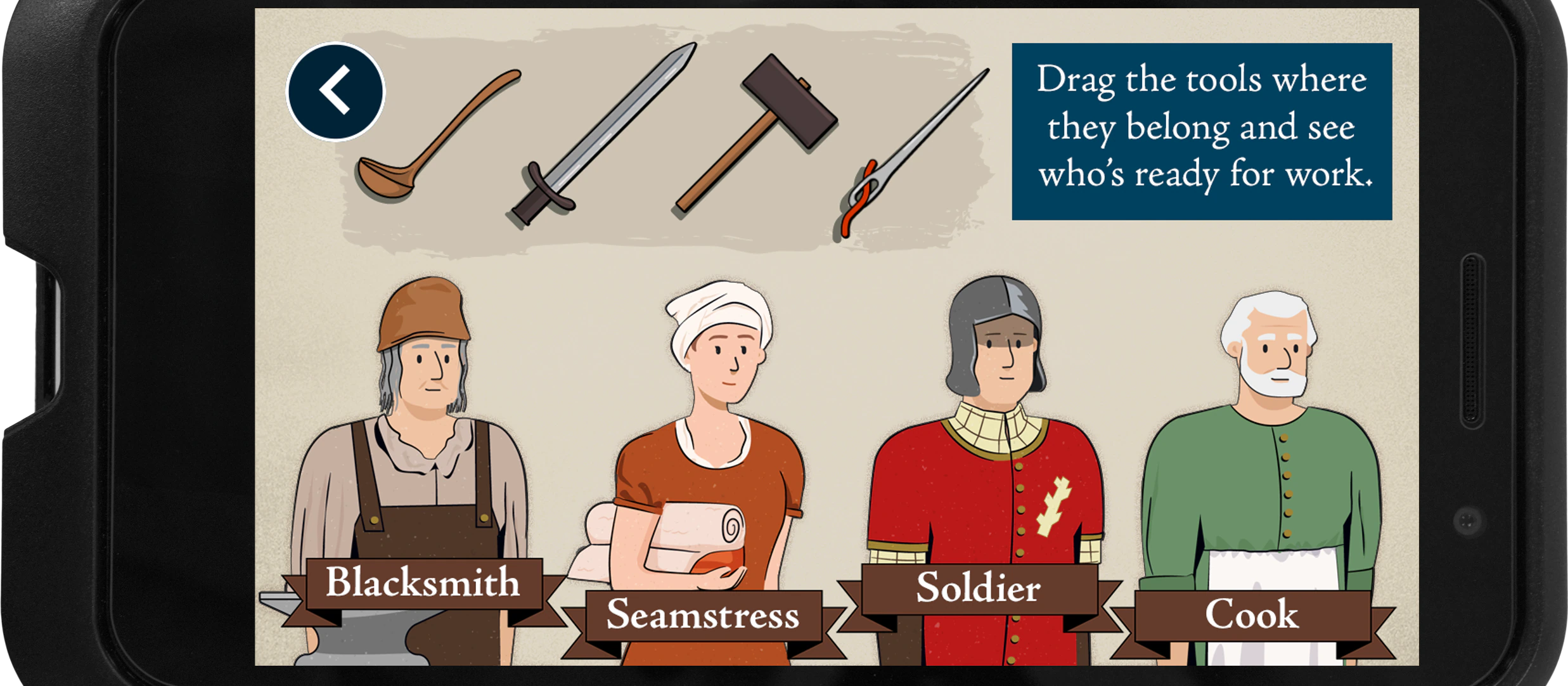
Warwick Castle is steeped in history, but the traditional room displays were failing to capture the imagination of younger visitors. Observations showed that children and families often walked through rooms quickly and with limited engagement due to interpretation panels that lacked engaging information and static mannequins that offered little interaction.
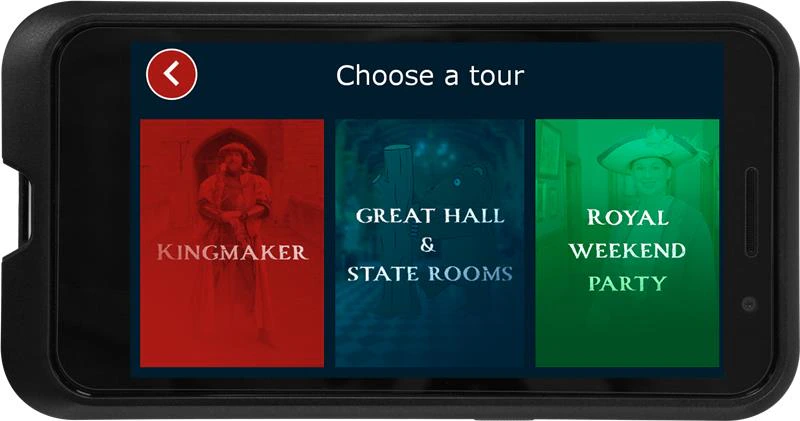
The company I work for, ATS Heritage, which specialises in digital interpretation, was asked to bring the castle’s stories to life in a fun and memorable way. This led us to develop an interactive family tour and a range of accessible multimedia tours, including BSL, audio-described and virtual tours.
For the family tour, we focused on creating interactive routes with layered storytelling that were suitable for family audiences.
Key considerations included tone, pacing and ensuring the experience was fun without compromising historical accuracy. The team at the castle was invaluable for its historical knowledge, which was all fed into the script.
For the multimedia guide, we brought to life some of the fascinating people who once lived in the castle, from the kingmaker of the 15th century to the Victorian socialite Daisy Greville, Countess of Warwick. A cartoon bear was also added to the lineup to provide a common thread between the tours.
We felt that the main characters were so vibrant in the script that it would be lovely for them to feature on screen, as well as through audio. The on-site actors who perform regularly at the castle seamlessly blended into the rooms and added life to the stories held within the castle walls.
Accessibility
Central to Warwick Castle’s brief was to make the content accessible to all visitors. Accessibility was a major challenge due to the castle’s historic structure, with issues posed by stairs, a lack of lifts and uneven surfaces.
Advertisement
We worked alongside the castle’s accessibility team and developed an audio-described tour with expert input and testing. This will accompany new touch points and tactile engagement. We have also created BSL videos with captions.
We captured 360° panorama virtual tours for those unable to navigate the challenging areas of the site. These will also be available on the multimedia devices.
We are now entering a testing phase to monitor how the multimedia guide and audio-described tour are being received.
Top tips for success
- Creativity is key when physical adaptations aren’t possible.
- Define your audience early to avoid trying to please everyone.
- Use real families to refine content and identify what resonates most.
- Staff knowledge adds authenticity and depth.
- Take advice from specialists before and during the process.
- Allow plenty of time, including for a soft launch to iron out any issues you may not have expected.
Sian de Wied is a senior producer at ATS Heritage