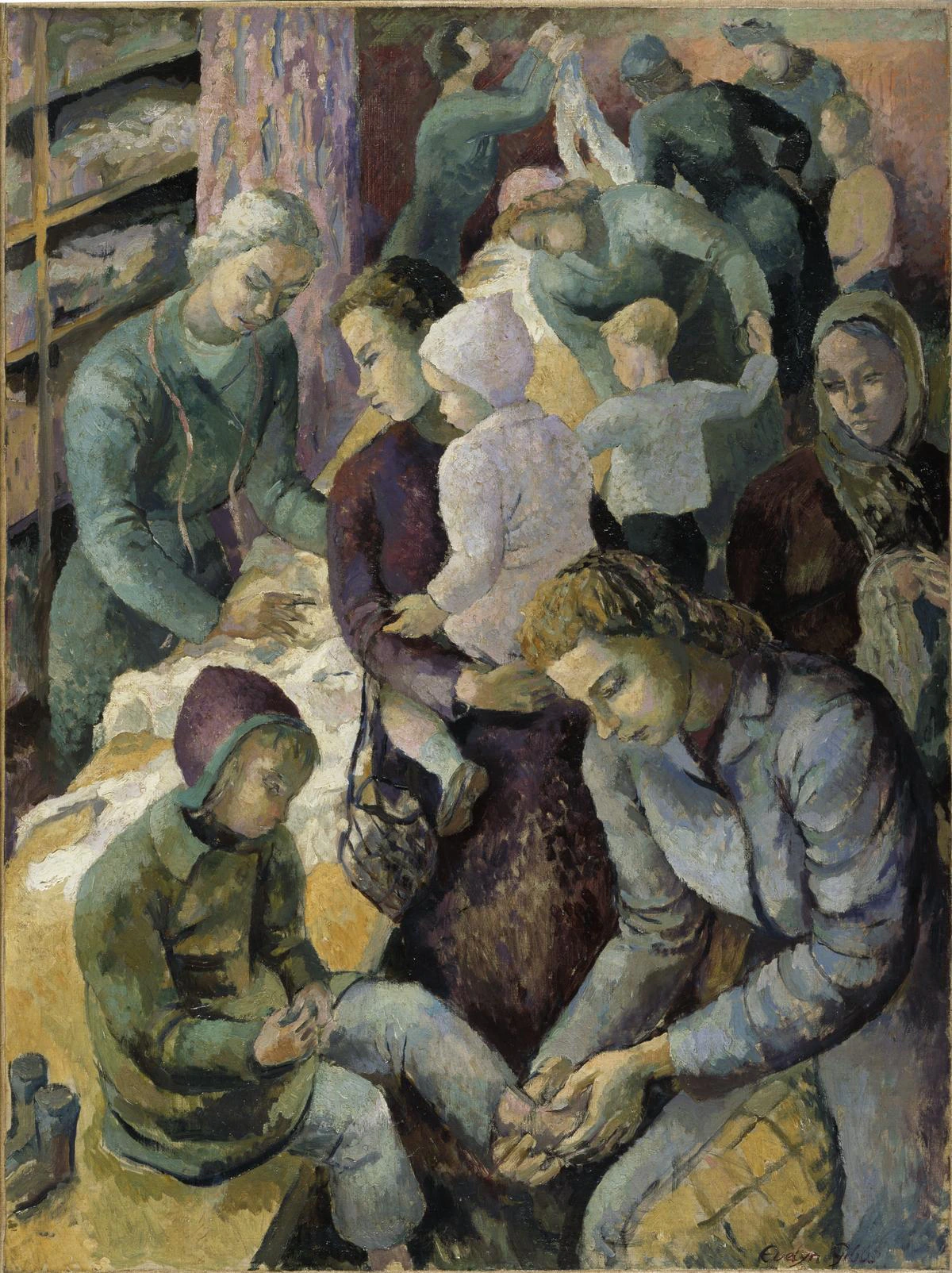
Beauty and Destruction: Wartime London in Art (until 1 November) is a free exhibition at Imperial War Museum London (IWM) that tells the story of the changes to the city during the second world war through the eyes of wartime artists. By harnessing IWM’s world-class art collection, the exhibition spotlights the resilience and humanity of the people of London.
Designed specifically for the show, the family trail guides visitors to connect with five paintings. As they seek out each one, they are encouraged to look a little closer and answer questions, providing an opportunity to learn more about the artworks and the history of the capital city during the war years.
They can find and collect a stamp for each painting in their trail booklet as a reward. Each stamp is designed to link to themes within the paintings and locations around London.
Child-friendly approach
IWM aims to provide opportunities throughout the museum that families can get involved in together. The exhibition features well-known London landmarks such as St Paul’s Cathedral and Tower Bridge. With a focus on local London history, the exhibition prompts intergenerational conversations, encouraging families to share memories and personal experiences of some of the sites that inspired the artworks.
This exhibition trail has a recommended reading age of eight and upwards, but we are conscious that a family group can consist of a range of ages so we aim to cater for all in some way.
Advertisement
It has been designed to allow the level of engagement to be scaled up or down dependent on age, ability, interest and understanding of art. The youngest members may simply want to seek out a painting and collect their stamp reward, while older children may want to dig deeper through the prompts and questions posed in the trail booklet.
Activities
The primary aim of this trail is to encourage families to take a closer look at the artworks on display. They may find something new or unexpected, and discover a part of our collection they would not typically engage with.
The activities encourage families to look at artistic skills, inspiration and social history. We also wanted to contribute to the development of literacy skills within museums, in particular how titles and captions are used. These are transferable skills that can be applied in all museum and gallery visits.
Challenges
One challenge we faced was the restriction on supplying writing tools inside the exhibition space, to reduce the risk of accidental damage to nearby artworks on display.
Advertisement
This meant activities in the booklet could not involve drawing or filling pages in. To overcome this, the activities are centred around finding, looking closely and discussion.
We also had to consider the layout of the space and ease of finding the paintings. The colours in the exhibition became a reference point and influenced how we decided to navigate the exhibition. This was achieved through instructions such as: “To start your journey look for the painting on the purple walls.”
Top tips for success
- Families arriving at the museum come in all shapes and sizes, with varying ages and differing levels of understanding and interest. It is important to consider this when creating opportunities for engagement.
- Having open expectations on how families may engage, behave or respond in the space is key, making sure there is flexibility within an activity to cater for that.
Claire Shaw is senior producer (learning and engagement) at IWM in London