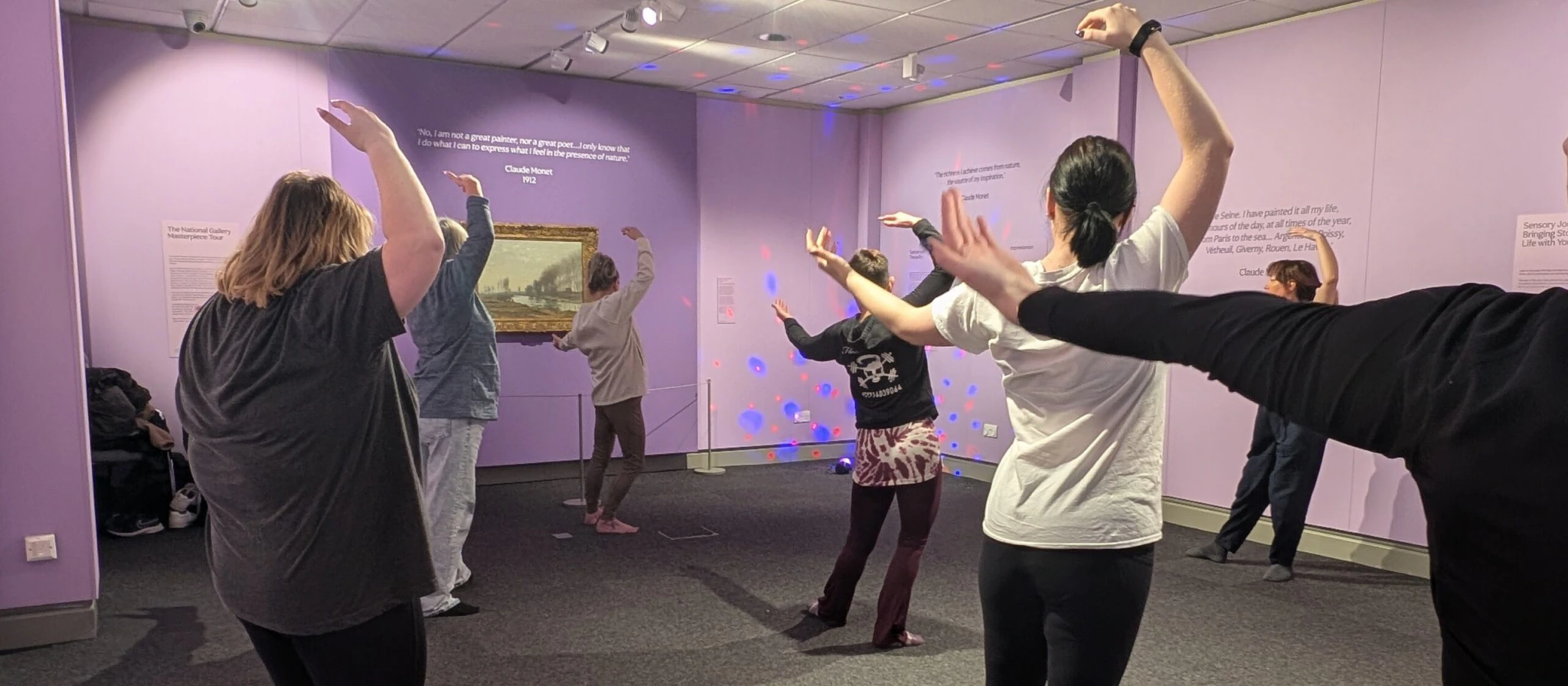
When South Shields Museum and Art Gallery secured a place on the National Gallery Masterpiece Tour, it marked a significant moment. Following an earlier partnership bringing Constable’s The Cornfield to a pop-up site in Jarrow in 2023, the arrival of Monet’s Petit Bras of the Seine at Argenteuil from January to March this year offered a longer opportunity.
Rather than presenting the painting in isolation, the museum created a programme rooted in participation, sensory access and wellbeing, designed to meet local needs and build lasting relationships with audiences.
Programming around the painting
The programme was structured around four strands:
- School workshops.
- Engagement with children and families affected by Emotionally Based School Avoidance (EBSA).
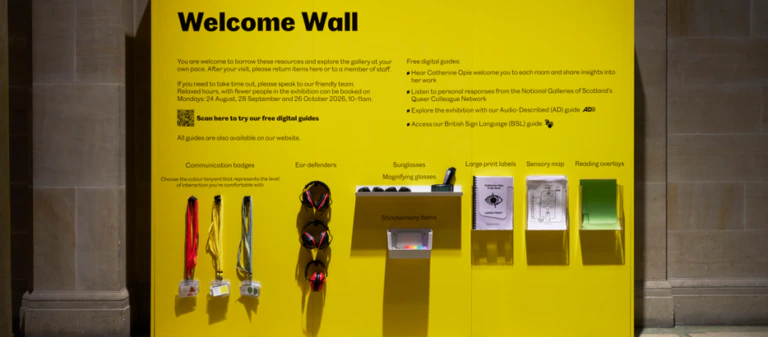
- Sensory accessibility.
- Wellbeing.
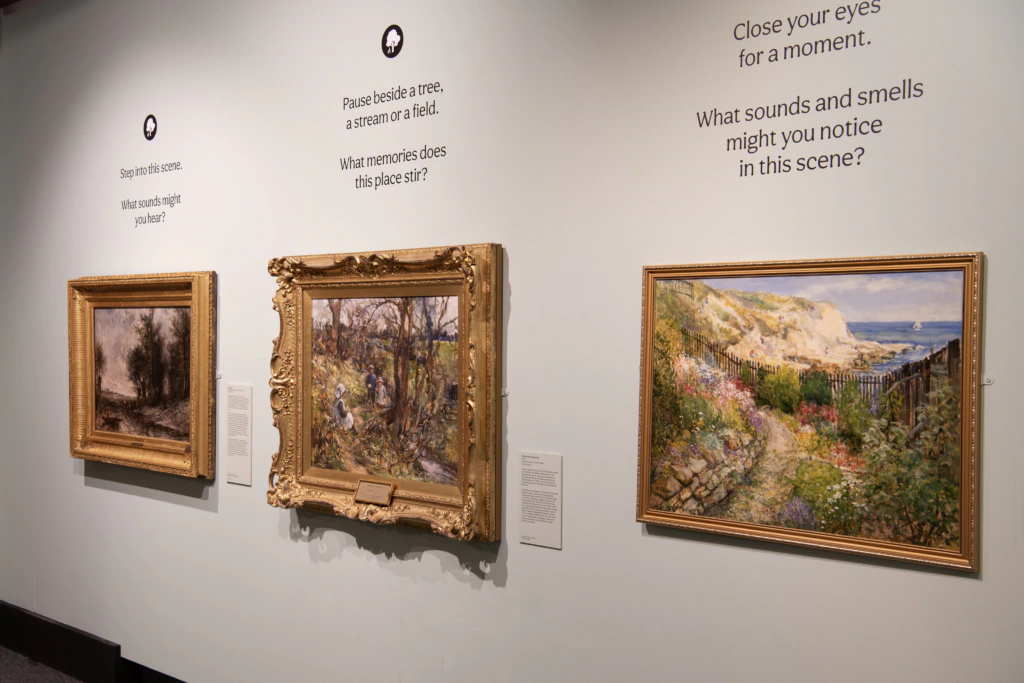
Alongside the display of Monet, curated works from North East Museums’ collections were presented with prompts encouraging slow looking and embodied engagement.
Wellness Weekends offered yoga, Qigong and guided slow looking, reframing the museum as somewhere to regulate as well as to learn. Open Studio sessions provided families with time to explore Monet’s themes through making and play.
Some offers required careful framing. Concepts such as slow looking were unfamiliar and needed clear, human interpretation to support participation.
Advertisement
“Learning to stop and breathe – thank you.”
While some sessions saw lower attendance, overall engagement was strong where expectations were clearly communicated.
The programme also extended internationally, with EBSA groups in South Shields “twinned” with groups in Argenteuil in France. Participants explored their relationships with the Tyne and the Seine, producing self-portraits, landscapes and poetry displayed as part of the Monet exhibition.
The school programme attracted local schools who enrolled their entire student body from reception to Year 6 as well as schools from further afield. Many of the schools were part of the Culture Match Programme, which aims to connect children and young people, schools and communities with art and cultural opportunities and experiences in response to their needs.
Co-creating a sensory installation
A central element of the programme was a co-created sensory installation developed with Collar & Cuffs Co, which specialises in sensory storytelling and inclusive heritage interpretation.
Advertisement
Across two days of workshops in summer 2025, nearly 100 participants, including local schools and adults with learning disabilities, contributed to its development.
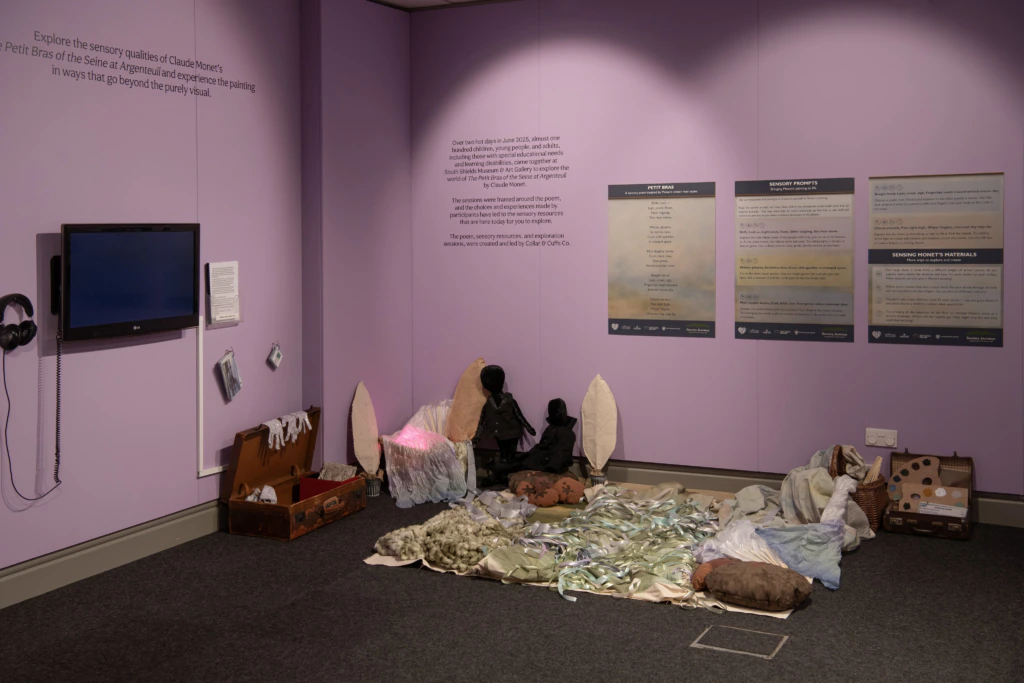
The installation sat alongside the Monet artwork. Drawing on the artist’s materials and processes, it translated the painting into an interactive environment: textured “mud”, pebbles, scented paint tubes, and large canvases layered with ribbons and appliqué to evoke river, sky and movement.
Visitors could construct and deconstruct their own versions of the landscape and “touch” the painting without touching it. The installation extended beyond the gallery through a digital teaching pack, enabling schools to engage with the work through sensory pathways.
“Beautiful – it made me feel calm. My two-year-old daughter loved the sensory play. She made ‘wind’ with the ribbons. ”
Audience response and impact
Visitor numbers in January, February, and March increased by 103%, 44% and 44% respectively over predicted numbers for these months based on 2024/25 figures. Many visitors returned multiple times.
Advertisement
“My son is autistic. We have been to London once but he was unable to manage with the busy streets and tubes. The sensory materials at the beginning of the room were engaging and accessible giving an understanding of what was happening in the painting with the running water, trees, light and painting.”
The three-month duration allowed relationships with the work, and the museum, to build over time.
Visitors described feelings of calm, pride and belonging, alongside appreciation for the exhibition’s presentation and hands-on approach. One visitor travelled from Manchester twice to experience the installation with their partner, noting its significance for early years and learning disability contexts.
For many, the presence of a major work in a local museum challenged perceptions of cultural access. Alongside joy and excitement, there was also a sense of frustration that such opportunities had not been available before.
“I feel very lucky to see artwork from a famous painter in South Shields. A beautiful, thought-provoking exhibition.”
The project was widely understood as an investment in the community, reinforcing trust and raising aspirations.
Reflections and learning
Comparing the Monet programme with the earlier Constable project highlights the value of time and depth. A longer exhibition period enabled repeat visits, deeper engagement, and more ambitious programming.
Clear signalling of permission for interaction, particularly within sensory installations, and active interpretation of less familiar formats such as slow looking are key.
Moving forward, the museum plans to build on these insights for future Masterpiece loans, further embedding participation, accessibility, and community co-creation at the heart of its approach.
Leslie Palanker is the learning co-ordinator at South Shields Museum and Art Gallery and Arbeia, South Shields Roman Fort. Julia Collar is a a sensory learning specialist in heritage and the arts at Collar & Cuffs Co.