Leeds Castle’s Pilgrimage of Love: Eleanor of Castile exhibition (until 1 November 2026) asks how a medieval queen can be made present for today’s visitors without turning history into spectacle.
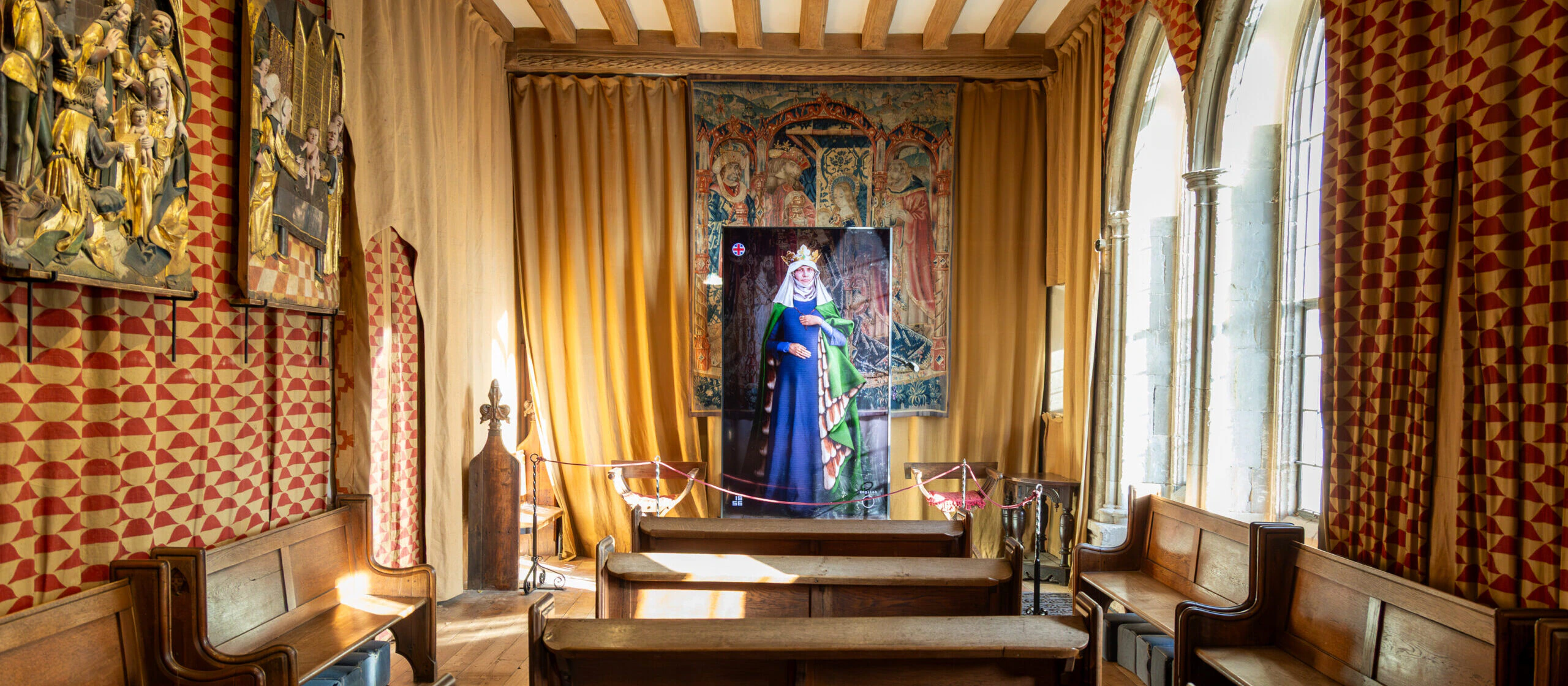
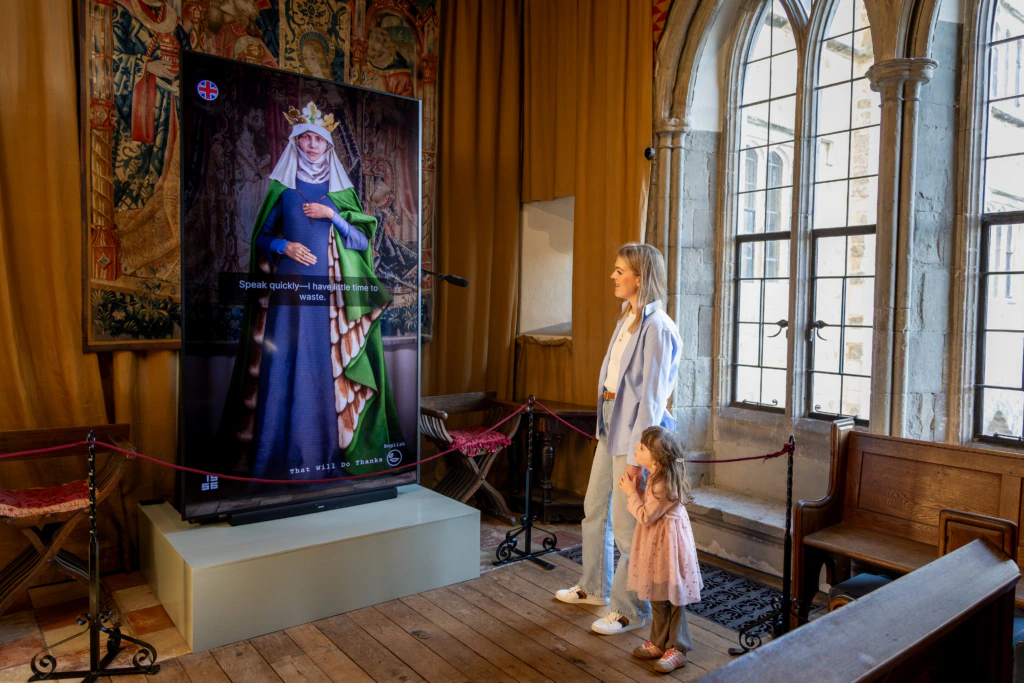
It culminates in the castle’s chapel with An Audience with a Queen, an interactive, environment-aware AI avatar of Eleanor of Castile that responds to visitors in real time.
The encounter is the conclusion of a curatorial journey using conventional interpretation to build context before inviting conversation. The aim was simple and ambitious: to trial an experimental technology while keeping history and scholarship at the heart of the experience.
How can AI transform the visitor experience?
Our online event on 9 December explores what the technology means for museums
Curatorial vision
Eleanor of Castile is an enigma, but her influence on the English court and culture was profound. The exhibition presents Eleanor as more than Edward I’s consort, foregrounding her as queen, landowner, traveller, cultural influencer and the first female owner of Leeds Castle in Kent, re-framing her legacy through modern scholarship.
Advertisement
It begins in the Gloriette, a pavilion at the intersection of pathways in a garden that was built by Eleanor in 1278, and explores aspects of her life and memorialisation in the Eleanor Crosses, before culminating in the chapel with the AI avatar interactive.
The AI is the final interpretive step, designed to let visitors test ideas built up through text, illustrations and animation. It closes a narrative that starts outside the castle and ends in direct dialogue.
The exhibition was led by the curatorial team, with collaborative input from visitor experience, learning, IT and operations, as well as partners from SKC Studios, whose 1956 Individuals platform powers the avatar.
Reimagining Eleanor of Castile
While the answers generated in response to visitor questions are formulated by the AI, Eleanor’s image was crafted without the use of any AI technology.
Advertisement
Her facial features, dress and posture were designed from academic research and informed by curatorial decisions, from the patina of the crown to the quality of the fabrics. The aim was to reimagine Eleanor as a historically plausible figure in a sacred-feeling space.
Her imperious and impatient personality was a deliberate choice, shaped to be authoritative and contemporary, rather than theatrical.
The avatar is environment-aware, its most unique and exciting feature from an interpretation perspective. It recognises when someone approaches and responds to unscripted questions, making the exchange immediate and personal.
It speaks English, French and Spanish (all languages that Eleanor would have used) and a native Spanish-speaking voice actor was employed to provide Eleanor’s voice.
Research and risk
Information cards explain how the AI forms answers and what is and isn’t recorded. The system saves only transcripts of questions and responses; it does not record or store any audio or visual data.
Advertisement
The avatar draws on exhibition texts and a curated knowledge base for high-confidence facts. When visitors venture beyond that material, the AI’s responses reflect wider web knowledge and therefore carry risk around fidelity and accuracy.
Our guidance and castle storytellers reinforce the message that the experience is experimental, helping to support confidence and dwell time.
Months-long testing, open to staff and volunteers across Leeds Castle, focused on tone, accuracy and guardrails. Colleagues asked curiosity-driven and edge-case questions, including inappropriate prompts, to verify that safety features deflected unsuitable topics while allowing light-touch modern questions that still link back to Eleanor’s world.
Lessons learned
- Testing the avatar in the chapel surfaced issues early, from acoustics to visitor flow and queuing, and doubled as informal staff training building confidence.
- Close cooperation between curatorial, front-of-house and learning teams maximised insight into visitor engagement and areas of potential friction.
- Acknowledging the tension between accuracy and conversational ability. Excessive parameters on AI responses may impair the fluidity and versatility of responses. We chose to allow the avatar to field “everyday” questions about the present day but pivot back to Eleanor’s life and times.
- Be honest about limitations – that openness needs positive framing and enthusiastic staff support.
Visitor response
Early visitor feedback has been excellent. People enjoy the freedom to follow thei own curiosity asking playful questions to reflective ones about power, travel and maternal loss. Many are surprised that there is no restricted menu of pre-set prompts, although we have introduced suggested questions for visitors who don’t know where to start.
We are evaluating how this affects learning, relevance and interest in the wider castle story, and what people most want to know from Eleanor.
Across the site, interpretation panels and multimedia guide content support entry points into Eleanor’s world. The AI encounter shifts people from observers to participants, which we see in dwell patterns and repeat questioning. The exhibition page and sector press have helped set expectations, describing the avatar as the world’s first environment-aware historical AI figure.
Opportunities and ethical considerations
This project shows how AI can widen access. Multilingual conversation, with clear framing, supports international visitors and invites deeper question-asking. We hope to extend accessibility further, including British Sign Language support in future iterations.
While some visitors are wary of interacting with an AI, we’ve found that transparency sustains trust. We tell visitors what the system knows, what it records, and how uncertainty is handled.
Interpretation in the chapel and wider exhibition, and staff-visitor engagements make clear that human curators and artists remain responsible for the interpretive frame.
The biggest ethical risk is false authority. An AI can sound confident even when scholarly evidence is thin or non-existent. To counter the risks, we’ve kept strong scholarship at the core through the training materials provided to the AI; we’ve signalled doubt in the interface and in the staff script, and we maintain capacity to review and refine incorrect responses over time.
For us, the value was not in making Eleanor “real” but in creating a bounded encounter that helps people test ideas, weigh evidence and feel closer to the past. Conversation can move visitors from passive to active participants, which is where understanding often begins.
Dominique Bouchard is the heritage and engagement director and Sue Prichard is senior research curator at Leeds Castle