The redesigned Natural History Museum of Jamaica reopened its doors to the Jamaican public on 31 August, revealing the island’s rich ecological tapestry.
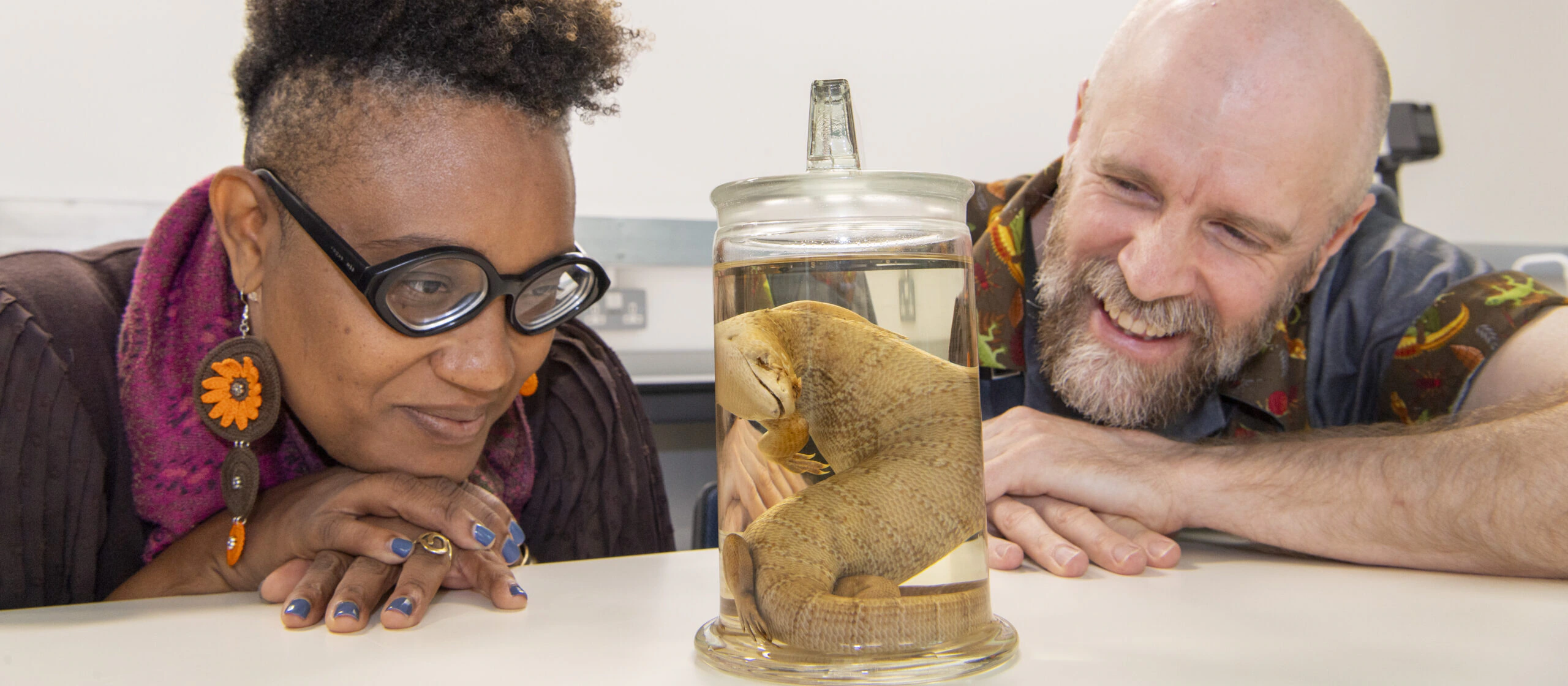
At the end of the exhibition, displayed in her own case, was Celeste, Jamaica’s first repatriated natural history specimen, an extinct Jamaican giant galliwasp. She returned to Jamaica on 24 April from the University of Glasgow’s Hunterian, after 170 years away.
The repatriation of cultural material, including natural history collections, is not a key part of larger reparatory justice debates in the Caribbean, which is partly because the Caribbean’s place in the histories of colonial collecting is not popularly known or understood.
The return of Celeste, as the giant galliwasp has become known, however, offered an important public education intervention for us, as museum practitioners, in three main areas.
Celeste’s return provided an opportunity to build awareness about Jamaica’s galliwasp population, and the impact of the plantation economy and current habitat destruction on Jamaica’s biodiversity.
Through our colleague Damion Whyte’s @roostersworld citizens science platform, Jamaicans flooded his timeline with sightings of different types of galliwasps from across the island. This created a chance to map reptile populations for research.
Advertisement
The repatriation process has also increased interest among practitioners in engaging histories of colonial collecting to get a better sense of what cultural material exists and where it is located.
Lastly, the project has strengthened our knowledge about the policy and legislative infrastructure required to facilitate targeted and systematic repatriation programmes in the Caribbean.
Shani Roper is curator of the University of the West Indies Museum, Kingston, Jamaica