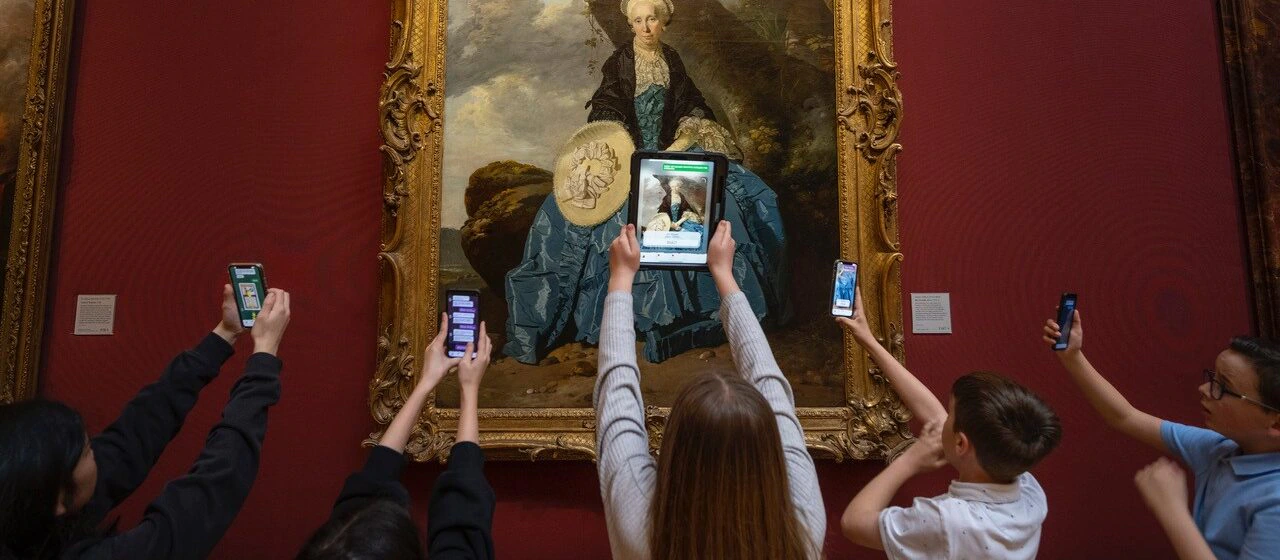
Digital is a vague, amorphous term. Is it your website and social media content? IT and content management systems? Gallery interactives and QR codes? Digital preservation and digitisation? Augmented and virtual reality?
A digital strategy or roadmap may embrace some or all of the above. It’s about creating a set of policies, processes and behaviours that run through the organisation’s output. It’s also about developing a digital mindset, to ensure that technology becomes embedded in people’s thinking about how to improve the service for audiences.
John Stack, director of digital innovation and technology at the National Gallery in London, recommends thinking about a digital strategy across three categories:
- Digitising the collection and research.
- Digitising the audience experience.
- Digitising the business model.
“To prioritise, we ask ourselves how will this deliver our mission, how will it meet audience needs, how will it draw on our strengths and also how can we be sure that we will succeed,” says Stack.
Camilla Stewart, the deputy chief executive at Art UK, which provides free digital access to the UK’s art collections, says a digital strategy isn’t just for large organisations.
Advertisement
“Not having a strategy can be quite worrying to people and can stifle innovation because you think ‘I don’t have a digital strategy, I don’t know what to do’,” she says.
“Smaller collections may not have digital strategies but they do think strategically about digital – they are trying to do interesting digital things, they have objectives and targets, and want to measure these. So they shouldn’t be afraid to experiment.”
Getting started
Headland Design consultancy was commissioned by the Welsh Government to produce a template to help staff, trustees and volunteers explore how to improve their use of digital technology.
Director Ruth McKew says a good starting point is to assess your current digital activity and services. The Digital Culture Compass, a toolkit funded by Arts Council England and the National Lottery Heritage Fund to help museums and cultural organisations asses their digital provision, is useful here.
The next step is to think about your other policies – such as community engagement, learning or income generation – and how your digital strategy links to these. You also need to consider how it might reflect local or national plans and priorities.
Advertisement
After that, the template steps cover key principles for your strategy:
- Practical details of what you want to do under headings such as collections, research and fundraising.
- Resources.
- Priorities.
- Potential risks.
“The template helps people, particularly smaller museums, understand what a digital strategy is and why you might want one,” says McKew. “Then you can set about working out the best way to present that information as an action plan.”
An alternative approach would be to embed digital in your other strategies and to create an index of which strategies include digital elements. An action plan, potentially following the structure in the template, would again be useful to summarise digital activities in one place.
Researchers Maureen Meadows and Alessandro Merendino studied how museums evolved digital strategies in response to the pandemic for a project at Coventry University. Meadows advocates experimentation as a key way to devise a strategy.
“You’ve got to be willing to try something,” she says. “It might not work – but that’s OK, as you can adapt and relaunch it in a slightly different shape, and you’ll learn something. It’s the nature of digital in any sector. Start small, see what works, learn and, as you do, you become quite agile and flexible.”
Advertisement
Know your audience
If the ultimate aim of any strategy is to serve audiences and users better, then finding out what those audiences want is essential.
For website and social media activity, there is a wealth of data available about audience behaviour – not just the number of website clicks, likes or reposts but metrics such as:
- Dwell time (how long someone stays on your site or on a piece of content).
- Where they came from (via social or search).
- Whether they are first time or deeply engaged users.
- Where they go to when they leave your site.
This data can take time and expertise to find and interpret – and is complicated by the frequency with which platforms and algorithms change.
One of the best ways you can create buy-in among staff is through communication, says Georgina Brooke, a strategist at digital agency One Further and chair of the Museums Computer Group.
Brooke worked with a multi-site museum service to install a new content management system and embed new content editors in their respective websites.
“We wanted to create more institutional knowledge around digital best practice,” she says. “To do that, we set up ‘digital knowledge sessions’ with staff across the organisation. There were training sessions on the website template suite being developed and on topics such as user-centred design and analytics.
“Once the tech was available, people felt they’d been consulted and were part of the solution. They also knew how to suggest edits that were in keeping with the user research and design scheme of the site as a whole.”
Organisational strategy
Coventry University researcher Merendino adds that getting management buy-in can be a challenge if leaders themselves lack the necessary knowledge. “It depends on whether the senior management team understands the power of digital and is willing to invest in it, and to what extent digital is a part of the thinking,” he says.
Without that mindset, the risk is that the museum pays lip-service to digital, drawing up a strategy that exists only on paper.
For some, the digital strategy should be clearly aligned to the institutional strategy, so that the objectives of the various digital activities and operations help the museum to meet its overall aims.
The important caveat here is that the organisational strategy needs to be up-to-date and that managers need to recognise digital as a strategic need, not just a service function.
“In an ideal world, it would be nice to derive your digital strategy from the organisation’s strategy,” says Brooke. “But a smart organisational strategy today should embed digital as a key part of future planning. Then the digital strategy can really be an implementation plan.”
A good digital strategy can operate as a golden thread across the organisation, enabling the sharing of good practice and knowledge, creating a unified approach and understanding of what is meant by “digital” in the museum, and building confidence in its use.
The fact that it needs to be flexible and capable of responding to the ever-evolving demands and opportunities digital technology presents suggests it may be better thought of as a roadmap – something that sets a way forward but is open to change.
Ready to create a digital strategy? Five top tips:
- Get user input. What do they want out of your digital offer
- Recognise that people – staff, volunteers, visitors, other users – have different access to technology, as well as varying levels of ability, confidence and connectivity.
- Have a champion in your museum who has embraced the digital technology or activity and can accentuate the positives to others.
- Even small changes can make quite a big difference. Your digital strategy can focus on just one or two key elements to begin with.
- Use museum networks such as the Museums Computer Group to learn from others and to find sources of expertise.