“Museums do very poorly in terms of leadership and recruitment,” said Arts Council England (ACE) chair Nicholas Serota this month, while launching the organisation’s latest report on diversity in England’s cultural sector.
The data, for 2017/18, shows that black and minority ethnic representation in the workforce of ACE’s regularly funded National Portfolio Organisations (NPOs) is 12%, compared with 5% of the workforce of the 21 Major Partner Museums (MPMs, integrated into the NPOs after the period of this data), and 16% in the total working population of England.
In the UK, 20% of working-age adults identify as having a work limiting disability, compared with 5% at NPOs and 4% for MPMs.
Although there was a significant proportion of “unknown” and “prefer not to say” for sexuality, both MPMs and NPOs met or (in the case of NPOs) exceeded the 2% of the UK’s working-age population identifying as lesbian, gay or bisexual.
Measuring success
One measure of success for diversity is how far the workforce in UK museums matches that of their local communities. The number of people in senior management who identify as disabled or BAME is another.
“As a workforce we should look diverse – as diverse as our world,” says Sara Wajid, the head of engagement at the Museum of London (MoL) and a member of the steering group of Museum Detox, the BAME network for museum and heritage professionals.
“How far off is that? I used to think I wouldn't see a black director of a national museum in my life – it is statistically unlikely. But I'm starting to feel more confident that I will see at least more non-white directors of medium- to large-size museums, if not national museums, in the next 30 years.
“That's not great, but it's I guess realistically where we are in terms of race.”
Wajid took part in the ACE-run Changemakers programme, which ran between 2016 and 2018, making £2.6m (including £500,000 for MPMs) available to support NPOs and MPMs in partnership with a named black, minority ethnic or disabled leader to support a training and development placement, training, culture-change initiatives and sharing of best practice.
The data, for 2017/18, shows that black and minority ethnic representation in the workforce of ACE’s regularly funded National Portfolio Organisations (NPOs) is 12%, compared with 5% of the workforce of the 21 Major Partner Museums (MPMs, integrated into the NPOs after the period of this data), and 16% in the total working population of England.
In the UK, 20% of working-age adults identify as having a work limiting disability, compared with 5% at NPOs and 4% for MPMs.
Although there was a significant proportion of “unknown” and “prefer not to say” for sexuality, both MPMs and NPOs met or (in the case of NPOs) exceeded the 2% of the UK’s working-age population identifying as lesbian, gay or bisexual.
Measuring success
One measure of success for diversity is how far the workforce in UK museums matches that of their local communities. The number of people in senior management who identify as disabled or BAME is another.
“As a workforce we should look diverse – as diverse as our world,” says Sara Wajid, the head of engagement at the Museum of London (MoL) and a member of the steering group of Museum Detox, the BAME network for museum and heritage professionals.
“How far off is that? I used to think I wouldn't see a black director of a national museum in my life – it is statistically unlikely. But I'm starting to feel more confident that I will see at least more non-white directors of medium- to large-size museums, if not national museums, in the next 30 years.
“That's not great, but it's I guess realistically where we are in terms of race.”
Wajid took part in the ACE-run Changemakers programme, which ran between 2016 and 2018, making £2.6m (including £500,000 for MPMs) available to support NPOs and MPMs in partnership with a named black, minority ethnic or disabled leader to support a training and development placement, training, culture-change initiatives and sharing of best practice.
Its aim was to prepare a cohort of potential leaders “to be able to compete on merit when future artistic director, chief executive or other senior leadership positions become available”.
Wajid says that she found the programme transformative.
“I thought it was what the sector needed because leadership is a really stubborn area, where we have seen the least progress – particularly in relation to national museums,” she says. “Many of the development schemes I'd seen over the years focused on the pipeline, and my experience in the sector had been that there was a lot of plateauing: people experiencing various problems, not being retained in the sector or not progressing when they were retained.
“A lot of effort is focused on getting people in to the sector, but when they are in, they get to manager level and look around and find that it's not very diverse, and then they start to find problems in progression. Not very much seemed to have been done up to that point to tackle that.
“Through Changemakers I was exposed to a really excellent museum that I would never have worked at in any other scenario – the chance to work at a different type of museum, in a different city, was something that only that grant could have afforded me.
“I was able to rebrand myself as somebody who can sit in senior management. When you go to a new place, and you present yourself as head of interpretation, that's who you are. And that helps you to behave like that and to consider your own experience in a new light.
“Now, I am in senior management at the Museum of London and it's pretty much all white. But if I hadn't had the experience of that year in Birmingham I wouldn't be able to handle myself now. If I'd gone from my previous job straight into senior management, I think I would have come unstuck.”
Wajid says that Museum Detox provided a vital support network during her year in Birmingham and subsequently. The “hypervisibility” of being a non-white person – and particularly as somebody known to be passionate about diversity and inclusion – can be fatiguing, she says.
“There's an extra layer of work that you're doing – an invisible layer – to manage yourself and how you're presented in the organisation,” Wajid says. “Because, like it or not, you start to mean something – just the fact of your presence means something – it slightly changes the dynamic in the room.
“Even working with progressive, like-minded, liberal museum workers, as many are in most museums, if you find yourself being the only person in a 20-person meeting, day-in, day-out, you need a bit of support.”
An understanding of intersectionality – how barriers to inclusion such as class, gender, race, disability or sexuality interrelate when applied to actual people, in practice – is crucial to taking a proactive approach to an organisation’s diversity. For Wajid – who is privately educated, listens to Radio 4 and goes to the theatre – social class is “probably the most stubborn. But of course it’s not that simple to divide that from race.”
Barriers to entry
Arts charities Create London and Arts Emergency commissioned Panic! Social Class, Taste and Inequalities in the Creative Industries, which was released in 2018. This research confirmed the picture of a sector that was not representative of wider society, highlighting in particular the underrepresentation of people from working class origins, women, and those from BAME backgrounds.
The report states: “No matter how talented or hard working someone is, they will still struggle if they aren’t part of the same class, ethnicity, and/or gender as the people hiring and promoting them.”
This was one of the fundamental barriers to entry found by the report, says Create London’s head of programme, Scott Burrell. “People in the industry were longing for some hard evidence to back up long suspected myths,” he says.
Becki Morris is the director of the Disability Cooperative Network of museum professionals, which aims to “create a new way of holistic thinking for inclusive practice in visiting and working in the heritage and cultural sector”.
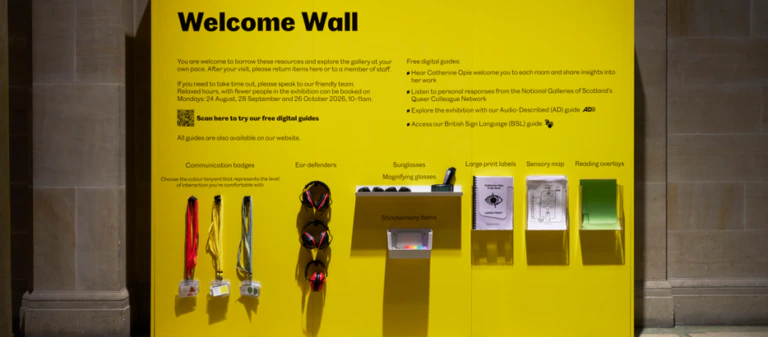
For her, barriers to entry to the sector centre on accessibility. Conferences, news and information about the sector should be accessible, as well as individual organisations’ offices, recruitment processes and programmes.
The need to declare a disability is also an issue, not only because whether an individual considers themselves to have a disability or not is often a matter of personal choice – people may have traits like dyslexia or dyspraxia, or be visually impaired, and not consider themselves disabled – but because an employee’s circumstances could change as the result of developing a chronic health condition or having an accident.
“You shouldn’t be in a situation where you have to categorically state whether you have a disability,” she says. “If you want somebody to work in that environment they need to see themselves represented. Can they have a space in the office, and what does that office space look like? If they go to an event, is that accessible?
“An employee might have a family and their child needs extra support at school, or have elderly parents. This is all reflected in – and requires the support of – the heritage sector. The sector needs to be able to accommodate and support any sensory needs of a member of their workforce.
“Sometimes, the bottom line is information,” Morris says. “And in terms of what barriers are most prevalent, really it’s about the sum of the parts.”
Ultimately, diversity has to be approached in a genuine way for it to be successful.
“Some areas are going to be less diverse in terms of ethnicity than others, and we know that,” says arts and heritage consultant Sandra Shakespeare, who, like Wajid, is a member of Museum Detox’s steering group. “But I think those that receive money from the public purse, or that are in the more culturally diverse areas, really need to wake up.
“They need a starting point that they are really taking the diversity of their staff seriously. That commitment has to move beyond just entry level: that intention has to be mirrored right through to the top.
“It's not going to happen overnight, but let's say that we've got a plan, and that in two years we're going to move from a board that's all white to at least having two or three other members that are from more diverse backgrounds, for example.
“Museum Detox gets a lot of requests to run its white privilege clinic. And we are not saying no, but I do sometimes ask what it is that they want us to do that they can't do themselves. What difference does it make to have three or four people come in and talk to you about diversity? Do you not feel empowered that you can begin to start having these conversations yourself?”
Wajid says that she found the programme transformative.
“I thought it was what the sector needed because leadership is a really stubborn area, where we have seen the least progress – particularly in relation to national museums,” she says. “Many of the development schemes I'd seen over the years focused on the pipeline, and my experience in the sector had been that there was a lot of plateauing: people experiencing various problems, not being retained in the sector or not progressing when they were retained.
“A lot of effort is focused on getting people in to the sector, but when they are in, they get to manager level and look around and find that it's not very diverse, and then they start to find problems in progression. Not very much seemed to have been done up to that point to tackle that.
“Through Changemakers I was exposed to a really excellent museum that I would never have worked at in any other scenario – the chance to work at a different type of museum, in a different city, was something that only that grant could have afforded me.
“I was able to rebrand myself as somebody who can sit in senior management. When you go to a new place, and you present yourself as head of interpretation, that's who you are. And that helps you to behave like that and to consider your own experience in a new light.
“Now, I am in senior management at the Museum of London and it's pretty much all white. But if I hadn't had the experience of that year in Birmingham I wouldn't be able to handle myself now. If I'd gone from my previous job straight into senior management, I think I would have come unstuck.”
Wajid says that Museum Detox provided a vital support network during her year in Birmingham and subsequently. The “hypervisibility” of being a non-white person – and particularly as somebody known to be passionate about diversity and inclusion – can be fatiguing, she says.
“There's an extra layer of work that you're doing – an invisible layer – to manage yourself and how you're presented in the organisation,” Wajid says. “Because, like it or not, you start to mean something – just the fact of your presence means something – it slightly changes the dynamic in the room.
“Even working with progressive, like-minded, liberal museum workers, as many are in most museums, if you find yourself being the only person in a 20-person meeting, day-in, day-out, you need a bit of support.”
An understanding of intersectionality – how barriers to inclusion such as class, gender, race, disability or sexuality interrelate when applied to actual people, in practice – is crucial to taking a proactive approach to an organisation’s diversity. For Wajid – who is privately educated, listens to Radio 4 and goes to the theatre – social class is “probably the most stubborn. But of course it’s not that simple to divide that from race.”
Barriers to entry
Arts charities Create London and Arts Emergency commissioned Panic! Social Class, Taste and Inequalities in the Creative Industries, which was released in 2018. This research confirmed the picture of a sector that was not representative of wider society, highlighting in particular the underrepresentation of people from working class origins, women, and those from BAME backgrounds.
The report states: “No matter how talented or hard working someone is, they will still struggle if they aren’t part of the same class, ethnicity, and/or gender as the people hiring and promoting them.”
This was one of the fundamental barriers to entry found by the report, says Create London’s head of programme, Scott Burrell. “People in the industry were longing for some hard evidence to back up long suspected myths,” he says.
Becki Morris is the director of the Disability Cooperative Network of museum professionals, which aims to “create a new way of holistic thinking for inclusive practice in visiting and working in the heritage and cultural sector”.
For her, barriers to entry to the sector centre on accessibility. Conferences, news and information about the sector should be accessible, as well as individual organisations’ offices, recruitment processes and programmes.
The need to declare a disability is also an issue, not only because whether an individual considers themselves to have a disability or not is often a matter of personal choice – people may have traits like dyslexia or dyspraxia, or be visually impaired, and not consider themselves disabled – but because an employee’s circumstances could change as the result of developing a chronic health condition or having an accident.
“You shouldn’t be in a situation where you have to categorically state whether you have a disability,” she says. “If you want somebody to work in that environment they need to see themselves represented. Can they have a space in the office, and what does that office space look like? If they go to an event, is that accessible?
“An employee might have a family and their child needs extra support at school, or have elderly parents. This is all reflected in – and requires the support of – the heritage sector. The sector needs to be able to accommodate and support any sensory needs of a member of their workforce.
“Sometimes, the bottom line is information,” Morris says. “And in terms of what barriers are most prevalent, really it’s about the sum of the parts.”
Ultimately, diversity has to be approached in a genuine way for it to be successful.
“Some areas are going to be less diverse in terms of ethnicity than others, and we know that,” says arts and heritage consultant Sandra Shakespeare, who, like Wajid, is a member of Museum Detox’s steering group. “But I think those that receive money from the public purse, or that are in the more culturally diverse areas, really need to wake up.
“They need a starting point that they are really taking the diversity of their staff seriously. That commitment has to move beyond just entry level: that intention has to be mirrored right through to the top.
“It's not going to happen overnight, but let's say that we've got a plan, and that in two years we're going to move from a board that's all white to at least having two or three other members that are from more diverse backgrounds, for example.
“Museum Detox gets a lot of requests to run its white privilege clinic. And we are not saying no, but I do sometimes ask what it is that they want us to do that they can't do themselves. What difference does it make to have three or four people come in and talk to you about diversity? Do you not feel empowered that you can begin to start having these conversations yourself?”