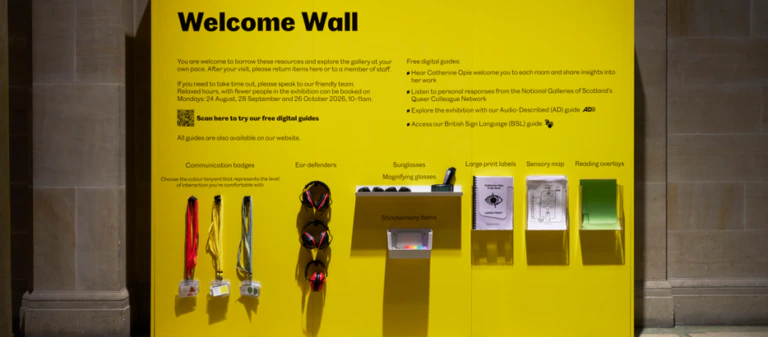
Architecture, technology, increasing access, exhibition themes, institutional brands and a desire to engage with visitors on an emotional level are all influencing new approaches to wayfinding in the cultural sector.
The Lost Palace experience created by Historic Royal Palaces incorporates many of these elements and is groundbreaking in that it allows visitors to explore spaces that no longer exist.
Running from 21 July to 4 September, this interactive experience allows audiences to explore one of Europe’s largest palaces 300 years after it burnt down. The tour starts at London's Banqueting House – the only surviving room of Whitehall Palace, which had 1,500 rooms across its 26 acre site and is where Henry VIII married Anne Boleyn and Jane Seymour. Visitors are guided to key locations by handheld devices, 3D sound and haptic technology, which utilises touch.
Surround sound will put visitors on the stage during the first performance of Shakespeare’s King Lear, which was put on at the theatre for the royal court.
A wooden object with a heartbeat will take people on the final walk Charles I took to his execution. Utilising GPS technology, the heart beats strongest the closer it gets to the site of the execution and upon arrival is stops completely. Modern-style street signs will also be used to announce the king’s execution. The devices developed for the project have been tested by members of the public and are the result of collaborations between artists and technology specialists.
There are, however, simpler ways that museums can make emotional connections with visitors while at the same time guiding them through their collections. The Wellcome Collection, for instance, offers bespoke visitor trails tailored to different moods and interests. The Braver Trail, for instance, is designed to inspire people about the bravery of individuals, leading them on an exploration of tattoos, phantom limbs and oppressed sexualities.
Signage can be used to communicate with audiences on an emotional and personal level says Karen Hughes, the creative director at True North – a design and branding agency based in Manchester.
In her article she writes: “This is where brand and identity comes into play. What brand qualities do you want to convey through signage? Do you need to communicate a sense of trust and reliability or do you want to appear playful and inviting?”
In fact, a desire to consolidate and strengthen an institution’s brand can be a key driver behind creating a new approach to wayfinding and signage, according to Alex Wood and Lucy Holmes, founders and directors of design company Holmes Wood.
“Usually the reason for re-looking at wayfinding is because there is a new brand that needs to be applied across all forms of communication and/or high levels of negative feedback from visitors and staff,” explain Holmes and Wood in an article outlining the challenges museums face when addressing wayfinding.
A lack of signage, poorly placed objects and text panels, no subtitles for videos and minimal use of audio are all factors that can negatively affect the visitor-experience for those with disabilities. But technology can overcome some of these issues, with some museums designing venue specific apps to help people get around.
Bespoke apps, however, are normally the reserve of large institutions with big budgets and many smaller museums choose off-the-shelf wayfinding apps, which are often low-cost, user-friendly and regularly updated.
Many apps also allow visitors to explore access options before their visit and get information that is tailored to their specific needs.
Wireless beacons mean that the navigational features of these apps can be easily combined with curatorial content writes Nick Goss in his article about how museums can increase access for disabled visitors, ensuring “greater intellectual” access.
Some apps are specifically tailored to cater for people with a specific disability. For instance, the Ucan go mobile app, aimed at visually impaired visitors, has a routing feature that lets the user select their chosen destination before giving them step by step instructions on how to get there, including reference point photos.
Audio and multimedia guides and re-purposed tablets are still popular options, and are often used to provide highly bespoke information or as part of a fully immersive experience.
Last year’s Tate Sensorium – a multisensory art exhibition at Tate Britain – illustrated new possibilities for tailored content. Visitors to the exhibition were kitted out with biometric measurement devices to record electrodermal activity, or perspiration, which indicates levels of excitement. The data was used to create personalised tours around the rest of the gallery’s displays, pointing people in the direction of paintings that are likely to resonate with them.
Even the most traditional forms of wayfinding, such as the humble map, are being reformed. New York’s Metropolitan Museum of Art has recently launched a digital map of its huge Met Fifth Avenue site.
The Lost Palace experience created by Historic Royal Palaces incorporates many of these elements and is groundbreaking in that it allows visitors to explore spaces that no longer exist.
Running from 21 July to 4 September, this interactive experience allows audiences to explore one of Europe’s largest palaces 300 years after it burnt down. The tour starts at London's Banqueting House – the only surviving room of Whitehall Palace, which had 1,500 rooms across its 26 acre site and is where Henry VIII married Anne Boleyn and Jane Seymour. Visitors are guided to key locations by handheld devices, 3D sound and haptic technology, which utilises touch.
Surround sound will put visitors on the stage during the first performance of Shakespeare’s King Lear, which was put on at the theatre for the royal court.
A wooden object with a heartbeat will take people on the final walk Charles I took to his execution. Utilising GPS technology, the heart beats strongest the closer it gets to the site of the execution and upon arrival is stops completely. Modern-style street signs will also be used to announce the king’s execution. The devices developed for the project have been tested by members of the public and are the result of collaborations between artists and technology specialists.
There are, however, simpler ways that museums can make emotional connections with visitors while at the same time guiding them through their collections. The Wellcome Collection, for instance, offers bespoke visitor trails tailored to different moods and interests. The Braver Trail, for instance, is designed to inspire people about the bravery of individuals, leading them on an exploration of tattoos, phantom limbs and oppressed sexualities.
Signage can be used to communicate with audiences on an emotional and personal level says Karen Hughes, the creative director at True North – a design and branding agency based in Manchester.
In her article she writes: “This is where brand and identity comes into play. What brand qualities do you want to convey through signage? Do you need to communicate a sense of trust and reliability or do you want to appear playful and inviting?”
In fact, a desire to consolidate and strengthen an institution’s brand can be a key driver behind creating a new approach to wayfinding and signage, according to Alex Wood and Lucy Holmes, founders and directors of design company Holmes Wood.
“Usually the reason for re-looking at wayfinding is because there is a new brand that needs to be applied across all forms of communication and/or high levels of negative feedback from visitors and staff,” explain Holmes and Wood in an article outlining the challenges museums face when addressing wayfinding.
A lack of signage, poorly placed objects and text panels, no subtitles for videos and minimal use of audio are all factors that can negatively affect the visitor-experience for those with disabilities. But technology can overcome some of these issues, with some museums designing venue specific apps to help people get around.
Bespoke apps, however, are normally the reserve of large institutions with big budgets and many smaller museums choose off-the-shelf wayfinding apps, which are often low-cost, user-friendly and regularly updated.
Many apps also allow visitors to explore access options before their visit and get information that is tailored to their specific needs.
Wireless beacons mean that the navigational features of these apps can be easily combined with curatorial content writes Nick Goss in his article about how museums can increase access for disabled visitors, ensuring “greater intellectual” access.
Some apps are specifically tailored to cater for people with a specific disability. For instance, the Ucan go mobile app, aimed at visually impaired visitors, has a routing feature that lets the user select their chosen destination before giving them step by step instructions on how to get there, including reference point photos.
Audio and multimedia guides and re-purposed tablets are still popular options, and are often used to provide highly bespoke information or as part of a fully immersive experience.
Last year’s Tate Sensorium – a multisensory art exhibition at Tate Britain – illustrated new possibilities for tailored content. Visitors to the exhibition were kitted out with biometric measurement devices to record electrodermal activity, or perspiration, which indicates levels of excitement. The data was used to create personalised tours around the rest of the gallery’s displays, pointing people in the direction of paintings that are likely to resonate with them.
Even the most traditional forms of wayfinding, such as the humble map, are being reformed. New York’s Metropolitan Museum of Art has recently launched a digital map of its huge Met Fifth Avenue site.