The museum sector has faced many profound challenges of late, not least working out how to survive through trying times of economic austerity. It can seem like a constant battle to keep up with ever-increasing demands, new legislation, fragmented policies and ever diminishing funding.
Times continue to test us, especially in the regions and more rural areas, where arguably public funding support is most needed yet least in evidence. The effects of insufficient funding include short-termism, reduced opening hours and redundancies, which in turn lead to a loss of expert knowledge, and a lack of continuity in outreach initiatives.
At a time when the value of culture and heritage to health and wellbeing is recognised, it seems incredible that our government should be so blind to the needs of people living in more rural areas.
But by developing partnerships with external organisations and seeking user feedback from disabled visitors, museums can improve their access offer even in financially challenging times.
Transport partnerships
One major issue for elderly and disabled people is transport, without which many may become isolated from community and cultural facilities. The provision of day care centres is diminishing and a growing number of older residents are identified as being in danger of isolation.
Some museums are now working with charities and housing associations to tackle this problem, helping to support older members of the community while increasing engagement with their collections.
National Museums Liverpool has worked with local housing associations, which have provided minibuses to bring elderly residents to its free Meet Me at the Museum events, where they take part in organised activities. The project provides the residents with greater opportunities for social interaction, and has played a significant role in increasing community engagement.
Similarly in London the City Bridge Trust has provided a vital lifeline to enable disabled people to take part in projects at the Geffrye Museum. The museum runs a range of creative activities to help people recovering from strokes or other debilitating conditions. The specially adapted transport provided by the City Bridge Trust has been a valuable resource for the local community in helping people access this support.
User experience testing
User experience testing is another area where partners can provide support through visitor observation or in-depth interviewing. At a time when a diminishing number of full-time curators, facilitators and members of staff are under increased pressure, community volunteers and focus groups are a valuable resource.
User research alerts us to things we may have noticed but have failed to deal with. Some issues reported to staff seem to be forgotten, not recorded or not passed to the appropriate department.
One way of doing this is taking a group of people who face access challenges on a tour of the museum.
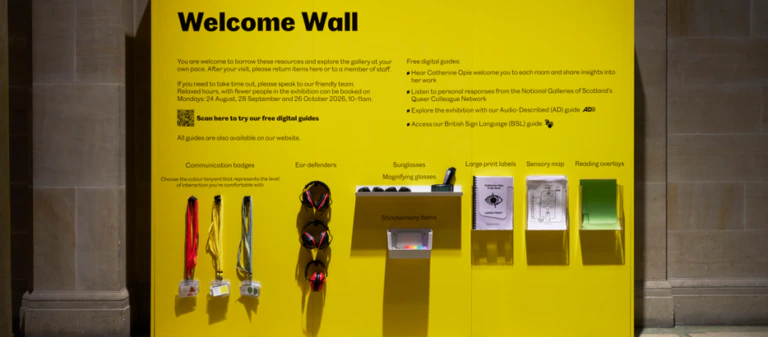
As a consultant, I have taken groups of visitors with varying degrees of disability around the museum. On the check list is: accessible facilities; seating availability; hearing loops; Braille; orientation and way-finding; access for wheelchairs and zimmer frames between displays; potentially dangerous obstacles; and the availability of handling, and sensory or tactile objects.
When we took a group of elderly people around a museum, we found that interpretative text was placed at ankle level, where the only way to read it was to bend or hunker down, making it impossible to decipher for anyone experiencing sight, knee, hip or back problems – whatever their age.
And at one recent exhibition, it was impossible to hear the recording of an interactive display video because of its proximity to another video being played some feet away. How had no one in-house realised this problem and not taken steps to rectify the situation? Surely this ought to have been dealt with within a few days, or better still, before the exhibition opened.
After decades of witnessing difficulties like this at exhibitions, I think that a valuable lesson would be learned if all able-bodied curators and staff experienced their museums in a wheelchair or blindfolded.
There are many different disabilities to think about. Considerations should be made for people with motor disabilities, such as cerebral palsy; people who are deaf, blind, visually impaired or have cognitive issues.
Museums should also address the needs of families with young children and other factors that may inhibit access, such as obesity, poor fitness levels and pregnancy.
Some access problems arise as a result of the normal process of ageing, while others may be temporary, such as a broken limb or recovering from a debilitating illness. Making it better for any one of these restrictions improves facilities for everyone.
User experience testing can also help improve the accessibility of digital technology. Access concerns arise for online information where there are flashing images or lights, contravening legal and ethical requirements for the safety of those who suffer photosensitive epilepsy.
Aside from these concerns, flashing images on side banners advertising or promoting an event can distract from key intellectual content, and can act as a barrier to concentration and understanding for all users.
User research often highlights small issues that can make a big difference once addressed. An interesting point was raised by one of a group of elderly people on a recent museum tour.
Arriving in the museum foyer, some first-time visitors are not sure which way to turn. If there is a queue at the information desk they feel hesitant, and will occasionally lose courage and leave.
Some museums will have a volunteer guide near the door – an excellent idea to welcome newcomers. Welcomers make an enormous contribution to people’s first impression of the institution, making them feel comfortable and giving them a sense of belonging within the museum environment.
Financial limitations should not be an excuse for inaction. All of the issues I have mentioned are common and not beyond some small, relatively inexpensive and innovative adjustment. It comes down to this: how much do we care about our visitors’ experience?
What are the collections for if not for the education, enjoyment and betterment of the community?
Museum collections have the power to engage and delight, stimulate the imagination, get people talking, and teach us about our rich and diverse heritage. We have a duty as custodians to ensure no one is excluded from them.
Caro Skyrme is a PhD researcher at Bath Spa University. She has a master's degree from Birkbeck, University of London in arts policy and management. She is an adviser on access and user experience for museums, galleries and heritage sites and serves on the advisory panel for the engagement of older audiences at the Geffrye Museum, London.
Times continue to test us, especially in the regions and more rural areas, where arguably public funding support is most needed yet least in evidence. The effects of insufficient funding include short-termism, reduced opening hours and redundancies, which in turn lead to a loss of expert knowledge, and a lack of continuity in outreach initiatives.
At a time when the value of culture and heritage to health and wellbeing is recognised, it seems incredible that our government should be so blind to the needs of people living in more rural areas.
But by developing partnerships with external organisations and seeking user feedback from disabled visitors, museums can improve their access offer even in financially challenging times.
Transport partnerships
One major issue for elderly and disabled people is transport, without which many may become isolated from community and cultural facilities. The provision of day care centres is diminishing and a growing number of older residents are identified as being in danger of isolation.
Some museums are now working with charities and housing associations to tackle this problem, helping to support older members of the community while increasing engagement with their collections.
National Museums Liverpool has worked with local housing associations, which have provided minibuses to bring elderly residents to its free Meet Me at the Museum events, where they take part in organised activities. The project provides the residents with greater opportunities for social interaction, and has played a significant role in increasing community engagement.
Similarly in London the City Bridge Trust has provided a vital lifeline to enable disabled people to take part in projects at the Geffrye Museum. The museum runs a range of creative activities to help people recovering from strokes or other debilitating conditions. The specially adapted transport provided by the City Bridge Trust has been a valuable resource for the local community in helping people access this support.
User experience testing
User experience testing is another area where partners can provide support through visitor observation or in-depth interviewing. At a time when a diminishing number of full-time curators, facilitators and members of staff are under increased pressure, community volunteers and focus groups are a valuable resource.
User research alerts us to things we may have noticed but have failed to deal with. Some issues reported to staff seem to be forgotten, not recorded or not passed to the appropriate department.
One way of doing this is taking a group of people who face access challenges on a tour of the museum.
As a consultant, I have taken groups of visitors with varying degrees of disability around the museum. On the check list is: accessible facilities; seating availability; hearing loops; Braille; orientation and way-finding; access for wheelchairs and zimmer frames between displays; potentially dangerous obstacles; and the availability of handling, and sensory or tactile objects.
When we took a group of elderly people around a museum, we found that interpretative text was placed at ankle level, where the only way to read it was to bend or hunker down, making it impossible to decipher for anyone experiencing sight, knee, hip or back problems – whatever their age.
And at one recent exhibition, it was impossible to hear the recording of an interactive display video because of its proximity to another video being played some feet away. How had no one in-house realised this problem and not taken steps to rectify the situation? Surely this ought to have been dealt with within a few days, or better still, before the exhibition opened.
After decades of witnessing difficulties like this at exhibitions, I think that a valuable lesson would be learned if all able-bodied curators and staff experienced their museums in a wheelchair or blindfolded.
There are many different disabilities to think about. Considerations should be made for people with motor disabilities, such as cerebral palsy; people who are deaf, blind, visually impaired or have cognitive issues.
Museums should also address the needs of families with young children and other factors that may inhibit access, such as obesity, poor fitness levels and pregnancy.
Some access problems arise as a result of the normal process of ageing, while others may be temporary, such as a broken limb or recovering from a debilitating illness. Making it better for any one of these restrictions improves facilities for everyone.
User experience testing can also help improve the accessibility of digital technology. Access concerns arise for online information where there are flashing images or lights, contravening legal and ethical requirements for the safety of those who suffer photosensitive epilepsy.
Aside from these concerns, flashing images on side banners advertising or promoting an event can distract from key intellectual content, and can act as a barrier to concentration and understanding for all users.
User research often highlights small issues that can make a big difference once addressed. An interesting point was raised by one of a group of elderly people on a recent museum tour.
Arriving in the museum foyer, some first-time visitors are not sure which way to turn. If there is a queue at the information desk they feel hesitant, and will occasionally lose courage and leave.
Some museums will have a volunteer guide near the door – an excellent idea to welcome newcomers. Welcomers make an enormous contribution to people’s first impression of the institution, making them feel comfortable and giving them a sense of belonging within the museum environment.
Financial limitations should not be an excuse for inaction. All of the issues I have mentioned are common and not beyond some small, relatively inexpensive and innovative adjustment. It comes down to this: how much do we care about our visitors’ experience?
What are the collections for if not for the education, enjoyment and betterment of the community?
Museum collections have the power to engage and delight, stimulate the imagination, get people talking, and teach us about our rich and diverse heritage. We have a duty as custodians to ensure no one is excluded from them.
Caro Skyrme is a PhD researcher at Bath Spa University. She has a master's degree from Birkbeck, University of London in arts policy and management. She is an adviser on access and user experience for museums, galleries and heritage sites and serves on the advisory panel for the engagement of older audiences at the Geffrye Museum, London.