Stories That Made Us is a South Asian heritage and cultural project that I founded in 2021 with support from Coventry Artspace. It was set up to tell the nuanced stories of South Asian communities while challenging stereotypes using archives as evidence and storytelling as a method of engagement.
Since 2021 we have held four exhibitions; commissioned work from artists, filmmakers, and designers; and facilitated talks, tours and workshops. Our long-term ambition is to establish a Living Museum of South Asian Stories in Coventry in a physical building with a cafe, archives and spaces for exhibitions as well as learning and participation. VR and AI technologies will play a role in terms of accessibility and participation.
Stories That Made Us – Roots, Resilience, Representation (14 November 2025 - 25 May 2026) was developed in partnership with the Herbert Art Gallery & Museum thanks to funding from the The National Lottery Heritage Fund. It was designed as the blueprint for a Living Museum of South Asian Stories and inspired by two collections - my own archive of more than 1000 items, including vinyl records, cassettes, magazines, posters and photographs, and the Virk Collection, created by my father and now held at The Herbert Art Gallery and Museum.
Based on my vision and the stories I wanted to tell, the exhibition had five room settings:
- Passport Control: the story of the South Asian migrant community arriving in the UK in the 1960s.
- Living Room: the story of activists and artists like my father, Harbhajan Singh Virk, who planned anti-racism protests while listening to music and reciting poetry in the 1970s.
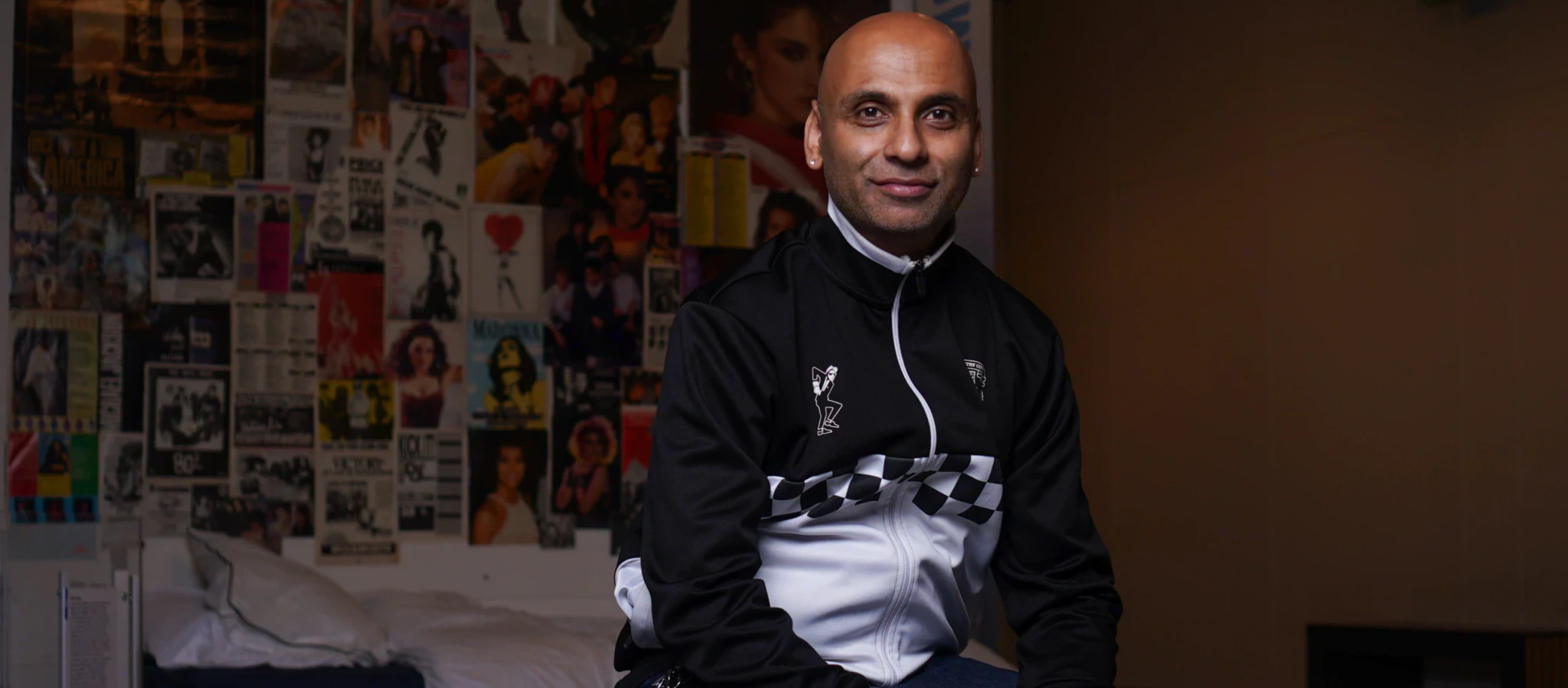
- Bedroom: my story of growing in Margaret Thatcher’s Britain in the 1980s where race, identity and belonging intersected with friendships and popular culture.
- Radio Station: my mother Jasvir Kang’s story as a ground-breaking radio broadcaster, poet and author in the 1990s, who spoke of domestic abuse and violence as well as female empowerment.
- Reflection Space: an invitation for visitors to share their stories, extending the exhibition narrative with contributions made by the public.
Wrapped around the exhibition walls was an historical timeline that depicted key milestones in the relationship between the UK and India (and then known as South Asia) from 1600 to 2010.
Advertisement
Graphics, film, music, oral histories, radio broadcasts, poetry, short stories, artefacts, objects and room settings bought the family stories and historical timeline alive. I worked with an incredibly talented team of individuals (full credits).
My voice was included throughout the exhibition and was part of every decision. At no point did I feel that I was being marginalised so that the organisation was taking over the narrative or authorship – that sat with me.
Stories That Made Us was more than an exhibition – there was a significant programme of activities and events supporting learning, participation and public engagement with communities, families, schools and colleges.
Developing South Asian audiences and participation was a key objective, particularly within Coventry, where local South Asian residents made up about 18.5% of the local population, but are under-represented within cultural services.
We partnered with South Asian media company DESIblitz.com, undertook outreach work and worked strategically through a South Asian Cultural Ambassadors Scheme in order to engage with communities.
Cross-departmental training also took place so that staff could develop their knowledge and awareness of the nuances of South Asian culture and heritage, and be prepared to welcome new audiences.
Advertisement
The exhibition attracted more than 22,000 visitors, ran 32 creative workshops and 12 public events. Visitors left 440 reflections with us.
Recommendations for heritage organisations that want to work with marginalised communities:
- The weight of power can’t sit within the organisation – it must be shared with the community. This equitable approach allows communities to feel they have a voice and stake in the project, particularly if the ideas and stories have come from the community. Organisations must value, listen to and action ideas. Care and sensitivity need to be central when it comes to the heritage stories born out of the community.
- Regular and transparent communications is essential. A lack of communication or “holding back” information can lead to misunderstandings, which can cause damage to the relationship and wider community fallout.
- Relevant training should be in place so that staff can be the best version of themselves, not just with visitors and participants but also internally with their colleagues.
- Community ambassadors are incredibly important for the civic ambitions of an organisation. Their role can support with audience development, enhance the storytelling in an exhibition and broker meaningful relationships with members of their community through a process of outreach, dialogue and trust.
- The vision and ideas matter – they should never be taken for granted. Oganisations must care for and protect the vision and ideas, and the people who share them, if they want to build a legacy of trust and the development of future work which centres community voices.
Hardish Virk is an artist, producer and curator. He leads the Stories That Made Us project