Jonathan Knott reports on what has changed since the Disability Discrimination Act was passed in 1995
The Disability Discrimination Act (DDA) made it unlawful to discriminate against people in respect of their disabilities in relation to employment, the provision of goods and services, education and transport. In 2010 the Equality Act replaced the DDA, although not in Northern Ireland.
Employers and service providers are required to make “reasonable adjustments” to avoid discriminating against disabled people.
How have museums responded to this challenge during the past 20 years?
According to Euan MacDonald, the co-founder of Euan’s Guide, a disabled access review website and app, museums and galleries are on the whole good at making reasonable adjustments for disabled visitors.
“Many of our top reviews are about access in museums, and reviewers have commented on creative access features as well as good examples of what you would expect to find, such as level access, wide doors, and good accessible toilets,” says MacDonald.
Wheelchairs users and people with visual or hearing impairment are among the most obvious groups who can benefit from such adjustments.
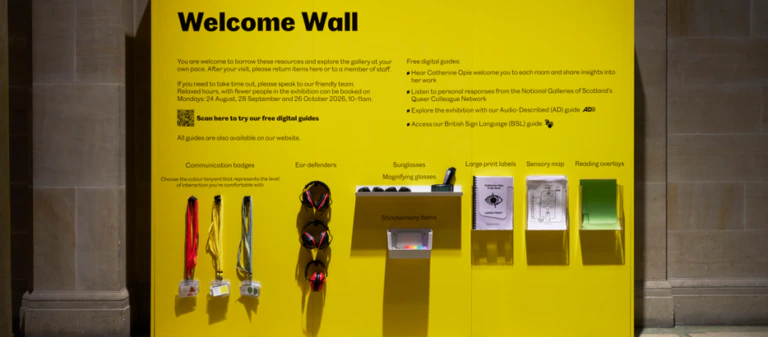
Common access measures implemented by museums include lifts and ramps, tours and talks in British Sign Language (BSL) or touch tours, which allow visitors to handle objects in the collection, or replicas of them. Many venues also provide information in Braille and large print, and set up induction loops to reduce background noise for visitors who use hearing aids.
Large museums might have more resources to make such adjustments but this doesn’t mean they are better at enabling access than smaller venues.
“While larger museums perhaps have greater capacity to make big physical adjustments, good disabled access can be just as much about a warm welcome and good service as it is about physical access,” says MacDonald.
“The size of the venue doesn’t necessarily impact how accessible it is, rather visitor interpretation and engagement does.”
A 2015 blog post on Euan’s Guide providing access tips for museums and galleries highlights that small details matter. For example, when addressing access for wheelchair users, museums should make space not only between display cases, but also beneath them so that people with a visual impairment can get closer to objects.
Added extras such as providing water bowls for assistance dogs can also make a real difference. Seeking feedback from disabled visitors is crucial for identifying what kinds of adjustments should be made.
Some museums come up with creative solutions to ensure measures to improve access don’t interfere with the need to conserve objects and buildings. For instance, the London Canal Museum has placed buttons next to objects with low lighting that increase the brightness for 30 seconds, striking a balance between addressing the needs of visually impaired visitors and protecting artefacts.
Good signage is important for a wide range of visitors, not just wheelchair users, says MacDonald.
“Many people find orientation challenging,” he says. “Signage is particularly helpful for visually impaired people, those with neurological impairments, and people experiencing dementia. It’s also incredibly useful for all guests visiting museums or galleries, particularly if staff are spread thin and aren’t available to assist people with navigation.”
Euan’s Guide stresses the importance of providing accessible information across the board, advising museums to look everything from leaflets to signage.
MacDonald says: “Are audio versions of leaflets available? Do you have large print versions of menus in the cafe? Is there a BSL video which welcomes visitors to your museum and tells them what to expect?”
These principles extends to the online world, adds MacDonald: “Websites are one of the most popular places people look for disabled access information before deciding to visit somewhere new,” he says.
“If that information is sparse or not logically placed online, it can give the impression that the museum or gallery hasn’t put much thought into access.”
Elanor Cowland, the access and equality manager at the British Museum, who often visits venues with her disabled daughter, agrees that an accessible, informative website is the key to an enjoyable visit.
“I will always look at a website before a visit,” she says. “I want to know how to get there, if [the venue] is wheelchair accessible, which entrance to use, if there are accessible toilets with changing areas and what to expect to see. It is good to get a feel for how busy, noisy, and bright the museum might be and if there are quieter areas.”
Cowland says progress has been made since the DDA, especially in the realm of physical access, but believes there is much more to be done.
“Disability is a broad term,” she says. “Barriers can be financial, physical, cultural and intellectual.”
The changing economic and social environments that museums work in affect access. Concern about financial accessibility is growing as many museums introduce charging, or consider doing so.
Conversely, as more and more people use smartphones and tablets, institutions have the chance to employ digital tools to increase their accessibility.
The Royal Yacht Britannia provides tablets loaded with a BSL tour of the attraction for visitors with hearing impairments. Similarly, the Roald Dahl Museum’s Signly app plays BSL videos when pointed at one of 24 trigger points dotted around the exhibition.
And National Museums Liverpool’s House of Memories app allows people with dementia to explore objects from the past in ways that help to stimulate memories and conversations. The app also provides information about living with the condition.
Another trend in recent years is a growing awareness of the importance of catering for neurodiverse museum visitors, such as those with autism or other communication and learning difficulties.
In 2014 the RAF Museum became the first museum in the UK to receive the National Autistic Society’s Autism Access Award, which recognises that an organisation is autism-friendly.
As part the application process the RAF Museum created a quiet space where the lighting can be altered with a dimmer switch. The space is for visitors, who may be overwhelmed by the sights or sounds of exhibits or find crowded places difficult.
The museum also provides pre-visit information for visitors with autism and has an autism-friendly trail, which can be downloaded from its website.
The RAF Museum also provides work placements for students with autism that attend a specialist college. Participants work at the museum for one to two hours a week for three to four weeks. Their tasks include preparing materials for the museum’s school programmes.
David Keen, the museum’s access development manager, says that the presence of autistic students at the museum reinforces its commitment to making provision for differently-abled people.
“Quite apart from the benefit to our department, the scheme demonstrates that students with special needs can be just as useful as any other student. This helps to improve the general attitude of the museum to inclusiveness,” says Keen.
As this project suggests, museums looking to embed inclusive principles within their culture need to think about more than just visitor services. They need to incorporate the input and perspectives of disabled people into all aspects of their work, including the content of their collections and exhibitions, and their recruitment and management practices.
In 2014, National Museums Liverpool put on an exhibition in partnership with theatre and creative arts company Wicked Fish that documented the family, social and cultural history of people with learning disabilities. From There to Here: The Hidden History of People with Learning Difficulties in Merseyside was part of a two-year project funded by the Heritage Lottery Fund.
The People’s History Museum in Manchester has also worked with disabled activists to commemorate the fight for disability rights. Chris Burgess, the museum's curator, says the process is far from a straightforward one, and museums must be careful to negotiate differing interpretations of contested issues.
An effective way for an organisation to make sure it includes the input of disabled people is for them to be represented on its staff. A museum with an inclusive approach will make sure that its recruitment and management policies are accessible to disabled people.
The Disability Co-operative Network (DCN) is an online platform for the museum and cultural sector, founded last year to help organisations share knowledge and best practice on increasing access for people with disabilities.
Becki Morris, a collections assistant at Heritage and Culture Warwickshire, which is the leading partner in the steering committee for the DCN, argues that a representative workforce helps diversify a museum’s audiences, and that experience from the commercial sector suggests that insight from disabled employees can also improve an organisation’s financial performance.
Such findings underline that increasing access is not a burden but an opportunity – a viewpoint that McDonald underlines.
“Museums and galleries depend on visitors to survive; so making sure the venue is accessible to as many people as possible should be a top priority."
The Disability Discrimination Act (DDA) made it unlawful to discriminate against people in respect of their disabilities in relation to employment, the provision of goods and services, education and transport. In 2010 the Equality Act replaced the DDA, although not in Northern Ireland.
Employers and service providers are required to make “reasonable adjustments” to avoid discriminating against disabled people.
How have museums responded to this challenge during the past 20 years?
According to Euan MacDonald, the co-founder of Euan’s Guide, a disabled access review website and app, museums and galleries are on the whole good at making reasonable adjustments for disabled visitors.
“Many of our top reviews are about access in museums, and reviewers have commented on creative access features as well as good examples of what you would expect to find, such as level access, wide doors, and good accessible toilets,” says MacDonald.
Wheelchairs users and people with visual or hearing impairment are among the most obvious groups who can benefit from such adjustments.
Common access measures implemented by museums include lifts and ramps, tours and talks in British Sign Language (BSL) or touch tours, which allow visitors to handle objects in the collection, or replicas of them. Many venues also provide information in Braille and large print, and set up induction loops to reduce background noise for visitors who use hearing aids.
Large museums might have more resources to make such adjustments but this doesn’t mean they are better at enabling access than smaller venues.
“While larger museums perhaps have greater capacity to make big physical adjustments, good disabled access can be just as much about a warm welcome and good service as it is about physical access,” says MacDonald.
“The size of the venue doesn’t necessarily impact how accessible it is, rather visitor interpretation and engagement does.”
A 2015 blog post on Euan’s Guide providing access tips for museums and galleries highlights that small details matter. For example, when addressing access for wheelchair users, museums should make space not only between display cases, but also beneath them so that people with a visual impairment can get closer to objects.
Added extras such as providing water bowls for assistance dogs can also make a real difference. Seeking feedback from disabled visitors is crucial for identifying what kinds of adjustments should be made.
Some museums come up with creative solutions to ensure measures to improve access don’t interfere with the need to conserve objects and buildings. For instance, the London Canal Museum has placed buttons next to objects with low lighting that increase the brightness for 30 seconds, striking a balance between addressing the needs of visually impaired visitors and protecting artefacts.
Good signage is important for a wide range of visitors, not just wheelchair users, says MacDonald.
“Many people find orientation challenging,” he says. “Signage is particularly helpful for visually impaired people, those with neurological impairments, and people experiencing dementia. It’s also incredibly useful for all guests visiting museums or galleries, particularly if staff are spread thin and aren’t available to assist people with navigation.”
Euan’s Guide stresses the importance of providing accessible information across the board, advising museums to look everything from leaflets to signage.
MacDonald says: “Are audio versions of leaflets available? Do you have large print versions of menus in the cafe? Is there a BSL video which welcomes visitors to your museum and tells them what to expect?”
These principles extends to the online world, adds MacDonald: “Websites are one of the most popular places people look for disabled access information before deciding to visit somewhere new,” he says.
“If that information is sparse or not logically placed online, it can give the impression that the museum or gallery hasn’t put much thought into access.”
Elanor Cowland, the access and equality manager at the British Museum, who often visits venues with her disabled daughter, agrees that an accessible, informative website is the key to an enjoyable visit.
“I will always look at a website before a visit,” she says. “I want to know how to get there, if [the venue] is wheelchair accessible, which entrance to use, if there are accessible toilets with changing areas and what to expect to see. It is good to get a feel for how busy, noisy, and bright the museum might be and if there are quieter areas.”
Cowland says progress has been made since the DDA, especially in the realm of physical access, but believes there is much more to be done.
“Disability is a broad term,” she says. “Barriers can be financial, physical, cultural and intellectual.”
The changing economic and social environments that museums work in affect access. Concern about financial accessibility is growing as many museums introduce charging, or consider doing so.
Conversely, as more and more people use smartphones and tablets, institutions have the chance to employ digital tools to increase their accessibility.
The Royal Yacht Britannia provides tablets loaded with a BSL tour of the attraction for visitors with hearing impairments. Similarly, the Roald Dahl Museum’s Signly app plays BSL videos when pointed at one of 24 trigger points dotted around the exhibition.
And National Museums Liverpool’s House of Memories app allows people with dementia to explore objects from the past in ways that help to stimulate memories and conversations. The app also provides information about living with the condition.
Another trend in recent years is a growing awareness of the importance of catering for neurodiverse museum visitors, such as those with autism or other communication and learning difficulties.
In 2014 the RAF Museum became the first museum in the UK to receive the National Autistic Society’s Autism Access Award, which recognises that an organisation is autism-friendly.
As part the application process the RAF Museum created a quiet space where the lighting can be altered with a dimmer switch. The space is for visitors, who may be overwhelmed by the sights or sounds of exhibits or find crowded places difficult.
The museum also provides pre-visit information for visitors with autism and has an autism-friendly trail, which can be downloaded from its website.
The RAF Museum also provides work placements for students with autism that attend a specialist college. Participants work at the museum for one to two hours a week for three to four weeks. Their tasks include preparing materials for the museum’s school programmes.
David Keen, the museum’s access development manager, says that the presence of autistic students at the museum reinforces its commitment to making provision for differently-abled people.
“Quite apart from the benefit to our department, the scheme demonstrates that students with special needs can be just as useful as any other student. This helps to improve the general attitude of the museum to inclusiveness,” says Keen.
As this project suggests, museums looking to embed inclusive principles within their culture need to think about more than just visitor services. They need to incorporate the input and perspectives of disabled people into all aspects of their work, including the content of their collections and exhibitions, and their recruitment and management practices.
In 2014, National Museums Liverpool put on an exhibition in partnership with theatre and creative arts company Wicked Fish that documented the family, social and cultural history of people with learning disabilities. From There to Here: The Hidden History of People with Learning Difficulties in Merseyside was part of a two-year project funded by the Heritage Lottery Fund.
The People’s History Museum in Manchester has also worked with disabled activists to commemorate the fight for disability rights. Chris Burgess, the museum's curator, says the process is far from a straightforward one, and museums must be careful to negotiate differing interpretations of contested issues.
An effective way for an organisation to make sure it includes the input of disabled people is for them to be represented on its staff. A museum with an inclusive approach will make sure that its recruitment and management policies are accessible to disabled people.
The Disability Co-operative Network (DCN) is an online platform for the museum and cultural sector, founded last year to help organisations share knowledge and best practice on increasing access for people with disabilities.
Becki Morris, a collections assistant at Heritage and Culture Warwickshire, which is the leading partner in the steering committee for the DCN, argues that a representative workforce helps diversify a museum’s audiences, and that experience from the commercial sector suggests that insight from disabled employees can also improve an organisation’s financial performance.
Such findings underline that increasing access is not a burden but an opportunity – a viewpoint that McDonald underlines.
“Museums and galleries depend on visitors to survive; so making sure the venue is accessible to as many people as possible should be a top priority."