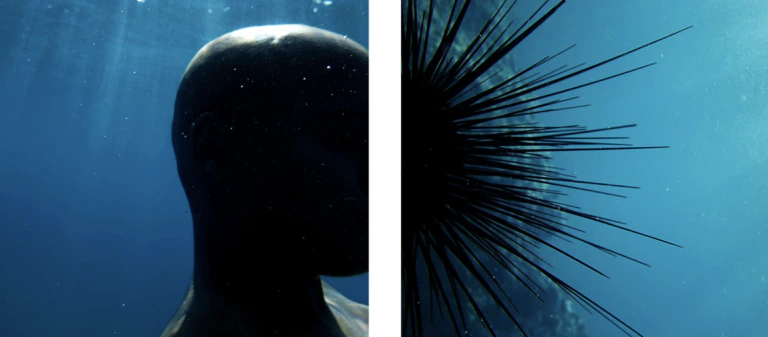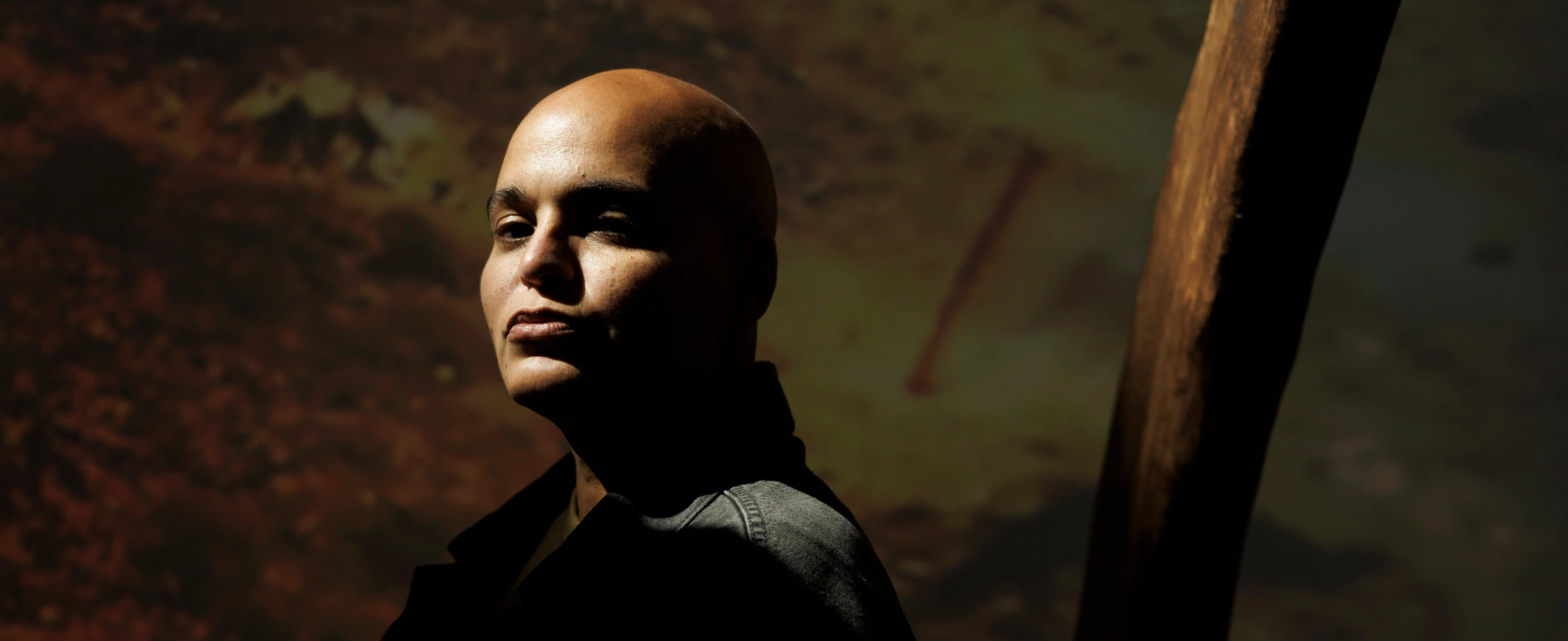
Nadia Huggins, who was born in Trinidad and Tobago and is now based in St Vincent and the Grenadines, is a multidisciplinary visual artist. Using photography, video and installation, her work merges documentary and conceptual practices that centre around Caribbean land and seascapes to explore the poetics that lie in the mundane and the quotidian of human life, along with its ties to temporality, memory and transformation.
Museum X: How does your practice engage with ecological and environmental histories in the Caribbean, and how might museum collections deepen, or limit, these conversations?
I do a bit of research, particularly in relation to the Caribbean, through archival images. My work is sometimes framed against the historical image of the Caribbean.
I recognise there is always an agenda with photographs, so I try to counter these outdated narratives in my work. While I acknowledge that the camera was introduced to the Caribbean as a colonial tool, and it is hard to completely push back against certain established rules (particularly in relation to composition, colour and light), my work attempts to present a different perspective than the gaze of someone who might be from outside of the region.
My practice engages with ecological and environmental histories by trying to reframe what is of value to us in contemporary Caribbean society. This is why my work focuses on everyday experiences. The environment was never the central focus of my practice when I began, but its presence exists in the work and I have been specifically exploring it in the past 12 years.
To separate a photograph from ecological implications, especially in the Caribbean, is almost impossible. We are living beings moving through small spaces that can only be urbanised to a certain extent. The environment is naturally implicated in our lives here and, by extension, in the photograph.
Advertisement
Our history of photography is still young in the grand scheme of the medium. The region is still growing in the sense of having a critical practice or an aesthetic that is specific to the Caribbean – and it becomes even more nuanced among Anglophone, Hispanic, Francophone and Dutch people.
Museums offer a formal way of presenting works to the public that can provide a cohesive and clear context to help them engage with works of art – especially when presented in relation to other works. There are many layers to an artwork beyond the image people see on the wall. The process to get to that place is where the limitations begin, especially when political values and differences start to prohibit ways that the artist can express themselves.
Radical thinking and creation happens outside of institutions. Museums can consider more radical ways of showing works, as well as creating the platform for more nuanced discussions with artists, curators and the public.
“Museums can be sites of living archival memory”
What does it mean to think of the museum “at the edge” geographically, historically or conceptually, in relation to the climate crisis?
I think the climate crisis is a political one. It is a series of complex events that have compounded into these multi-layered issues, with a domino effect on every single aspect of our lives and the world we live in – from ocean warming and coral bleaching to the way disasters unfold, food, security, wars, genocide, immigration, the housing crisis and racism. To think one thing is separate from the other at this stage would be ignorant of us.
Advertisement
Museums aren’t the only ones at the edge. As denizens of the earth, we all have to understand our relationship with the climate crisis and play our own small part to counter it. Now is the time for all of us to dig deeper into our inherent roles, whether institutional or individual, and to think up more radical approaches to a new future.
The reality is that there is no life without healthy natural environments. We have many blueprints of approaches that work. Indigenous practices have shown us time and time again that we don’t necessarily need to reinvent the wheel in every regard, but that we also cannot keep operating in the same way we have been. It’s unsustainable for our long-term existence.
How are climate and environmental change already reshaping cultural heritage in the Caribbean, and what responsibilities do museums hold within this?
In the Caribbean, the greatest vulnerability is around hurricanes, volcanic eruptions, fires and tsunamis, which can greatly transform landscapes and properties.
The biggest risk in relation to this is how artworks, publications and data are being archived. How are decisions being made with regards to what is of value to us? These are questions I am sure museums are thinking about, but it is increasingly important to put systems in place to ensure that there is a life and record of our ideas and existence beyond our own lifetime.
What forms of knowledge – embodied, ecological and ancestral – are often missing from museum spaces, and how might they be re-centred?
There needs to be more rich, dynamic public programming. We must engage with artists and curators more, facilitating workshops and talks. But also look at who the public are – how are they encouraged to engage with these institutions? Often, we assume the needs of others and don’t listen to what is needed within communities. More forums set up to facilitate this would be helpful and there is a lot to learn and adopt from institutions that already do this.
Advertisement
The reality of living on an island means I understand the relevance of having a single space for the public to visit and, of course, the limitations of funding. That said, I think satellite locations should be set up beyond the urban landscape, even if short-term. How can we talk about the ocean or the forests when people aren’t actively engaging with them? How can museums extend into physical spaces beyond the traditional white walls?
What does a Caribbean museum of the future look and feel like to you?
I imagine the museum inhabiting three spaces – urban, rural and oceanic/coastal – with digital and physical archives. When physical space for storage becomes an issue, how are artworks, conversations and ideas being archived for posterity? Crucially, how cohesive and accessible is it for the public?
Architecturally, we need more inviting spaces that are less brutalist or colonial in design and integrate native plant species. Museums can be sites of living archival memory. I would love to walk into these spaces and feel I’m in the right place. From a distance, the building should create wonder, curiosity and enticement, and that feeling should be sustained once I enter it.
There should be a clear discourse between the building and the local community and surrounding environment. This should extend beyond people and into other species. Integration and symbiosis are key things to consider in this Caribbean museum of the future.
Nadia Huggins is a multidisciplinary visual artist who uses photography, video and installation to explore Caribbean land and seascapes. Recent work has been featured in commissioned installations and international photography and visual arts exhibits, including Otras Montañas at Ocean Space, Venice (2025); Caribe por venir, Museo de Arte Contemporáneo de Puerto Rico (2025); and Prospect 6 held in New Orleans (2024), among others