Sandra Shakespeare and Livi Adu reflect on what happens when museum-making begins with people rather than collections
Five years ago, the Museum X takeover edition of Museums Journal opened a conversation about what a Black British Museum might become. Many of the ideas explored then – relationships, intangible heritage, distributed authority and community living practice – continue to shape our thinking today.
Museum X has focused on that work, developing relationships, partnerships and shared authority that allow a Black British Museum to emerge not simply as an idea, but as a living practice through co-creation and collaboration.
In many ways, we have spent the past five years building the museum before the building exists.
Conditions for a Black British Museum
For many of the communities we work with, the question is not simply whether the historical legacies of African presence and the wider African diaspora are visible within museums. It is whether they have the power to shape how those histories are researched, interpreted, cared for and shared. Representation matters, but on its own it is not enough. Communities want agency, influence and a meaningful stake in how cultural knowledge and value are created, held and shared.
Advertisement
Museum X is testing what happens when museum authority is distributed rather than centralised. This creates spaces where lived experience is not treated as an addition to expertise, but as a form of expertise in itself.
Ultimately, the question is not simply what a Black British Museum might contain but what kind of institution could emerge if the historical legacies of African presence and everyday life were treated not as a temporary programme, or institutional gap, but as a living and foundational part of British cultural life.
A museum imagined collectively
In 2024, Museum X convened a roundtable at Arts Council England with museum leaders, artists and practitioners to explore the future Black British Museum. Rather than beginning with questions of collections or architecture, the discussion returned repeatedly to purpose: should a museum simply preserve the past, or actively shape the future? Participants imagined a distributed, community-led institution rooted in learning, exchange and partnership rather than institutional authority. These conversations reinforced a simple idea: before deciding what a museum contains, we must first ask what relationships it exists to support.

Ethics as infrastructure
During our discussions, questions of ethics consistently returned to care. Participants recognised that historical legacies of African presence and the wider African diaspora cannot be approached only through celebration or only through trauma. Working with histories of enslavement, colonialism and racism requires thoughtful, trauma-informed approaches, but equally demands space for creativity, joy, imagination and cultural production. Ethics, therefore, is not simply about avoiding harm; it is about creating the conditions in which people feel respected, listened to and able to contribute on their own terms.
Advertisement
This shifts ethics from being an institutional policy to becoming part of a museum’s infrastructure. It shapes relationships before exhibitions, collections or programmes are developed.
For Museum X, ethics cannot sit at the end of a project as a policy, checklist or statement. It has to shape how the work begins: who is invited in, who holds power, who is listened to, who benefits, and how accountability is practised.
Not beginning with collections or buildings, the framework starts with social infrastructure: the relationships, networks, trust and shared knowledge that make cultural institutions possible. Rooted in Ubuntu (African humanity philosophy from southern Africa, meaning: ‘I am because we are’) it helps us think about museum-making as a collective practice, shaped through care, interdependence and responsibility.
It asks how we can create a museum for Black British and Pan-African culture that is more than representative; a museum shaped by intersectional narratives, lived experiences and community knowledge. With support from Arts Council England, Museum X now has greater capacity to test what a Black British Museum might become while continuing to develop its networks, partnerships and role as a space of living memory and experimentation.
Practice as proof
Our approach prioritises care-led, non-extractive methodologies, recognising that relationships are not a by-product of museum practice; they are part of the infrastructure that sustains it.
Advertisement
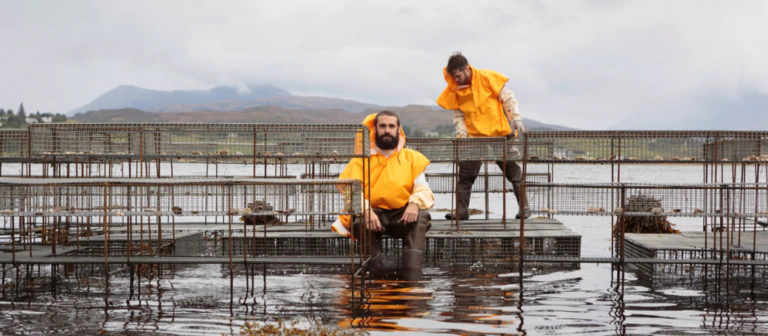
This approach informs projects including To Whom Does This Belong?, exploring archives, ownership and African presence in Cornwall; Our Living Archives, developed with Kresen Kernow Archives, Falmouth University, School of Film and Television and Kowetha; Black Beyond Data, with Royal Museums Greenwich; and Bitter Sweet: Legacies of Sugar, led by the Newham African Caribbean Heritage Reference Group.
Across these projects, a consistent question emerges: what happens when communities are invited to move beyond consultation and become co-authors of heritage?
Although each project differs in scale and context, they share a common methodology. Museum X uses creative practice as research: films become research tools, walking becomes a method for exploring memory and place, and archives become sites of dialogue rather than repositories of fixed knowledge. Success is measured not only through participation, but through the relationships, trust and shared knowledge that emerge.
These forms of social infrastructure may be less visible than buildings or collections, but they are no less significant.
Learning with the next generation
Museum X is also creating space for emerging practitioners to question inherited assumptions about authority, knowledge and museum practice. Through relationships with SOAS, the University of Leicester and Culture&’s New Museum School, researchers are exploring how ethics, governance and community practice might reshape the museum itself.
One example is Valentina Scazzola, an MA researcher in Curating Cultures at SOAS, whose engagement with Museum X’s film To Whom Does This Belong? prompted questions that moved beyond resistance, authorship and institutional form towards a deeper challenge: whether existing academic frameworks can adequately engage with community-led cultural practice without reproducing some of the limitations they seek to critique.
Critical dialogue
These exchanges remind us that the Black British Museum is not simply being built through communities, archives and museums. It is also being shaped through critical dialogue with those who will inherit the sector.
What is particularly encouraging is that these conversations are increasingly being initiated by emerging practitioners themselves. Decentering inherited museum models, they are asking whether new institutional forms are needed to address questions of restitution, digital heritage, ownership, care and community governance. Their research suggests that the future of museums may depend less on refining existing structures than on creating entirely new ways of working across institutions and communities.
Museum X has become a place where these questions can be explored collaboratively, connecting academic research with community practice and allowing ideas to be tested through real projects. What Museum X offers is not a finished model, but a space to test one.
Although our thinking has evolved considerably over the past five years, some of the questions raised during the original Museum X and Museums Journal takeover continue to resonate.
One contributor asked whether a Black British Museum might inadvertently “let other museums off the hook” for addressing structural racism within their own institutions. Another questioned whether we should follow “the imperial model of a museum” at all, asking instead whether new forms of cultural infrastructure might better reflect lived experience and shared memory.
Others imagined something different: a place for contemplation, cultural exchange and collective action; a museum rooted in Pan-African perspectives while remaining grounded in Black British experience.
These conversations continue to inform Museum X’s practice. They remind us that building a Black British Museum is not about creating another institution. It is asking about what kinds of museum are needed for the 21st century.
An invitation to build differently
Museum X is building the museum through practice, testing ideas and learning collaboratively as the work develops. If a Black British Museum is to become a reality, it will need collaborators, partners, researchers, artists, communities and institutions willing to help shape its future.
When the Museum X editorial takeover of Museums Journal was published five years ago, many contributors described the Black British Museum as an aspiration whose time had come. They imagined an institution capable of connecting histories, communities and future generations while challenging established assumptions about whose stories belong in museums.
Steve SI Martin stated: “A Black British Museum is needed to bring these histories and their connections to ongoing issues... and to provide a 21st-century platform for the development of new Black British visions.”
Etienne Joseph, offered this view from a grounded Pan-African perspective: “We need more institutions led by people like us who understand our needs through lived experience. However, it is vital that any such institution should complement, rather than replicate the important work of existing organisations working in this area... The idea of a ‘Black British Museum’, unless approached with a Pan-African mindset, risks a parochial presentation of our history. It is important that any such institution acknowledges Pan-African pasts, presents and futures – both through collection and collaboration.”
Five years later, those views remain, but they have become more practical. Rather than asking whether such a museum should exist, we are asking how it can be built ethically, collaboratively and sustainably. Our answer is not a blueprint but an invitation. The museum is already being shaped through partnerships, experiments and shared practice. The task now is to continue building together.
If you would like to contribute to this next phase of research, experimentation and collective practice, we’d love to hear from you: info@themuseumx.com
Sandra Shakespeare is a founding director of Museum X. Livi Adu is a freelance e-curator, social activist, artist and advocate for inclusive digital spaces in the cultural sector