Museums are still largely organised around collections. This shapes how and what is collected, catalogued and displayed across both documentation systems and exhibitions: from accession records and classification structures to labels, cases and narrative framing. Collections are not simply groups of objects, but systems of relationships between objects, records, people and practices, which already contain values, priorities and silences.
Even as institutions work to diversify what they hold, these underlying structures often remain largely unchanged, continuing to privilege object-centred knowledge and established forms of expertise.
Collections are typically treated as stable sources of meaning, structured through documentation and translated through exhibitions. With this comes an enduring belief that objects can speak for themselves, and that a small number of authoritative voices can interpret them on behalf of others. This raises a broader question: not just what collections mean, but how we are expected to engage with them.
When collections and exhibitions are organised around objects as the carriers of meaning, museums tend to prioritise looking and reading as the “proper” way in – through glass cases, authoritative labels, lighting and quiet gallery etiquette that trains visitors how to behave around collections.
Sensory, embodied and affective experiences – how it feels to stand, move, listen, tire, overstimulate or orientate yourself in a space – when considered at all, are often treated as secondary, even though they shape whether people can stay long enough to find meaning.
Documentation plays a key role in reinforcing this hierarchy. Catalogues, accession records and classifications often stabilise objects within particular descriptive frameworks, prioritising what can be seen, measured and professionally verified, while leaving other kinds of knowledge unrecorded or harder to retrieve later.
Advertisement
As these records feed into exhibition narratives, interpretation can appear as neutral description that is coherent and settled, rather than a set of choices shaped by institutional norms.
As a result, efforts to diversify or reinterpret collections can become surface-level gestures. What needs to shift is not only what is collected, but how collections are recorded and how people are invited to engage with them.
The Sensational Museum, an Arts and Humanities Research Council-funded research project that ran from April 2023 to October 2025, began from a different premise: what happens if we start with experience rather than collections?
Instead of assuming that looking is the main way in which we understand the past, we took as our starting point a simple but disruptive move by dialling up all our sensory encounters in museums so they were as valid and rich as sight.
Working across collections documentation and interpretation, we focused on how collections are encountered through sensory, embodied and lived experience. This was important because what happens behind the scenes in records and stores constantly shapes what becomes possible on the museum floor, and vice versa.
This meant treating experience not as an add-on to interpretation, but as central to how meaning is produced: access shapes the story. We approached this through a principle of disability gain – that what improves museums for d/Deaf, disabled and neurodivergent people often improves them for everyone.
Advertisement
We tested this by encouraging encounters where no one sense alone was necessary or sufficient to engage with heritage. Participants were positioned as experts and co-creators, whose knowledge could reshape what collections and exhibitions prioritise, regardless of whether this knowledge came from formal training or lived experience. In practice, this required rethinking what we were asking collections to do.
This shift also required us to rethink what collections are for. Traditionally, they are expected to store, stabilise and communicate knowledge through documentation and display, which position collections as evidence and catalogues as the place where meaning is secured.
Multisensory encounters
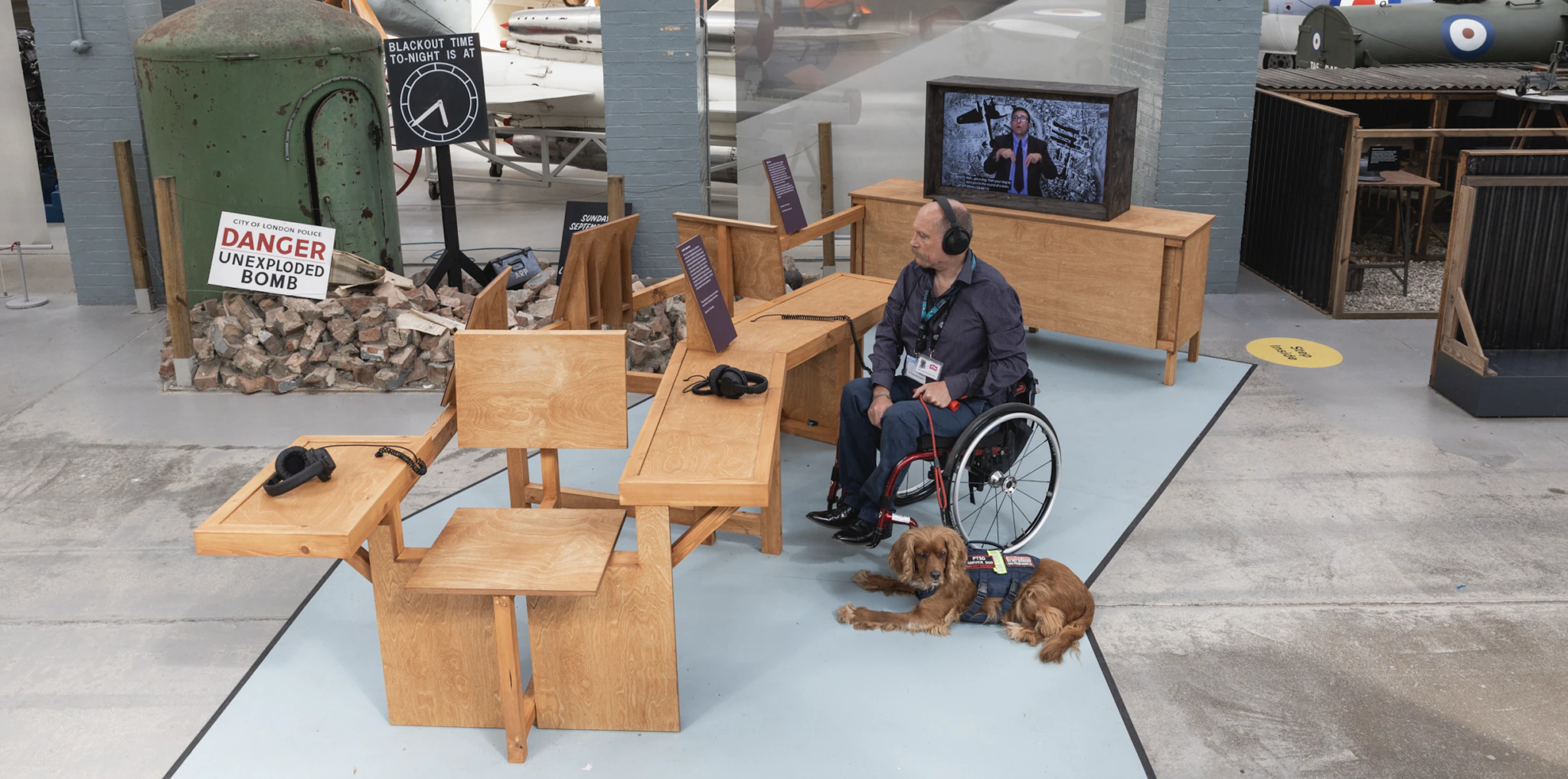
Our work on the Sensational Museum approached collections differently – not as containers of settled interpretation, but as things we enter into dialogue with. This starts from a reality often left out of collections discourse: collections work is embodied and relational. It happens through bodies moving in stores, hands handling awkward items, eyes adjusting to light, ears responding to machines humming, and minds navigating fatigue and over stimulation, or processing lag.
Yet, these realities rarely count as “knowledge” in the record. The result is often documentation that becomes depersonalised and sensorially narrow because systems and standards do not make space for what is noticed through multisensory encounter.
Advertisement
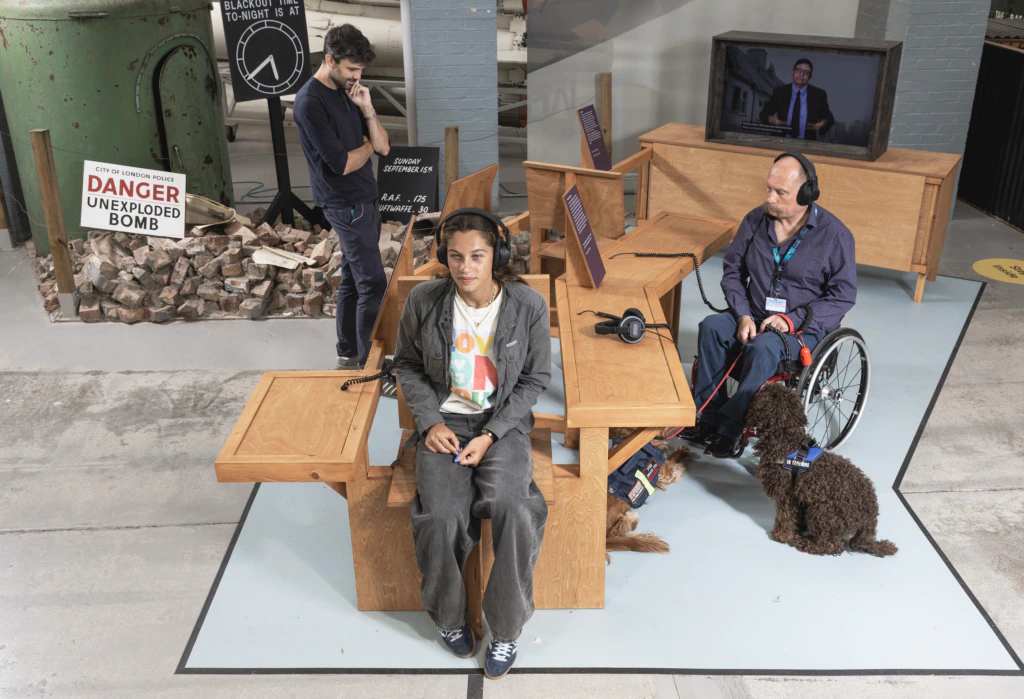
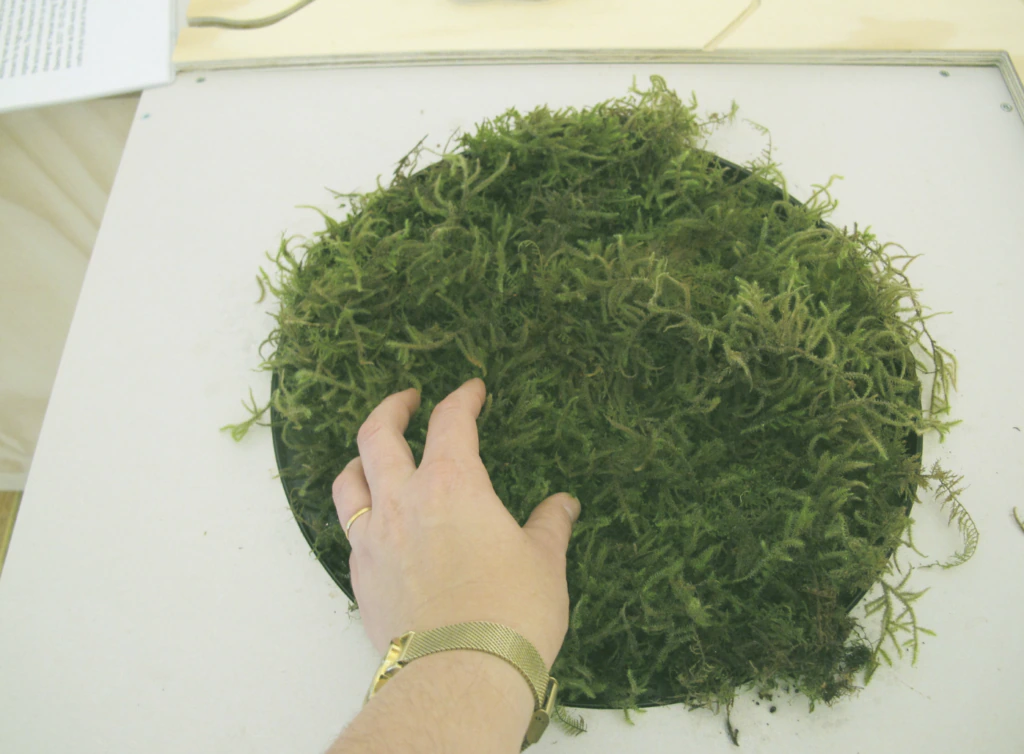
Rather than treating objects as sources of meaning, we explored how collections can be encountered through multiple senses and perspectives. The sensory character of a collection item is not singular or universal; it emerges through interaction between material properties and the perceiver’s sensory frame, shaped by context, culture, and processing differences.
Where two people encounter a collection differently, they should not be flattened into one “objective” account, but should sit as complementary records.
Collections documentation was a key site of intervention. We questioned the assumption that catalogues provide definitive accounts and treated records as partial, an interface for ongoing engagement, rather than a final statement of meaning.
To make that practical, we developed a scaffold that holds multiple registers side by side: functional, evaluative, evocative. This anchors existing practice while legitimising sensory/access observations and makes space for emotional impact and memory as forms of knowledge.
Museums already understand the power of storytelling in exhibition making. However, we sought to move away from object-first interpretation to experience-led, essentially asking the question “how can we tell these stories in a multisensory way?”.
Our focus was on providing equitable multisensory alternatives for engagement, rather than elements that merely supported a core visual experience. One of the key ways we achieved this was by working with pan-disabled co-creators. Doing so not only broadens the accessibility of museum interpretation but also changes which stories can be told, as well as redistributing authority.
The role of documentation and exhibition practices shifted from static repositories of meaning to sites of multisensory encounter and dialogue. Instead of asking what collections mean, we asked how they can be experienced.
Working in this way required an experimental approach, because there was no ready-made model for integrating multisensory engagement into collections documentation at the level of everyday practice. The point was not to bolt optional “access fields” on to old structures, but to treat collections’ management systems as places where inclusion, sensory knowledge and diverse perspectives can be embedded into the foundations of heritage work.
The work developed iteratively, through testing, adapting and responding. In practice, this meant accepting that new descriptive registers can feel unfamiliar at first, and that confidence grows through doing.
The functional-evaluative-evocative scaffold mattered because it gave practitioners a structured route into sensory description without abandoning existing professional anchors and to support a process of learning (and unlearning) about what “counts” as legitimate knowledge in a catalogue record.
We also learned that this is hard work. Paying close sensory attention, finding vocabulary and reflecting on access and environment can be cognitively and emotionally demanding within already stretched roles.
Finding the time, energy and budget to co-create multisensory interpretation is also tough. This is why toolsets and guidance matter. They distribute effort, reduce intimidation and give people permission to try, even when outcomes are not perfectly defined.
Finally, the project reinforced the value of holding multiple perspectives open rather than forcing consensus. Sensory encounters are shaped by bodies, contexts and histories. Records that can hold that plurality are no less rigorous, but they are more honest about how collections are known.
Embedding the knowledge that everyone will experience a collection differently into interpretation can, in turn, both improve the visitor experience and the museum’s understanding of its own collections. In this sense, “experimental” practice is not a stylistic choice, but what becomes necessary when you take ability, diversity and multisensory encounter seriously.
Challenging authority
These shifts have implications for how authority operates in museums. When collections are approached through multisensory dialogue, meaning is no longer produced solely through institutional expertise or stabilised through documentation as if it were neutral description.
Instead, it emerges through multiple forms of knowledge, including lived experience and situated sensory encounter, providing space in both the records and interpretation for both museum professionals and the communities that museums aim to serve. This makes it clear that collections are known through people, bodies and contexts, not apart from them.
This is where many decolonisation efforts falter. If decolonisation is treated as an action focused on “diversifying” collections or revising labels, while leaving the catalogue structures, interpretive conventions and institutional voice intact, it risks becoming a surface-level gesture.
Decolonisation cannot begin and end with collections; it must also shift who is authorised to produce and record meaning, and how museums make that visible and shareable. The issue is not only what museums collect, but who gets to make meaning from those collections.
This approach does not require museums to abandon collections or overhaul systems overnight. Start small by piloting multisensory recording on 10-20 objects by adding evaluative (perceptive, third person) and evocative (affective, first person) notes alongside your existing fields, using prompts such as sensory system, context, temporality and relationships.
Use the Sensational Museum Collections Demonstrator to try this safely (including space/access notes) before changing your live CMS. For exhibitions, use the Multisensory Interpretation Toolkit to embed co-creation and multisensory thinking early.
Its modules and facilitator notes are designed for in-house workshops and can be scheduled flexibly. The key is the starting point: shift from collections as fixed meaning to experience as active engagement. Then iterate, test and refine.
The Sensational Museum shows one route from objects to experiences, by treating collections as sites of multisensory dialogue and building documentation and interpretation that can hold multiple ways of knowing.
It is not about replacing systems, but re-orientating how they are used, so that authority over meaning is shared rather than assumed. Done well, this moves museums beyond surface-level decolonisation gestures towards more open, responsive and co-authored practice.
Charlotte Slark is a research fellow at the University of Westminster. Sophie Vohra is a research officer in history at Leeds Beckett University