The Grand Egyptian Museum in Giza, Egypt, has been one of the most highly anticipated – and delayed – cultural projects of the 21st century. The official opening of the billion-dollar museum last November was an international affair, with world leaders and officials from 79 countries attending a lavish, Olympic-style opening ceremony, presided over by the Egyptian president Abdel Fattah al-Sisi, where they were entertained by parades, fireworks and a hieroglyphics drone show.
The museum itself is a catalogue of superlatives: at 500,000 sq metres, it is the world’s largest archaeological museum dedicated to a single civilisation.
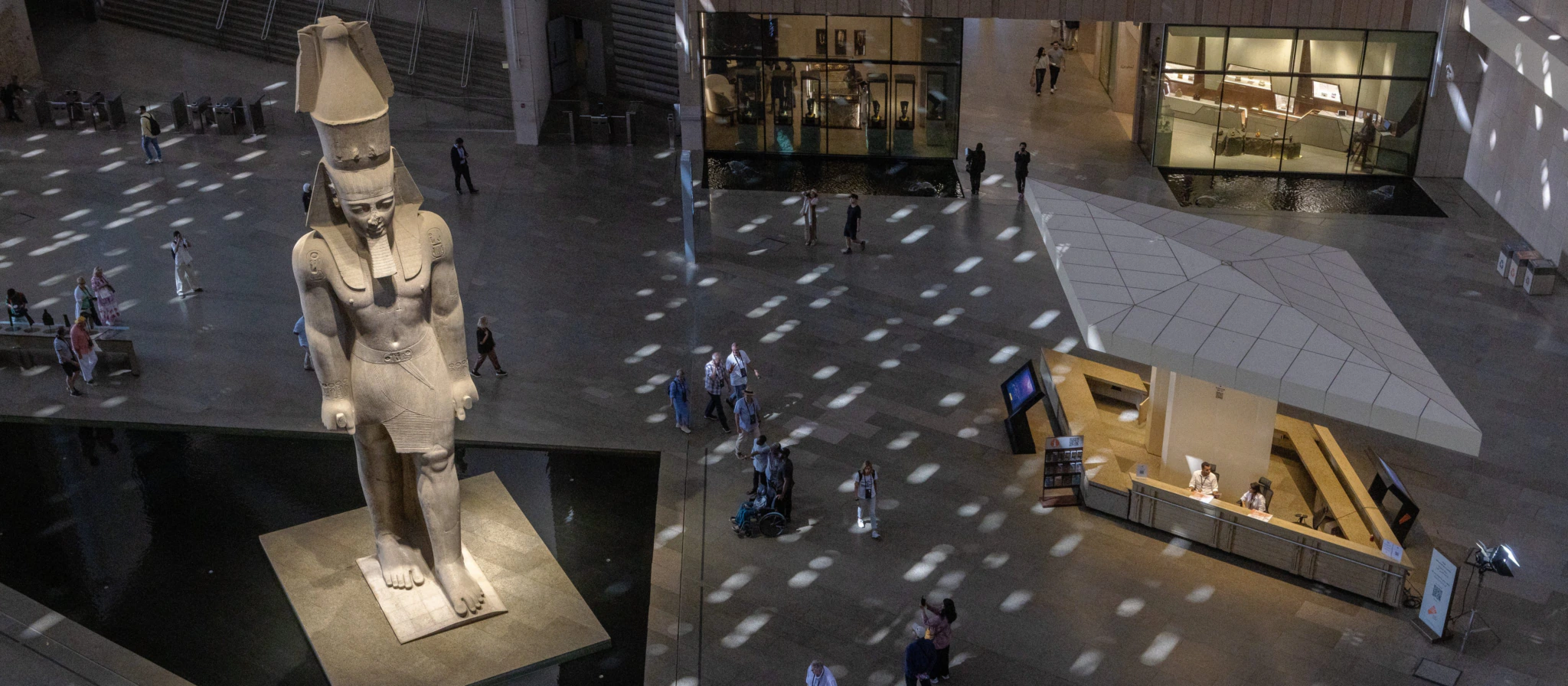
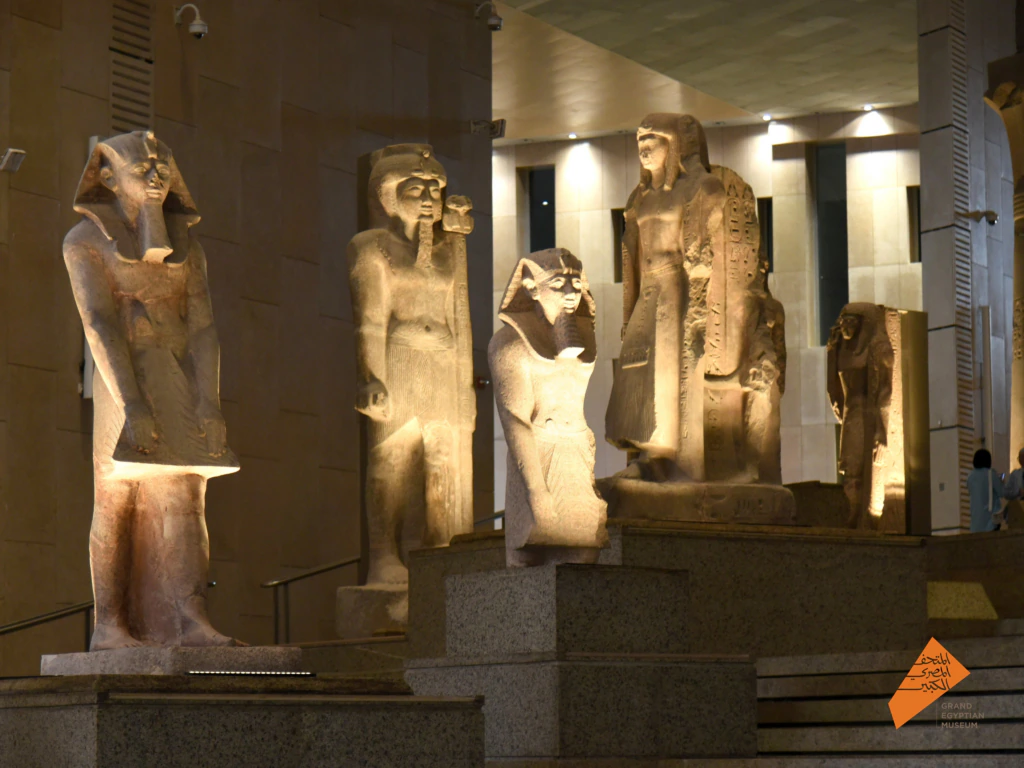
It brings together all 5,000-plus items in the Tutankhamun collection for the first time, while the colossal 83-tonne statue of Ramesses II, one of the largest and most intact Ancient Egyptian sculptures held by any museum, looms over the atrium’s sweeping stairway, a central feature of the museum’s architecture.
Alongside its 12 exhibition galleries, the complex also holds 19 conservation labs, a children’s museum, plus a cinema, shops and restaurants.
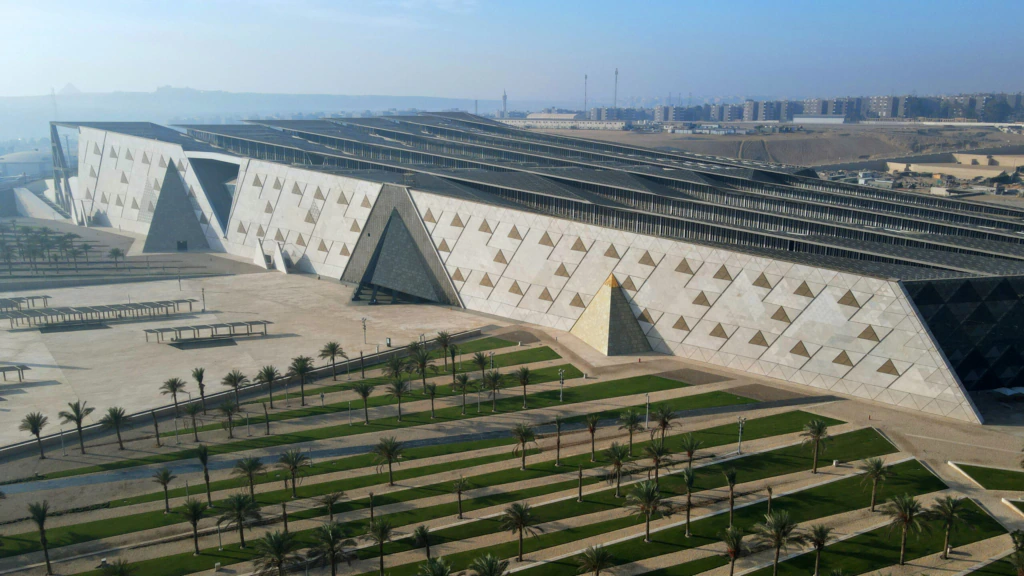
In 2002, an international competition saw some of the world’s leading architects put their names into the hat to design this once-in-a-lifetime project. The competition was anonymous and, against all odds, the contract went to a tiny practice based in Dublin, Heneghan Peng Architects, which was founded by Shih-Fu Peng and Róisín Heneghan in 1999.
Advertisement
At the time of the bid, the firm had just three employees and no experience in the museum sector.
“We were very busy on our first project and we said, ridiculously, just for chance, why not do this competition, because everybody was doing it,” says Heneghan. “So we put it in, but when you have 1,500 entries, you’re not expecting anything.”
So how did their bid succeed against such stiff competition? “I think we had maybe two intuitions,” says Heneghan. “One was that there was an opportunity to see the pyramids from the museum. Oddly, even though they were so close, we were probably the only ones that had that very strong visual relationship.”
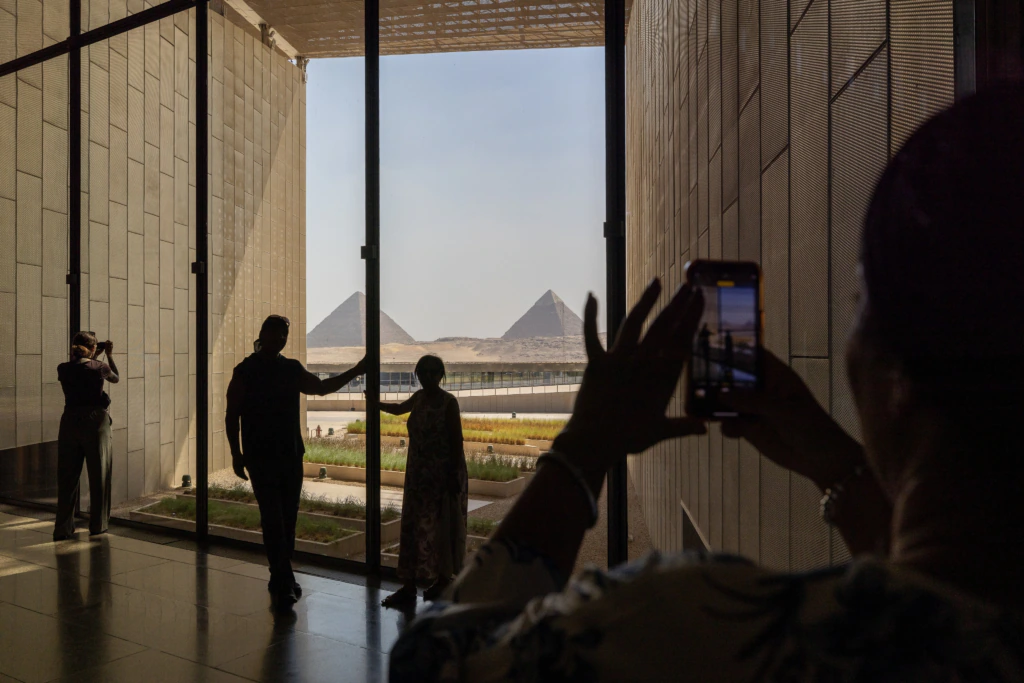
To enable visitors to see this spectacular view, the design had to seamlessly move huge volumes of people a day upwards from ground-floor level, says Heneghan.
“There’s a six-storey difference – the pyramids are on the level of the desert, and our site starts in the Nile Valley. So we had to go up. And that was one thing that drove us, because we know that there’s a lot of international visitors, we know they’re there for maybe half a day, so to get them up, you make an event of going up.
Advertisement
“That’s why we had this big staircase – it was really a solution to the problem of bringing six million people [a year] up to the top level and making an experience of it.
“The other thing we wanted to convey was this sense of the scale of the civilisation,” Heneghan says. “The durations we’re talking about, the timescale is extraordinary – three to four millennia. And we were aware that so many visitors are only going to visit that museum once. They had to have this broad vista and get an almost visceral experience of the scale.”
Since completing the design work on the museum in 2008, Heneghan has watched from afar as the project struggled through multiple crises – the Lehman Brothers collapse, the 2011 Arab Spring, the pandemic, and ongoing conflicts in the Middle East.
“It was an enormous undertaking,” she says, with understatement. “But it was worth doing, even if it took a bit longer to get everything in – because you only want to do it once.”