
The death of Queen Victoria on 22 January 1901 ended the reign of Britain’s longest-serving monarch, a period when the country had undergone massive industrial, political, scientific and social changes at home and the huge expansion of its empire overseas.
The 20th century was to bring even more upheaval – the first world war was just 13 years away, and would be followed by the Great Depression, another global conflict and the collapse of British colonialism.
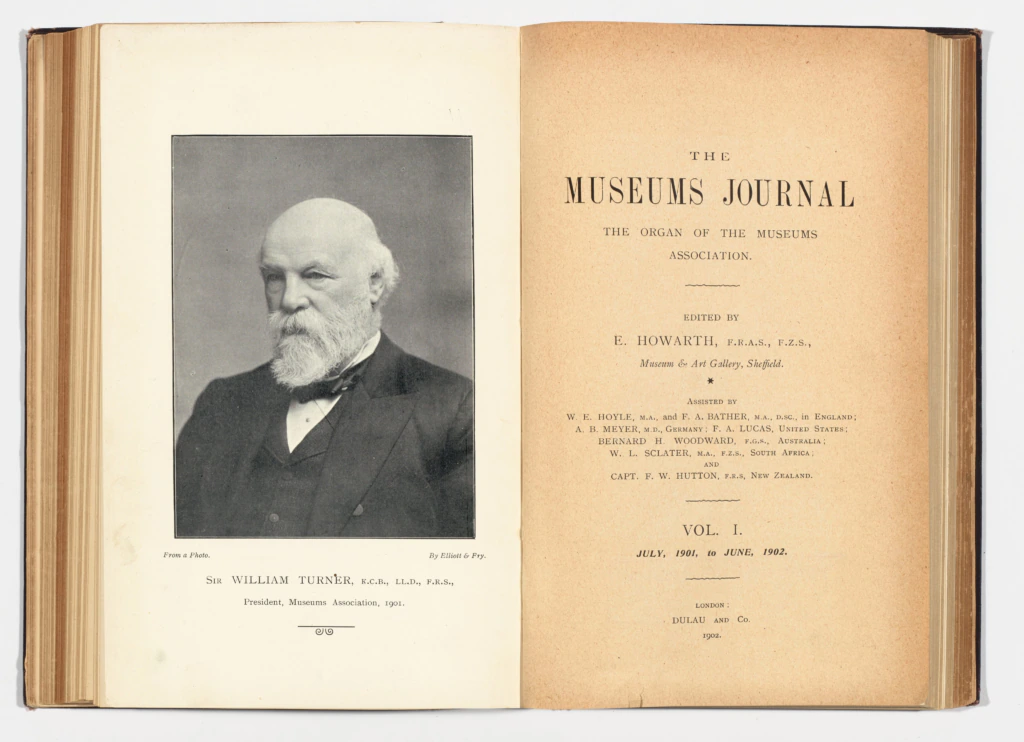
It was into this tumultuous period that the first issue of Museums Journal was published by the Museums Association (MA) in July 1901. This year marks the magazine’s 125th anniversary.
The first monthly journal, edited by E Howarth from the Museum & Art Gallery, Sheffield, was grandly described as “The Organ of the Museums Association”.
Howarth’s introduction to the first issue shared his concerns about adding to what sounds like an already busy publications market, which is relevant today, albeit in a different context with the seemingly ever-increasing amount of digital content we are consuming.
Advertisement
And the worries Howarth had were not only about the volume of content, but also about the quality – again something that we still worry about now.
“When a periodical is launched amongst the miscellaneous craft which already disturb, and sometimes disfigure, the overcrowded sea of journalism, it is customary to offer some excuses for its appearance,” Howarth wrote.
“Fortunately in the present instance no excuses are required, for everyone connected with museums, or in any way interested in them, will be sure to welcome a journal devoted to museum matters and written by experts intimately associated with museums and their work.”
The introduction also shows how those involved in the journal at the start of the 20th century were aware of the danger of specialists writing inaccessible articles.
“The dogmatism and obscurity occasionally associated with expert authorship will, however, be avoided by the co-operation of a wide circle of experts, as diverse on their opinions as in the subjects of their study.
Advertisement
“The objects of the editors will be, not to enforce any individual views, but to garner a rich harvest of fact and theory, in which each reader may find some grains of value to his own work.”
The overall aim was to use “the Journal in every way possible to promote inter-communication between individual museums and the general advancement of all”.
The publication also wanted to help those in the sector think about the potential of museums.
“If the journal merely enables its readers to realise more vividly what a museum is, or better still, what it may be made, then it will be a positive and practical influence for good.” Not a bad aim, it has to be said.
One thing the first journal neglected to mention was that the publication was nearly called Musea, something highlighted in Geoffrey Lewis’s book For Instruction and Recreation: A Centenary History of the Museums Association.
Conference calling
Then, as now, the annual MA conference was an important date in the calendar, and the president’s address was printed in full in the first journal. The 1901 event was held in Edinburgh and William Turner, the president of the organisation at the time, was comprehensive, to say the least, with his speech taking up 17 pages.
Advertisement
There was also a separate conference report, which struck a triumphant tone: “With the attractions which Edinburgh can boast, a visit to that fair capital must at any time afford considerable enjoyment, and no doubt all the delegates to the Conference of the Museums Association anticipated a pleasant and satisfactory meeting. In this they were not disappointed.
“All who were present agreed that the Edinburgh meeting, in the complete and happy combination of graceful hospitality, cordial good fellowship, and the high level of papers and discussions, afforded entire satisfaction, while, in a very marked degree, it still further promoted the reputation and progress of the Association.”
“If the journal merely enables its readers to realise more vividly what a museum is, or better still, what it may be made, then it will be a positive and practical influence for good.”
High praise indeed, although it does make you wonder whether the approach to delegate feedback was perhaps less rigorous than it is now.
As well as longer articles, the first journal also featured bite-sized offerings, particularly in General Notes.
This section acted as a repository, or possibly a dumping ground, depending on your point of view, for all types of information, including moves, obituaries, acquisitions, loans, new museums and exhibition announcements. There was even a place for international news, simply called “Abroad”.
Many of the concerns in the first issue of the journal are still pertinent today. There was a regular monthly feature on label writing, for example, which kicked off with advice on describing British pottery. Much like today’s In Practice section, the 1901 journal was responding to a demand from MA members for practical advice on how to run a museum.
Of course, the language of the journal in 1901 gives away many of the assumptions, prejudices and conventions of the time. The use of “his” to refer to a generic museum professional in the introduction is one of the more obvious examples.
Shared anniversaries
The first journal also had an interesting mix of extreme confidence combined with a certain amount of humbleness, bordering on false humility.
An article with the headline “The Smallest Museum” apologised “for venturing to bring this association any account of the Whitechapel museum”.
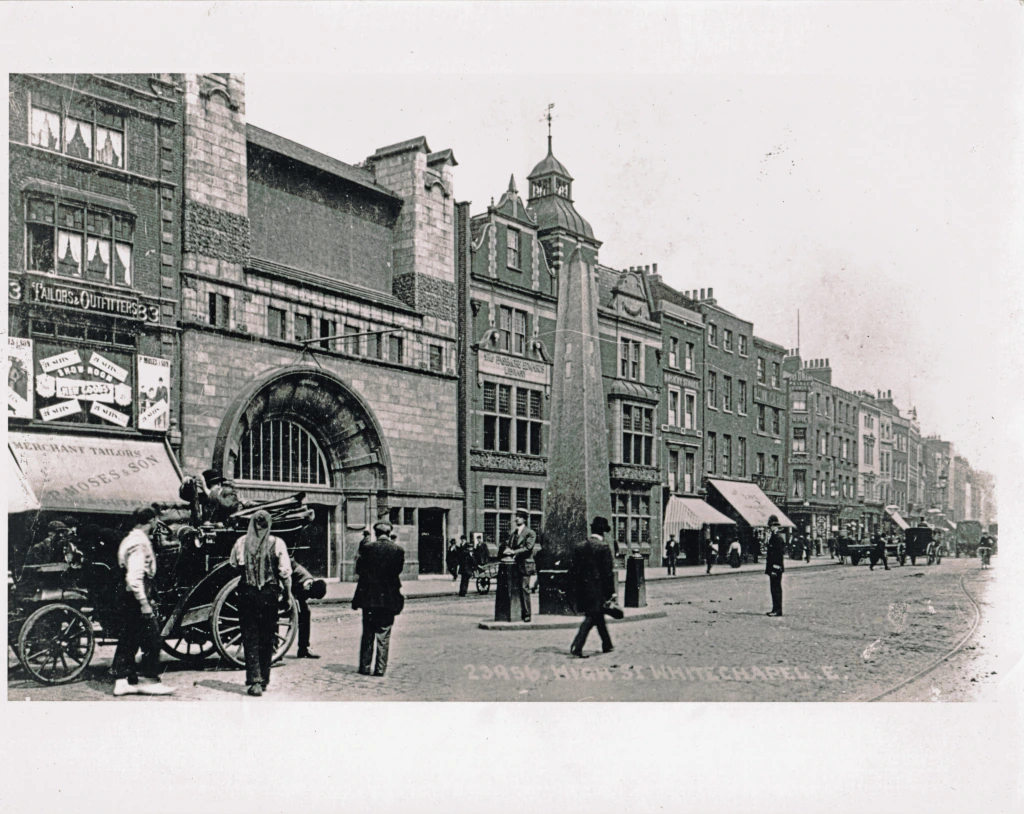
The Whitechapel Gallery was founded in 1901, the same year as the journal, by the philanthropists and social reformers Canon Samuel and Henrietta Barnett. The aim was to present “the finest art of the world for the people of the East End, London”.
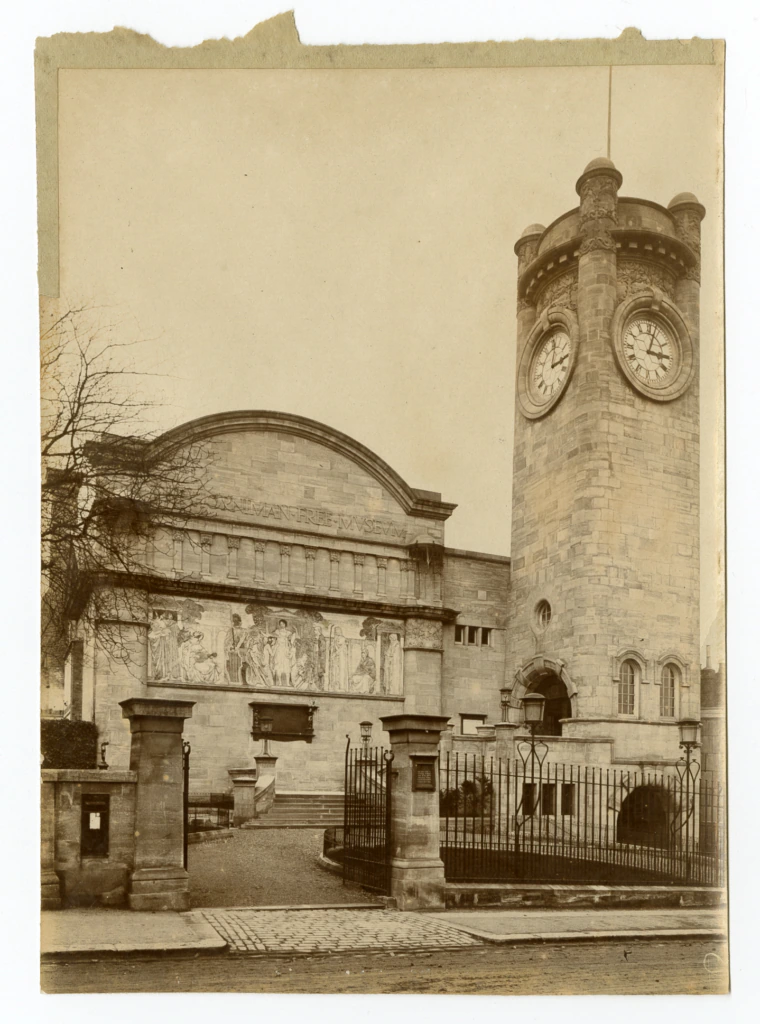
Museums Journal also shares a birthday with the Horniman Museum and Gardens. The opening of the south London institution was covered extensively in the first journal:
“On 5th February, 1901, the London County Council met to learn that for the third time since its institution 12 years ago it had the opportunity of becoming the trustee of considerable estate which the owner, with munificence and public spirit, which merit the admiration and gratitude of all classes, was prepared to hand over as a free gift for the use of the people of London.”
The gift from the MP FJ Horniman, included 15 acres of land, a museum and large collections of art and natural history.
Like the journal itself, the Horniman Museum & Gardens and the Whitechapel Gallery are still thriving 125 years later.
We look forward to bringing you more of the history of the journal throughout this year, as well as a special celebration issue in November/December.


