
Loucia Manopoulou
Director of Newlands House Gallery and curator of Jane Bown: Play Shadow
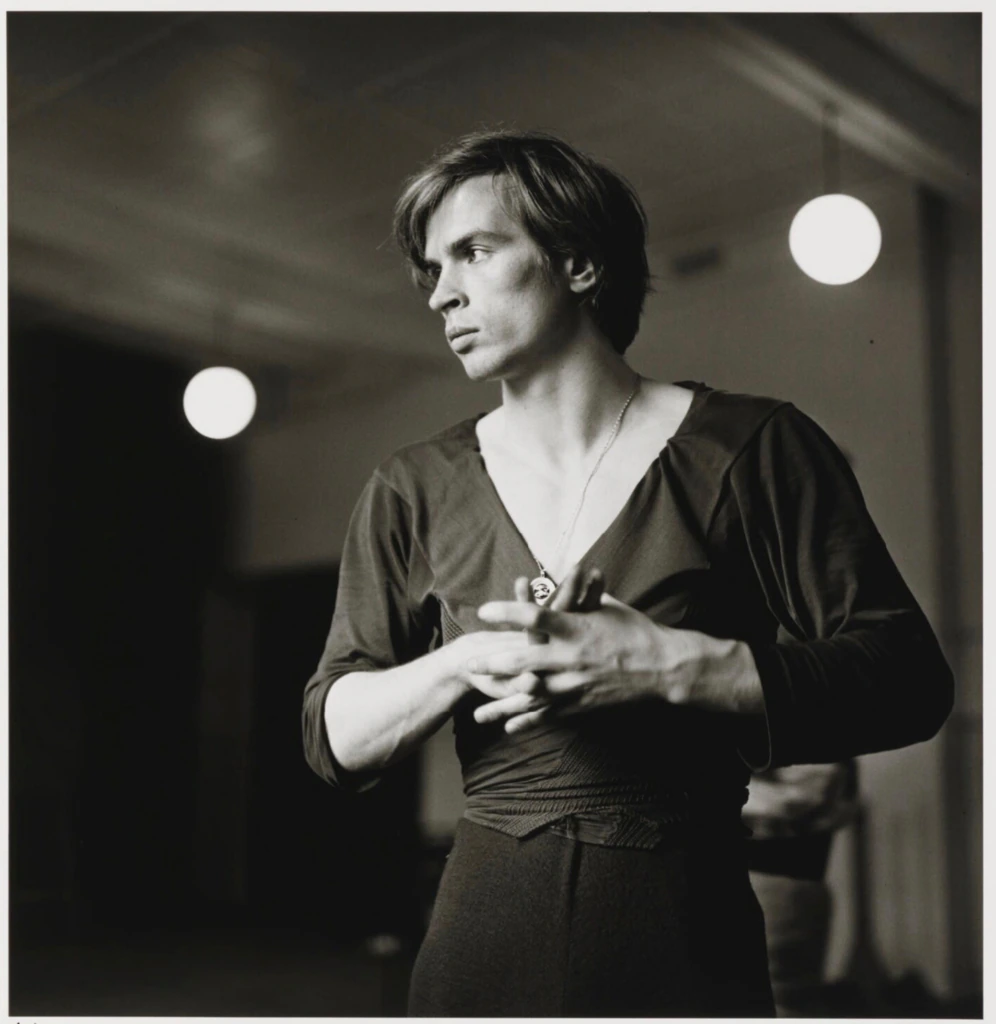
“This wonderful portrait of the Russian ballet dancer Rudolf Nureyev is typical of how English photographer Jane Bown (1925-2014) worked with all of her subjects.
At the time this photograph was taken, Nureyev was at the peak of his powers, yet Bown chose to capture the man, rather than the world-famous dancer.
She was not documenting his fame, the glamour or the spectacle. Bown never cared about the nature of celebrity and was always more interested in the essence of the person behind a public image.
Nureyev is not captured here in a traditional dancing pose, yet you can still see the control and alertness he had on stage. He has such presence, but there is a subtle vulnerability on show, too.
Advertisement
It’s a perfect example of the vision and philosophy that guided Bown’s work – much of which appeared in the Observer newspaper. She loved simplicity, using just what lighting was available and – above all – an interesting face.
She preferred to work in black and white, aesthetically and philosophically. I think colour was ‘too noisy’ for her and that monochrome prints stripped away any visual distractions, enabling the viewer to fully focus on the subject.
It’s as if the tonal harmony gave an image emotional depth; here, the absence of colour directs attention to the face of the artist and, particularly, his eyes.
The format brings out all the expression and creates a sense of immediacy and intimacy. He seems very normal, whereas at the time he was the star of stars.
I’m from the generation that grew up with Nureyev in his prime, and even if you knew nothing about ballet back then, you’d know his name and his reputation.
This photograph celebrates his achievements but also reveals his humanity.I became interested in Bown’s work when I visited an exhibition in 2014 and realised that I had seen many of the images on display in newspapers.
Advertisement
She started working at the Observer in 1949 in what was then a very male-dominated profession. She became the mother of three children and successfully maintained a balance between her personal and professional lives.
As a craft scholar, from the very beginning I identified with the craftsmanship of Bown’s work.
She recognised restraint as a discipline and had a very simple method of working with minimal equipment usually using just one roll of film for her portraits, working very quickly and precisely.
Alongside the quality of her photography, that must have made her very appealing to the people who sat for her.”
Interview by John Holt. Jane Bown: Play Shadow is at Newlands House Gallery, Petworth, West Sussex, until 15 February