Located in central London, a short walk from Kensington Olympia tube station and the bustle of red double-deckers and corporate chaos sits Leighton House: a testament to a century of art, culture and history featuring intricate Arabic tiling, a fountain, and a domed ceiling.
Leighton House, former home to the British artist and president of the Royal Academy of Arts between 1878-1896, Frederic Leighton, celebrates its 100 year anniversary this year. The museum is running three exhibitions to mark its centenary:
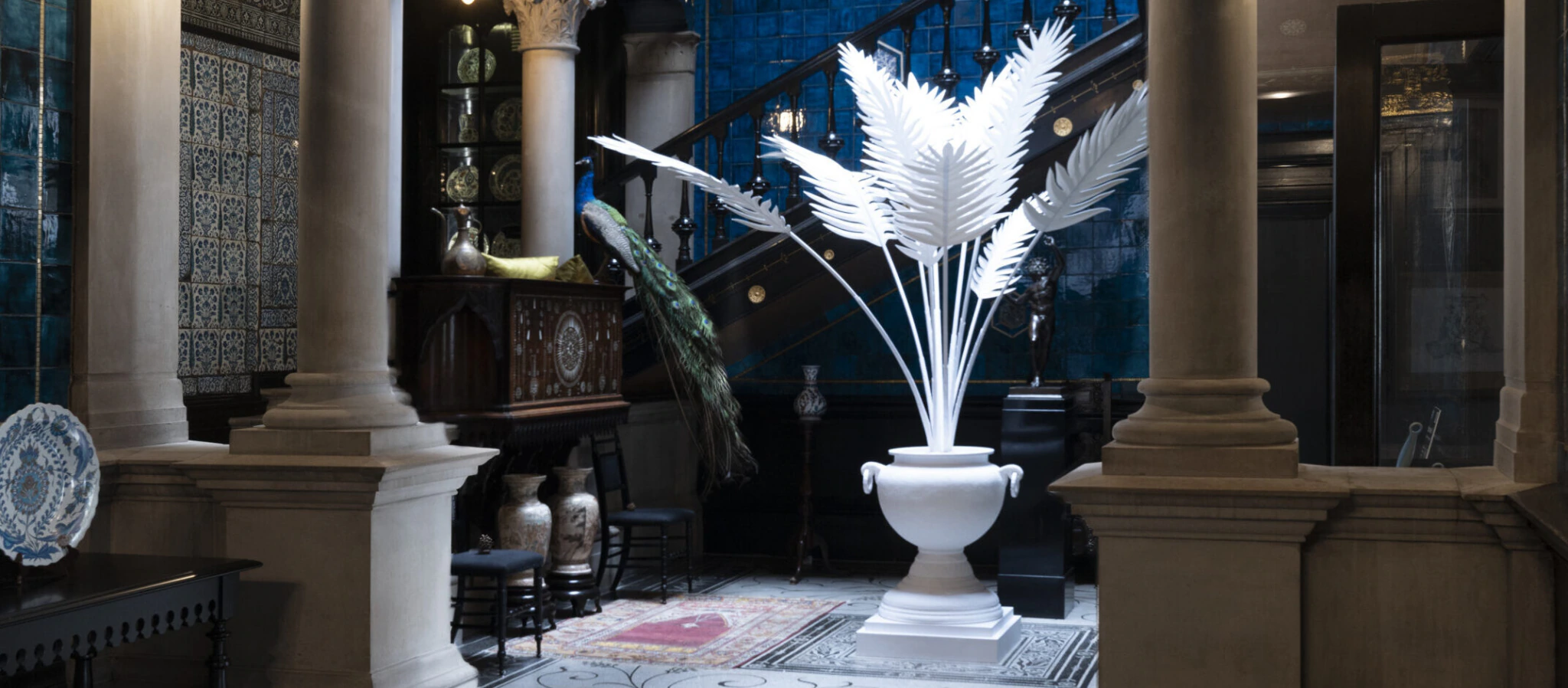
- Ghost Objects: Summoning Leighton’s Lost Collection, a new commission by paper artist Annemarieke Kloosterhof that recreates four lost objects from Leighton’s original collection as spectacular life-sized handcrafted artworks, including a 15th-century shrine made of over 8,000 hand-cut paper elements.
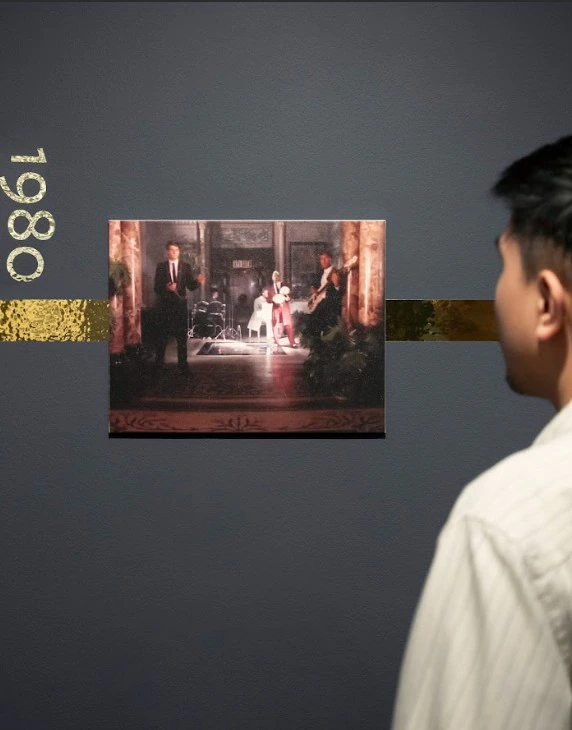
- Leighton House: A Journey Through 100 Years, which charts the museum’s transformation over the past century, with never-before-seen archival material and photographs.
- The View from Here: contemporary art from the Middle East and North Africa (MENA), which showcases emerging voices from the MENA region exploring heritage and identity through assemblage and collage.
Daniel Robbins, a senior curator who has worked at the museum for almost as long as Leighton himself lived there – over 20 years – describes the changes the home undertook whilst under Leighton’s ownership as well as throughout the twentieth-century, in what he describes as a constant process of building and reinventing.
The property presents Leighton’s interests as a collector, says Robbins. “The house functions as a showcase for his collections in a sort of museum-like way.”
Advertisement
Twenty years after Leighton’s death in 1896, the property was acquired by Kensington Council with the intention of using it as a venue for appreciating art, with little to no reference to Leighton and his artistic background. The Perrin Gallery, funded by the Perrin family, opened as an extension to the house in 1929, designed to present works from their collection.
The building later survived bomb damage during the Second World War, with the council unable to address the roof damage caused until 1947. Leighton House then became home to Kensington Central Library, and later the British Theatre Museum Association during the 1960s.
Robbins describes this period as a particularly low point for Leighton House, given the threat to demolish three of the neighbouring artist’s houses which placed Leighton House’s security under question.
However, there was a turning point in the 1980s towards restoration when Stephen Jones started as a curator at Leighton House.
“It marked a very deliberate and definite decision to value the house itself,” says Robbins.
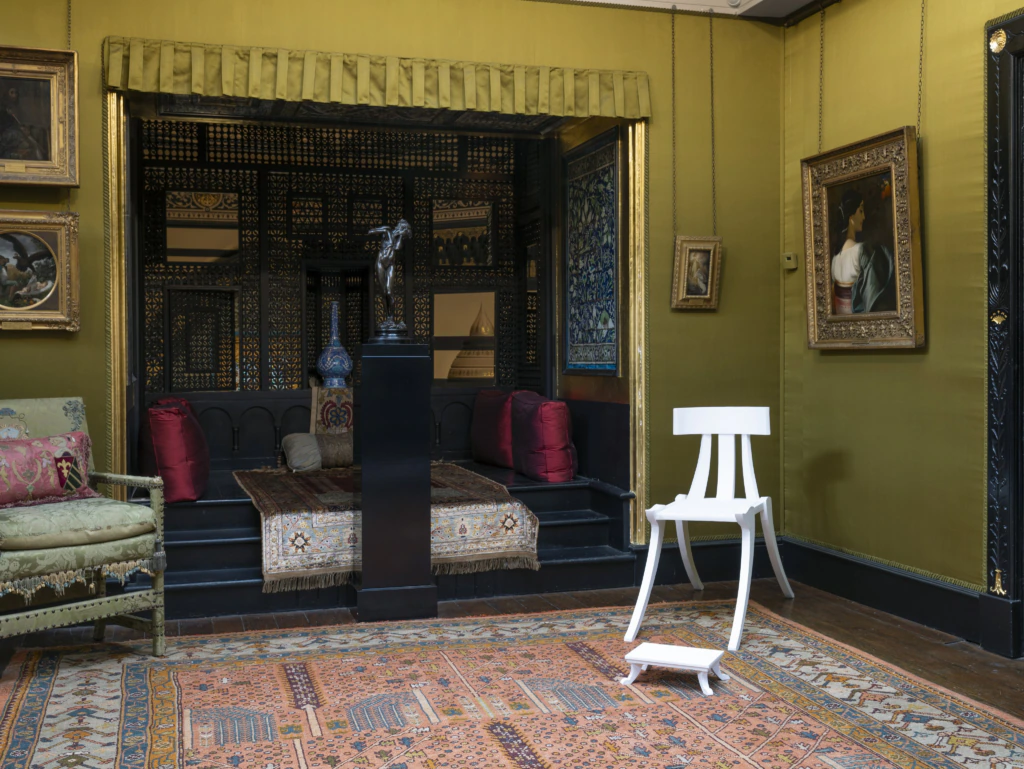
It was in 1984, based on surviving photos of the room taken in 1895, that the silk room was restored, with the restoration of the dining room and drawing room following the year after, with efforts taken to recreate its Victorian character and appearance.
Advertisement
The Closer to Home restoration project from 2008-2010, prompted by the need to address issues with electrical and heating systems completed in the 1980s, focused on the restoration of the Arab Hall with removal of the post-war flooring and fluorescent overhead spotlights. The dining room was also repainted and the museum worked to return pieces of Leighton’s own collection that were sold after his death.
Most recently, the house underwent a £9.6m renovation that included major restructuring and the introduction of a new wing and cafe.
“The whole ambition of the new wing was to change the dynamic, somewhere free to enter and a place where the local community are much more inclined to use the space,” says Robbins.
The Islamic-inspired ceramics behind a glass case in the cafe were created by William De Morgan, a friend of Leighton’s and previously part of his private collection, while the furniture in the cafe was created by displaced Syrian artists in Jordan (a nod to the Syrian tiling in Arab Hall).
“We try to give a contemporary expression to the same sorts of ideas that were formed in the rest of the house,” says Robbins.
Advertisement
In 2023, the Iranian artist Shahrzad Ghaffari painted her mural, Oneness, directly onto the walls of the staircase at Leighton House. The colours of her mural honour and reflect the rest of the house, complementing the colours of the Arab Hall for example, while emphasising the museum’s inclusivity.
On Ghaffari’s mural, Robbins says: “We wanted to commission a permanent piece that spoke to the identity of the museum but that spoke to a contemporary audience.”
One hundred years on, Leighton House exists as a museum that appreciates its rich history including that of its former owner, as well as the property’s Islamic influences, in what now stands as a museum grounded in community and inclusion.