High on the wall of a corridor at the Royal Museum for Central Africa, in Tervuren, just outside Brussels, lays a marble panel featuring the names of the 1,508 Belgians who died in the Congo during the earliest years of colonisation.
On a bright day, when the sun sits just right, they are joined by the roll call of seven more names, reflected through the glass window opposite, each carrying the date 1897.
This was the year Brussels hosted the World Fair or International Exposition in the suburb of Tervuren. William of Orange’s former summer palace was used to showcase the Belgian monarch King Leopold II’s ostensibly enlightened jurisdiction over the vast, mineral-rich expanse of Central Africa.
As part of the exhibition were three fenced “villages” populated by Congolese people who had been forcibly transported to Belgium so that they could be gazed on as though in a human zoo, behind signs saying “do not feed”.
The names reflected on the wall, an installation called Ombres (Shadows) by the Congolese sculptor and visual artist Freddy Tsimba, are seven of those Congolese “villagers” who died of pneumonia in Tervuren in 1897. Refused burial in the local cemetery, their remains were dumped in unmarked graves, generally used for adulterers and suicides.
Tsimba’s work was installed in 2016 as part of the museum’s renovation and overhaul to reappraise what had been an uncritical appraisal of Belgium’s horrific colonial history.
Advertisement
Koekie Claessens, one of the museum’s project managers, told German broadcaster Deutsche Welle: “It puts a shadow over the colonisation, over the violence.”
Or at least sometimes it does. Belgium enjoys, on average, four and a half hours of sunlight a day and quite often it’s overcast. So, the names are only occasionally visible. When I visited in February I couldn’t make them out. For those who are interested, an explanation as to their significance hangs on the wall.
Meanwhile, the marble tribute to the colonialists carries a quotation from Leopold’s successor and nephew, Albert I: “Death reaped mercilessly among the ranks of the first pioneers. We can never pay sufficient homage to their memory.”
The contingent, discrete, unreliable, belated and well-meaning response of Ombres that stands in temporary, momentary and fleeting competition and conflict with the permanent, prominent, distorted and official response below it is a metaphor for the manner in which so many European cultural institutions are addressing the deeply problematic exhibits and artefacts within their collections and the challenges they face.
This guest-edited issue of Museums Journal seeks to explore, through various institutions, nations and disciplines, how European museums and Black Europeans are engaging with decolonisation as a process.
In a period of nationalist insurgency and populist ascendancy, cultural bodies of all kinds have a crucial role to play in telling a story about who we are, how we got here and how, in so many ways, our stories are related.
Advertisement
While not all European states had colonies, the entire continent was impacted by colonialism, just as slavery affected all of the US, even if only some states practised slavery. The legacy may be uneven, but it was fundamental to the politics, economics and culture of the continent.
But the failure of Europe to metabolise its colonial history has produced a confused and confusing political and cultural landscape in which ancient events are lauded and recent atrocities conveniently erased from national memory.
In Britain we can name Henry VIII’s wives and remember 1066, but few can recall the Bengal famine of 1943 that occurred under the British Raj, or the mass detentions of the Kikuyu people under British colonial rule in Kenya during the 1950s.
The consequent historical disassociation leads not just to an historical rupture, but a human one. Those who have been discarded in memory cease to be human. Their sacred objects, stolen in massacre and pillage, can be displayed; their skulls can be collected; their remains tagged and numbered.
As recently as 1997, the Darder Museum of Natural History in Banyoles, just an hour north of Barcelona, displayed a stuffed corpse of a Tswana warrior from Botswana known only to the locals as “El Negro”.
Museums, in this regard, do not exist in a vacuum. They may be able to teach new stories, but they alone cannot set the curriculum. They are a product of the culture, as well as producers of it. They can shape the narrative but are also shaped by it.
Advertisement
Take Belgium. The slow, partial and tortured pace at which the Royal Museum for Central Africa has travelled on this journey (it is blighted by complaints of racial insensitivity, historical aphasia and curatorial negligence to this day) has been in lockstep with the broader political culture.
In 1958, during Expo 58, a later Brussels World’s Fair, Belgium presented another human zoo, with locals throwing bananas and taunting the human exhibits again brought from Congo to populate another “village”.
In 2000, the former Belgian police commissioner, Gerard Soete, confessed that in 1961 he had dismembered the body of Patrice Lumumba, the elected prime minister and independence leader of the recently liberated Congo, and dissolved his remains in acid, keeping a single tooth as a trophy.
In 2019, a quarter of Belgians said they thought the former empire was something to be proud of, one in four wishing they still had an empire and slightly more believing countries were better off because of colonialism.
In 2022, the Belgian authorities returned Lumumba’s tooth to his family, with the prime minister recognising the nation’s “moral responsibility” for his murder.
Last year, a 700-page report into Belgium’s colonial past was suppressed because it recommended a state apology for its colonial crimes.
In this regard, of course, the Belgians are by no means alone. Research shows that the British are the most likely to desire a return to empire while the Dutch are more likely to be proud of their empire.
And my guess is the Danes, Swedes and Germans would be the least likely to know they even had an empire. So, we should not be too surprised if the heritage sector is slow and cumbersome.
But we should neither indulge nor excuse its shortcomings either. For the past is not an abstract moment in time. It is directly related to the present and informs the future. How we interpret history, stands in direct relation to how we understand current events.
The only thing we can really change about the past is how we remember it. For better and for worse, museums have a unique role in that process.
Given the broader cultural, racial and political dysfunction it has never been more important that they lead our culture to a more enlightened and informed place, rather than follow it into the shadows.
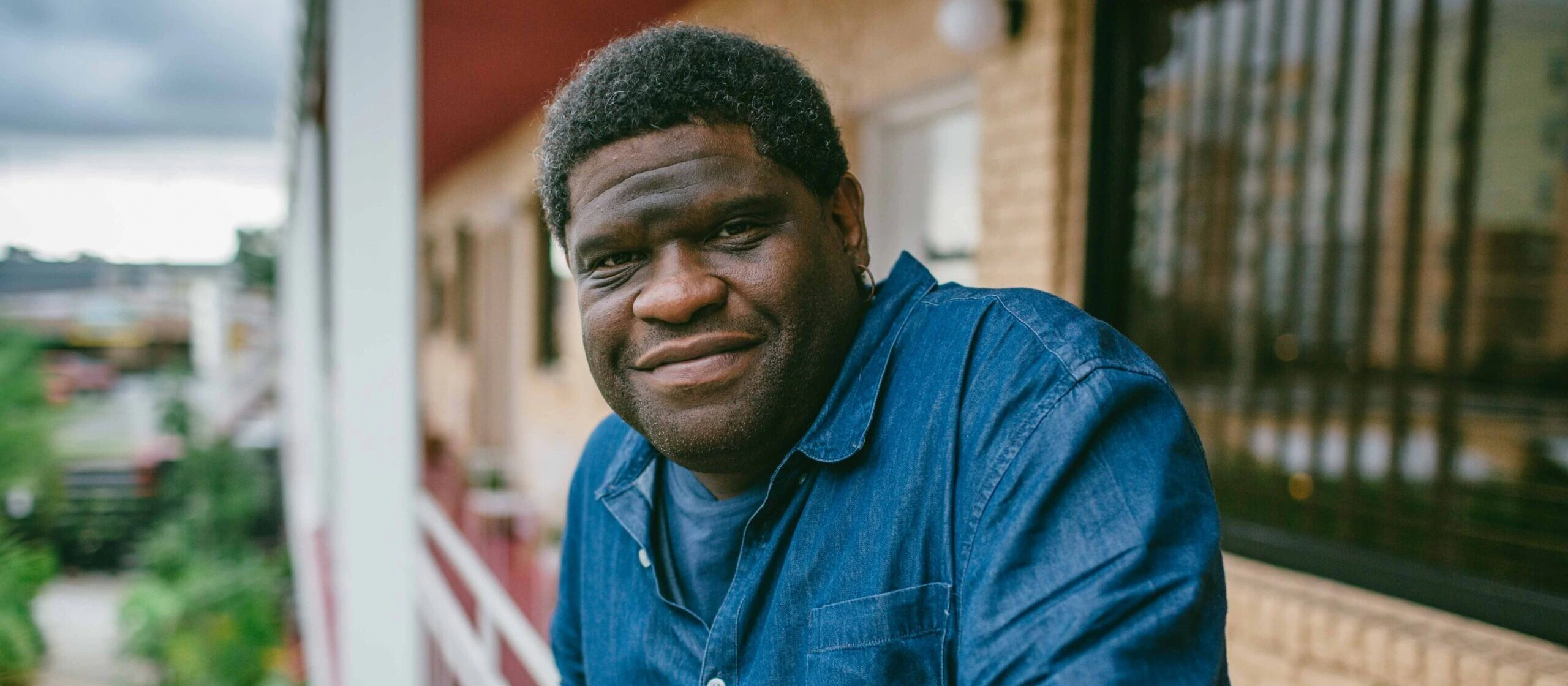
Guest editor: Gary Younge
Gary Younge is an award-winning author, broadcaster and a professor of sociology at the University of Manchester. Formerly a columnist at the Guardian, he is an editorial board member of the Nation magazine and the 2023 Orwell Prize for Journalism.
Born in Hertfordshire to Barbadian parents, he grew up in Stevenage until he was 17 when he went to Kassala, Sudan, with Project Trust to teach English in a United Nations Eritrean refugee school.
On his return, he attended Heriot Watt University in Edinburgh where he studied French and Russian. In his final year at Heriot Watt he was awarded a bursary from the Guardian to study journalism at City University.