The Wereldmuseum Amsterdam has been working with artists and other creative practitioners to explore the impact of Dutch imperialism, but Carol Ann Dixon says more needs to be done to empower its own staff to contribute to meaningful change at the organisation
Carol Ann Dixon
•
27 November 2025
Share
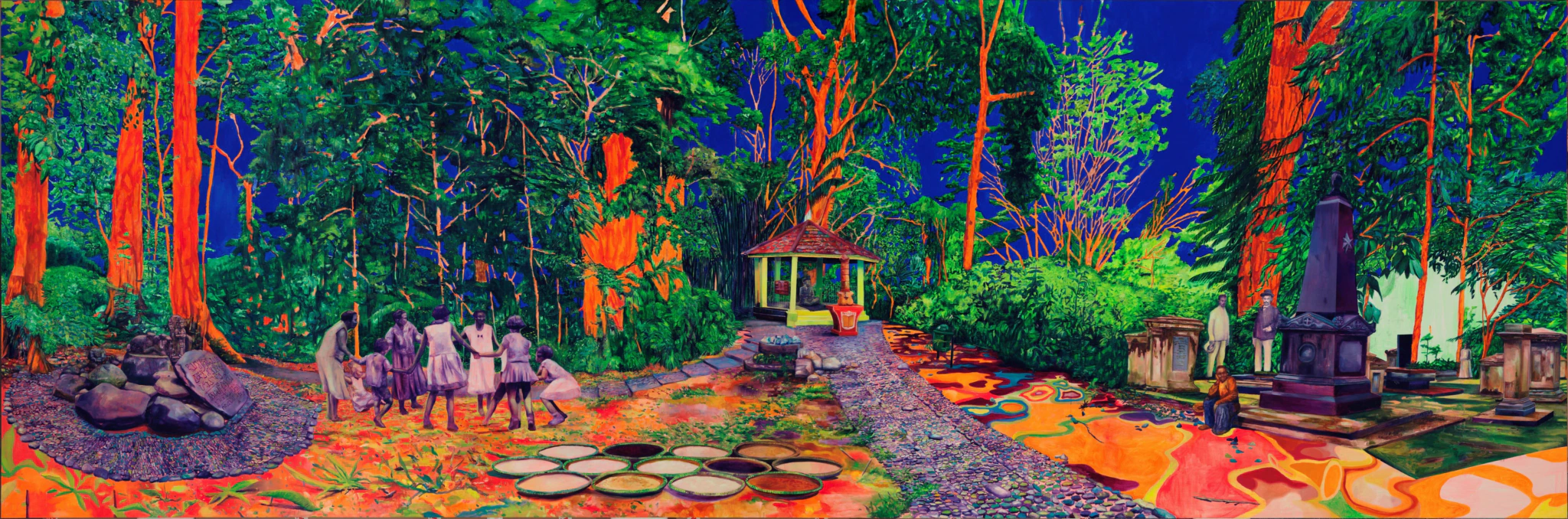
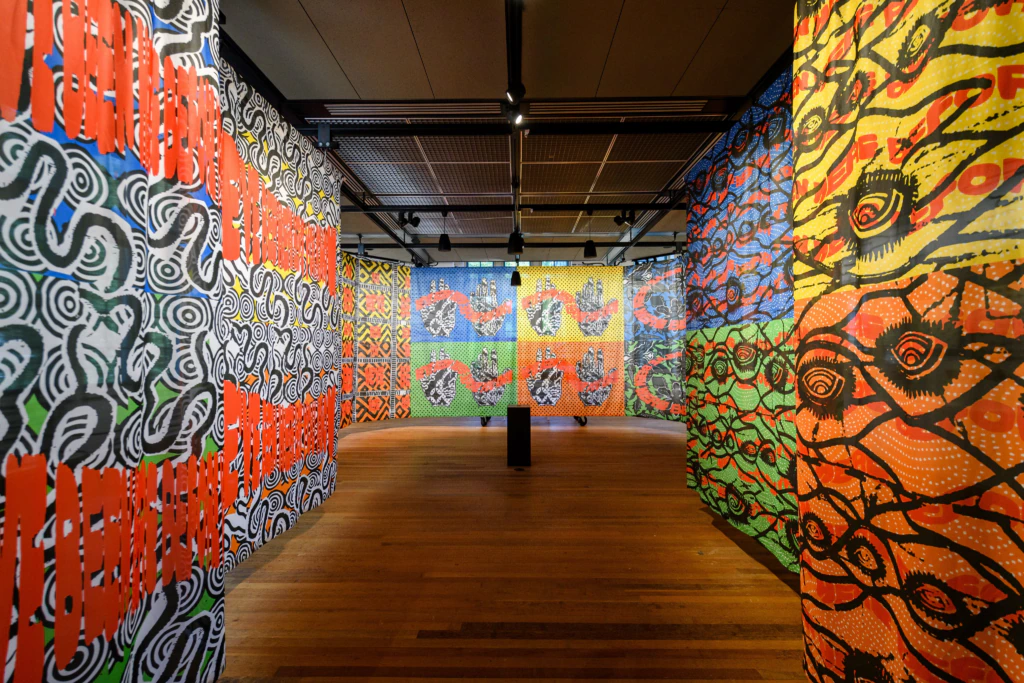
Ruwatan Tanah Air Beta Reciting Rites in its Sites, by Zico AlbaiquniCourtesy of the artist and Yavuz Gallery
As a visitor to the Wereldmuseum Amsterdam (formerly the Tropenmuseum) on several occasions over the past decade, I have observed a number of significant transformations within the storied architectural setting of this internationally renowned world cultures space.
Housed within a Dutch neo-Renaissance-style building designed by architect Johannes Jacobus van Nieukerken, the site opened in 1926 as the home and museum of the Colonial Institute.
Generational responses to seismic geopolitical changes throughout the 20th century saw major shifts in the museum’s policies and exhibiting practices that were also reflected in the institution’s name changes. These include its post-1945 rebirth as the Tropenmuseum, part of the Royal Tropical Institute, and the formation of the Netherlands’ National Museum of World Cultures Foundation in 2014.
The latter restructuring process also saw sibling sites in Leiden and Rotterdam align with Amsterdam as a 21st-century Wereldmuseum group, supported by its flagship interdisciplinary Research Centre for Material Culture and also an experimental WereldLab – or museum without walls – in Nijmegen.
In the Amsterdam site’s public galleries, a decolonial reinterpretation and reinstallation of the museum’s permanent collections has been under way for several years.
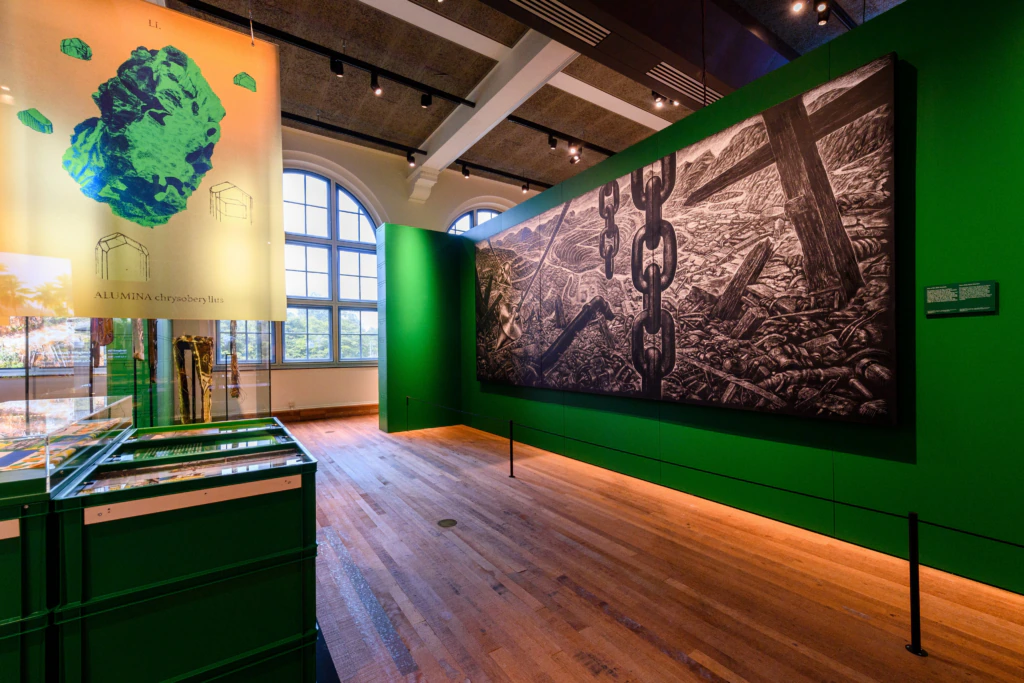
A new permanent exhibition in the Treasures from Overseas room Wereldmuseum Amsterdam
In 2021, the museum moved away from a typological arrangement of exhibits packed inside glass cabinets and adopted the title Our Colonial Inheritance to denote a thematic recontextualisation of holdings sourced throughout the era of Dutch imperialism.
Advertisement
The first floor galleries surrounding three sides of the museum’s central atrium present a series of thought-provoking assemblages of cultural objects, artworks, documentary photographs, archival documents and printed sources.
These offer a critically reflective, globalised narrative and are divided into sections: Prologue; A Profitable Trade, But for Whom?; Wealth from Overseas; Slavery, Resistance and Resilience; Racism Exists, Race Does Not; On the Road to Freedom; Education and (Anti) Colonial Awareness; The Power of Language; This is My Home; and Epilogue.
Beginning with a filmed prologue – Prelude to a Nation/Prologue of a Nation by Dutch visual artist Bibi Fadlalla (b.1978, Cairo) – visitors encounter a two-channel video installation showing ethnically diverse flag bearers walking along a beach.
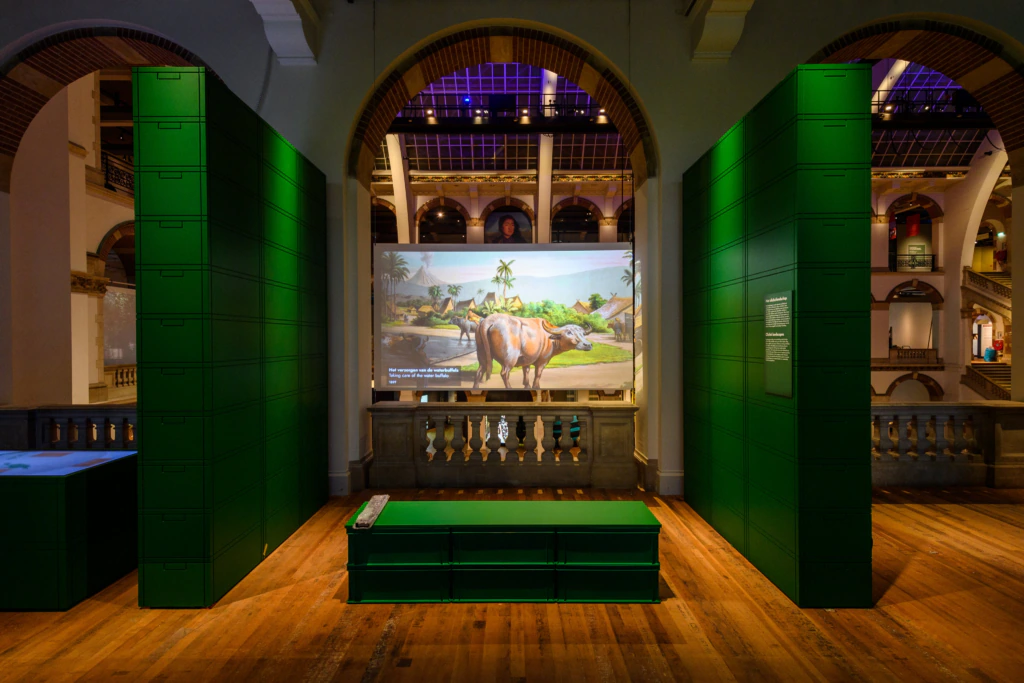
Multimedia artworks show how Dutch colonialism shaped the world Wereldmuseum Amsterdam
The kaleidoscope of cultural emblems carried aloft in this procession reflects the multicultural heritage of the Netherlands, as well as the varied diasporic and hybrid cultural identities of the featured collective.
Commissioning Fadlalla, a lens-based artist with Sudanese heritage, to provide this visually striking cinematic introduction exemplifies the museum’s approach to storytelling.
Advertisement
By rejecting the western convention of using a singularised, disembodied and anonymised written interpretation of the historic holdings, a multi-vocal narrative is provided to trace and reconsider present-day relationships to the colonial past from the perspective of diverse, inclusive and pluralised authorship.
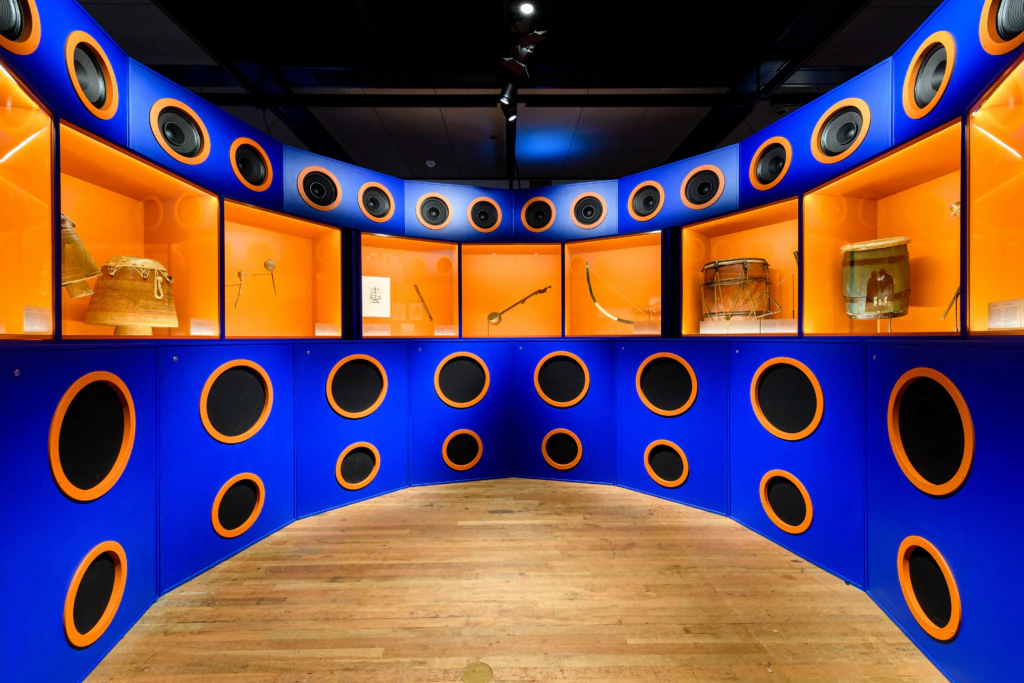
Creative combinations of soundscapes, scenography, documentary film clips, touchscreen-based digital interactives and piece-to-camera recorded interviews with scholars from around the world animate and illuminate the object-focused displays.
The audiovisual and multimedia presentations also create contrasts in ambiance that evoke different affective responses to the exhibition’s challenging content.
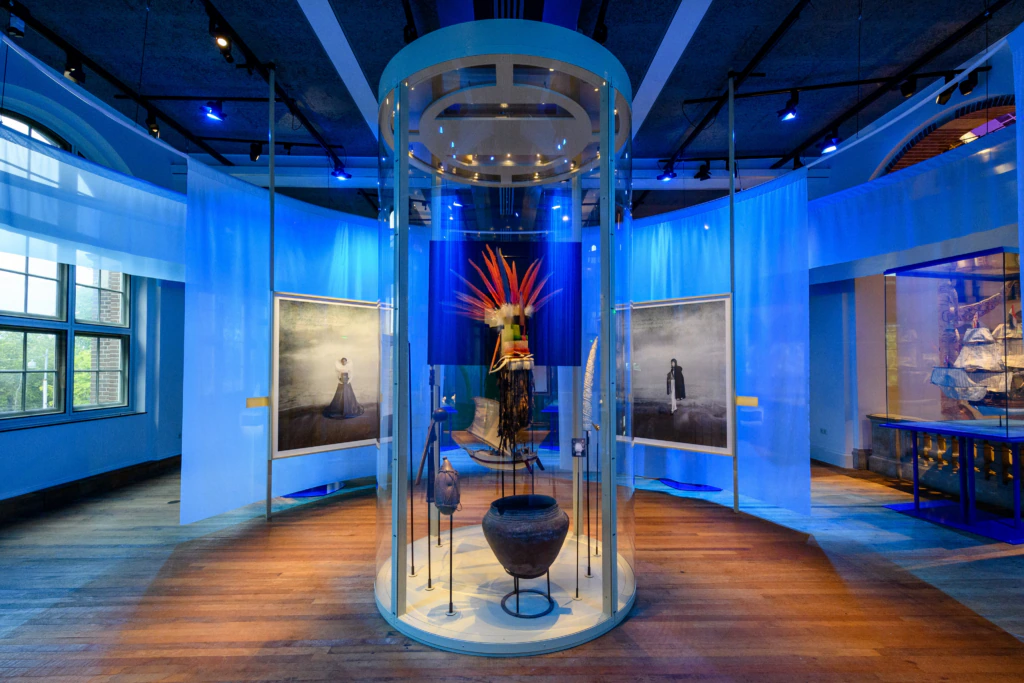
The displays use lighting and interpretation to pose searching questions about the Netherlands’ complex history of empire-building Wereldmuseum Amsterdam
From subdued, blue-toned lighting reflective of the world’s seascapes, through to representations of red-earthed tropical landscapes, the changing settings mirror the way the interpretation poses searching questions and multi-layered content about the Netherlands’ complex history of empire-building, global trade, settler colonialism and the exploitation of natural resources sourced overseas.
Contributions by global majority world scholars, rights advocates and cultural commentators from nations and diaspora communities linked to the former Dutch empire also help to foreground hitherto under-examined histories of resistance to colonial oppression, struggles for the right to self-determination and ongoing activism to combat the enduring aftershocks of colonial injustice still experienced today.
Advertisement
Art-political interventions
A particularly innovative and successful approach to displaying Our Colonial Inheritance has involved positioning commissioned installations by contemporary visual artists alongside exhibits from the longstanding ethnographic collections.
These juxtapositions enable the artists’ creative imaginations to convey poignant insights about the impacts and legacies of Dutch colonialism in Aruba, Curaçao, Indonesia, Saba, Sint Maarten, South Africa, Suriname, Taiwan and other nations that once formed part of the Dutch empire.
Importantly, many of these site-specific installations represent art-political and justice themed provocations by Dutch contemporary visual artists with diasporic links to the places in focus.
For instance, Curaçao Layers (2022) by Avantia Damberg (b.1977, Leeuwarden) features a large, three-part cylindrical installation, suspended from the ceiling near the On the Road to Freedom section of the exhibition, which combines decorated ceramic tesserae, printed textiles and wood carvings to commemorate histories of colonial resistance on the island of Curaçao.
Ancient motifs and markings used by Indigenous Caquetíos, textile-printed copies of formerly enslaved Africans’ manumission letters and extracts from the lyrics of the national anthem symbolise the freedom struggles, heroism and resilience of Curaçaoans over many centuries.
Our Colonial Heritage was decorated by artist Farida Sedoc with soundscape by Myrtho Photo by Rick Mandoeng
Other contributions by internationally renowned creatives combine decolonial interventions with symbolised advocacy on human rights, equality, freedom and reparative justice.
For example, Territory Dress (2018) by British artist Susan Stockwell (b.1962, Manchester) features an old-fashioned bustled dress made from printed maps and computer components, positioned in the section Profitable Trade.
This artistic mapping of the world onto a representation of a female body focuses attention on women’s lived experiences within the traditionally male-dominated “master” narratives of imperialism. Consequently, the dress’s tournure and train signify the immense weight and longue durée of colonial history.
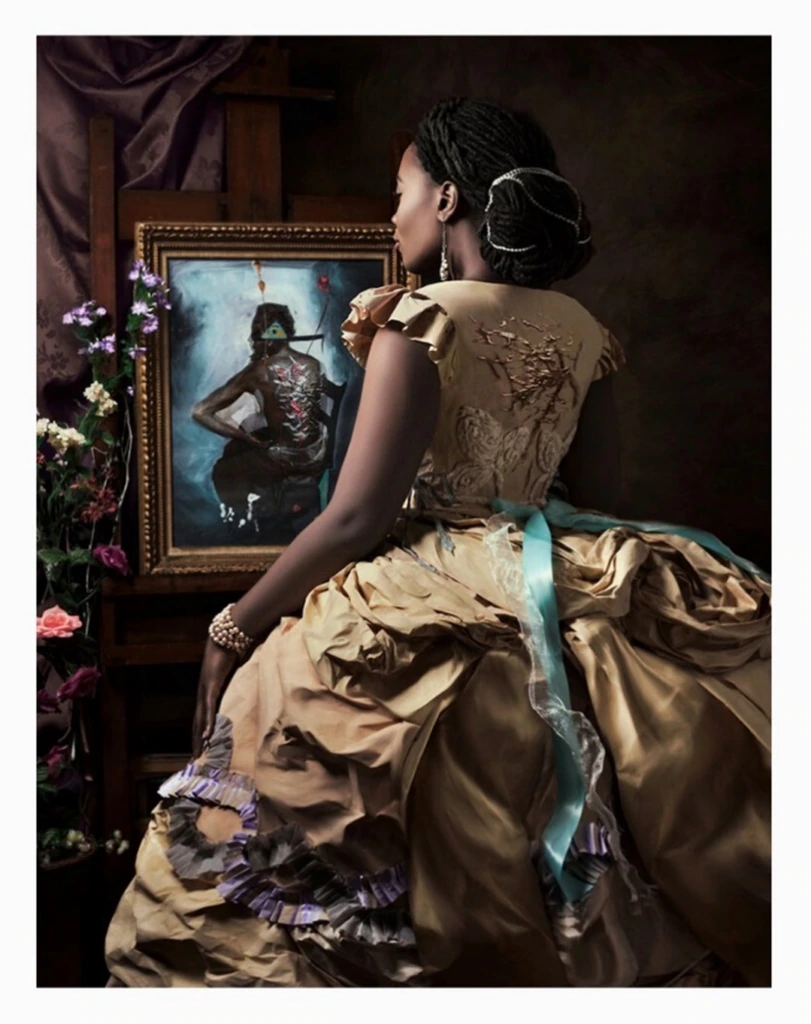
Madame Beauvoir’s Painting (2017) by Haitian-American artist Fabiola Jean-Louis
Relatedly, the photographic installation Madame Beauvoir’s Painting (2017) by Haitian-American artist Fabiola Jean-Louis (b. 1978, Port Au Prince), and the mixed-media sculpture Planets in My Head, Literature (2010), by Nigerian-British installation artist Yinka Shonibare (b. 1962, London), both offer re-mediated representations of the physical and psychological brutalities of enslavement and colonialism created by artists with African heritage.
Fabiola Jean-Louis’ nuanced figuration uses stitches embroidered on the back of a 19th-century crinoline dress to symbolise the whip marks and scarring on the bodies of enslaved Africans.
Shonibare’s sculptural installation of a child-sized, globe-headed mannequin seated at a traditional wooden school desk alludes to the psychological damage caused by exposure to racist, colonial era systems of education.
Both artworks’ adjacency to historical content about the physical violence and mental suffering experienced under colonial rule challenges and contests prevailing falsehoods and fantasies about European imperialism as a (so called) “Golden Age”.
These types of creative interventions by contemporary visual artists of colour also contribute to decolonising museums in Europe in a more structural way.
This is because the commissioning of artworks by creative luminaries with global majority world heritage is one of the few ways contributors from under-represented communities can make visibly impactful interventions in museums to positively influence decolonial thinking and institution-wide decolonisation in practice.
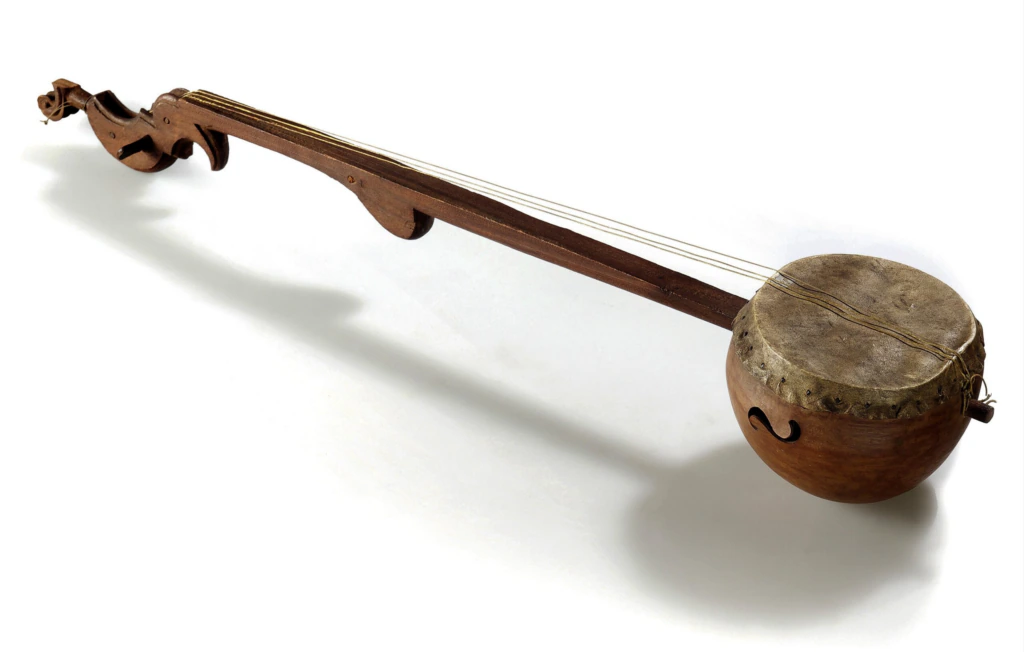
The oldest banjo from the American continent, which was made by an enslaved person in Suriname and collected by Stedman in the 1770s
Concluding reflections
As the Wereldmuseum Amsterdam approaches the centenary of the building’s opening, there are many commendable decolonial achievements to highlight.
Most notably, the ongoing research to clarify the provenance of contested holdings, address and settle restitution claims and return cultural treasures to their communities of origin is one of the most important aspects of the museum’s continuing decolonisation process, operating alongside the aforementioned transformations in the public galleries.
However, just as the architectural and financial remnants of an exploitative Dutch colonial past remain imbricated in the building’s design, the museum’s internal decolonial interventions to date only serve to expose additional concerns that also need attention.
Artefacts related to slavery are accompanied by a soundscape from Vernon Chadlein
To give you an idea, although a diverse front-of-house team in a museum signifies a commitment to inclusive staffing, it must also ensure that everyone has opportunities to contribute to decision-making.
This includes in aspects of the collections-based research, curatorial (re-)interpretation work, strategic planning on audience engagement, event programming and wider educational developments.
My experience of discussing these issues with a range of staff members revealed more could be done to share interpretative power and support participative leadership throughout the museum.
Disrupting hierarchical staffing and governance structures to democratise organisational agency and challenge the status quo is a necessary part of decolonial practice.
So, too, is the pursuit of meaningful dialogues and research relations with a broad collective of fellow arts and heritage institutions, external advisers from other sectors, community groups and activists working at the forefront of human rights, anti-discrimination and reparative justice campaigns.
Only through these types of continuous collaborations and shared action-planning mechanisms will museum decolonisation represent genuinely critical engagement with “our colonial inheritance”.
Europe after Empire | Carol Ann Dixon
Carol Ann Dixon is a cultural geographer and education consultant with research interests in African and Caribbean diaspora histories, geography-art alignment, museology and the politics of heritage. She blogs at Museum Geographies.
Climate action | It’s time for museums to take their place at the table
Cultural institutions across the UK are doing thoughtful work to tackle the climate crisis, with many individuals in the sector working hard to drive change
Advertisement
Join the Museums Association today to read this article
Over 11,000 museum professionals have already become members. Join to gain access to exclusive articles, free entry to museums and access to our members events.