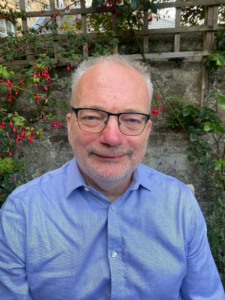
Patrick Elliott
Chief curator of modern and contemporary art at National Galleries of Scotland
“Many people I have talked to about this exhibition over recent years assumed that it was going to be staged outdoors, and were then very surprised to find out it was to happen in a 200-year-old building bang in the centre of the capital city.
That’s because the artist Andy Goldsworthy is known for his site-specific sculptures and land art made out of ice, coloured leaves and so on.
But his work – much of it inspired by his teenage years working on farms – has a much more complicated underbelly than I had originally expected.
He portrays the dangers of nature – a place that is hostile and where things die. He is also interested in barriers and complications in the landscape that correlate to obstacles in life and, I think, his art is about finding a way through.
Advertisement
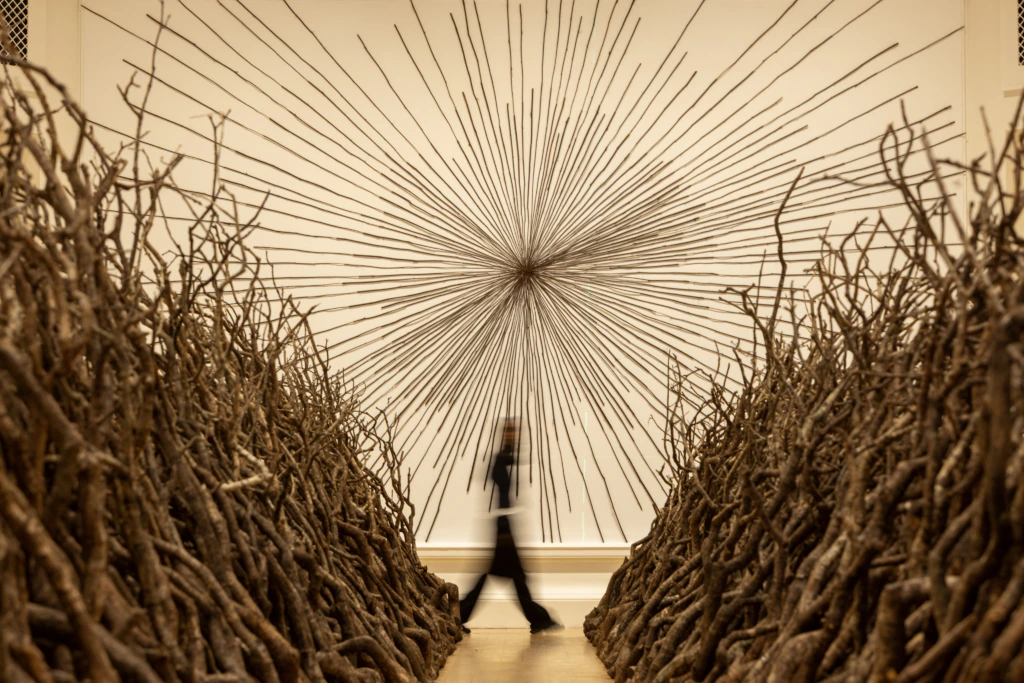
This work takes up an entire 25-metre-long room and comprises hundreds of windfallen oak branches, almost two metres tall, as far as the eye can see. When you move in closer, you notice a passageway down the middle that is just 90cm wide.
I think the idea was inspired by those narrow country lanes where cars have to pause for a moment to let each other past.
The floor is also made of Scottish oak, and Goldsworthy is reminding us that we’re all part of nature and that when people complain about woodlands being cut down, they will probably have wooden tables and furniture at home.
This building is, of course, made of stone, and Goldsworthy also reflects that in a piece consisting of more than 100 stones he has collected from graveyards around his Dumfries and Galloway home.
Gravediggers remove large stones from the ground before a burial, and Goldsworthy’s collection of them is a telling metaphor that as a body goes into the soil, a stone comes out.
There have been challenges putting the show together – structural engineers have been involved as we gauge the weight of some objects and how to fix others. We have also had to ensure that nothing harmful has been brought into the building.
Advertisement
Other pieces on show include a carpet of sheep’s wool on the stairs up to the entrance. All the fleeces have different-coloured marks from different farmers, and it looks a bit like the abstract expressionist artist Jackson Pollock made a rug.
There are also a couple of pictures made by sheep scrambling across a canvas that Goldsworthy placed in their muddy field to get to food placed in the middle.
This kind of artwork involves a lot of conversations, contracts and agreements. If you’re a painter, all your effort and emotional turmoil happens in private, but Goldsworthy’s tends to happen in council and nature society meetings, and lengthy email trails about boards and budgets.
Oak Passage has a lot to say about dialogue and finding your way through life’s problems, but it’s also a very beautiful work that looks like it could have occurred quite naturally.”
Interview by John Holt. Andy Goldsworthy: Fifty Years is at the Royal Scottish Academy, Edinburgh, until 2 November