Where
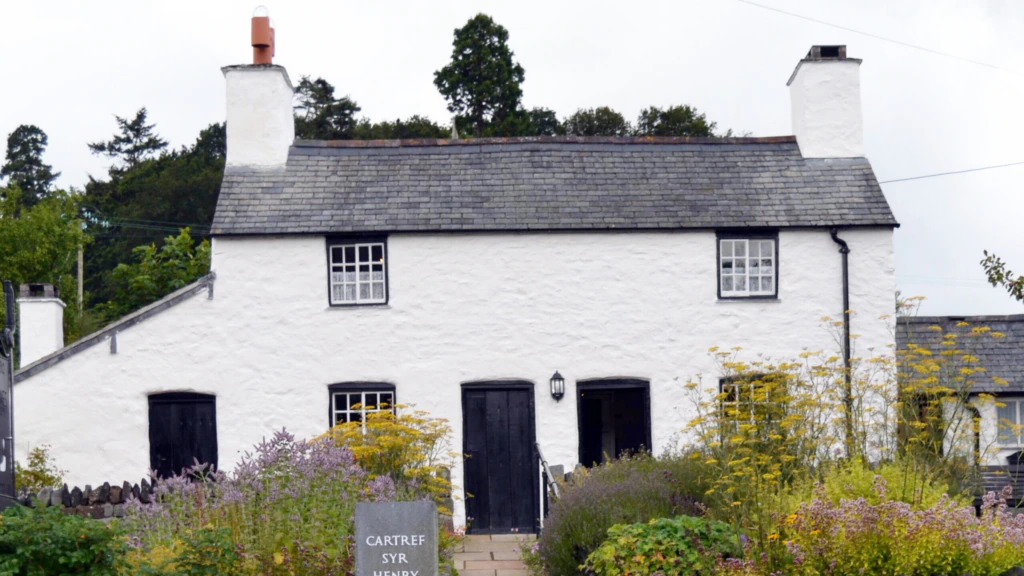
The museum is in the village of Llangernyw, which is in north Wales.
What
The museum, established in 1934, is the former childhood home of Welsh philosopher and academic Sir Henry Jones (1852-1922). It consists of two early-19th-century labourers’ cottages, furnished to reflect the period. Each cottage contains two rooms – one on the ground floor, the other on the upper floor.
Collection
There are about 270 items in the museum collection, including furniture, tools, books, photographs, and domestic items. “My favourite item in the collection is a photograph of Sir Henry taken on the steps of 11 Downing Street, London, with the reverend John Williams Brynsiencyn and prime minister David Lloyd George,” says Morus Jones, one of the museum’s trustees.
Advertisement
“There’s also an impressive piece of oak furniture, unique to Wales, known as the ‘Cwpwrdd Tridarn’. This item, owned by Sir Henry, was donated in 2016 by Janet Jones, one of Sir Henry’s direct descendants.”
Highlights
“We have organised exhibitions on local and agricultural themes, focusing on local achievers at the National Eisteddfod of Wales,” says Jones. The Eisteddfod, which is held in a different part of Wales every year, is the largest cultural festival in Europe.
“We honoured John Cledwyn Davies, who was a Liberal MP and the director of education for the county of Denbighshire for one year, 1922-23; Robert Roberts – known as Y Sgolor Mawr or the Great Scholar because he was instrumental in collating the English/Welsh Dictionary, who died in 1903; and Thomas Glynne Davies, a 20th-century journalist and poet.”
Help at hand
The museum is run by four trustees. The team has benefited from grants from the local county authority, the local windfarm fund, and the National Lottery Heritage Fund.
Advertisement
Budget
Admission is free, but donations from visitors are greatly appreciated. The museum is open from May to September on Saturdays only, from 2-4pm.
Sticky moment
At the end of 2024, the museum faced an uncertain future due to a lack of volunteers. “A friend of the museum has applied for government funding for a part-time development officer, which, if successful, would alleviate much of the burden of administering the museum from us,” says Jones.
Survival tips
Community engagement has remained one of the museum’s key strengths. “The museum has cultivated an excellent relationship with the local school, Ysgol Bro Cernyw, which has 100 pupils and is a Welsh-speaking primary school,” says Jones.
Advertisement
“We organised a series of school workshops where pupils collaborated with local artists, including making prints and collages with Eleri Jones, mixed-media art with Nerys Jones, glass art with Rhian Haf, and dramatic arts with Arwel Owen.”
Visitors
About 200 a year.
Future plans
The museum will focus on a series of restoration projects in 2025. “Part of the building is surrounded by heavy scaffolding. It will cost more than £500 to get the chimney fixed,” explains Jones. “We also intend to fix the air-conditioning by replacing our dehumidifiers, but this will be costly.”
Lynsey Ford is a freelance writer