Changing the record | Archives in the 21st century
In an age of turbulence and digital revolution, archival practice is changing at a rapid rate. How are the nation's record-keepers adapting and innovating for this brave new world?
In the dizzying first few weeks of Donald Trump’s second presidency, one of the actions that stood out, even amid the chaos of mass public sector firings, was his decision to dismiss Colleen Shogan, the head of the National Archives and Records Administration of the United States.
Trump and his acolytes may not have, let’s say, a fine appreciation of the historical record, but they are well aware that the information held within those walls is a powerful currency. Whoever controls the archive controls how a nation’s story is told.
As archivists in the US contemplate what the next few years might hold and how they can adapt to this brave new world, their counterparts in the UK are considering the same questions, though perhaps with a slightly less acute sense of existential dread.
Archives are on the cusp of change as the world that they document becomes increasingly fast-moving, polarised and turbulent. The digital revolution is bringing novel challenges, and opportunities, for the sector.
These include the rise of AI, the ubiquity of social media, big tech censorship and the question of preserving an endlessly growing archive of born-digital material.
Caring for the historical record is no less challenging. An archivist attempting to, for example, appraise legacies of empire and slavery, or address historic exclusion, must navigate the ever more febrile battleground of the culture wars.
Advertisement
The UK’s National Archives (NA) is in the process of developing a new strategic vision for the sector that it hopes will shine a path through some of these issues. Due to be published this summer, the vision will build on the NA’s previous strategy, Archives Unlocked, which was published in 2017 and centred around three key ambitions: trust, enrichment and openness.
Its major priorities included digital capacity, impact, inclusion, and health and wellbeing. Given how closely intertwined the relationship is between archives and museums – the line where one stops and the other begins has always been blurred – the new strategy is likely to have implications across all sectors.
Later this year, the Victoria and Albert Museum (V&A) will unveil the first of its two new sites in east London, the V&A East Storehouse, which has been created to provide unprecedented public access to the institution’s vast stored collections and archives.
For many visitors, one of the most exciting features of the new storehouse will be the David Bowie Centre, which will hold the cultural icon’s archive of more than 90,000 objects, ranging from musical instruments to costume ensembles and notebooks of handwritten lyrics.
The centre, due to open in September, will have three separate spaces where visitors will be able to interact with the archive in different ways.
“As an archive, not an exhibition, the David Bowie Centre will have a mix of small, curated rotating displays, an audiovisual installation, and quieter study areas, where visitors can explore aspects of Bowie’s archive on their own,” says archivist Sabrina Offord.
A series of guest curators– including Bowie’s collaborators, experts and contemporary creatives – will be invited to share their perspectives on the material.
Displays will spotlight Bowie’s “multi-dimensional creative approach, including his unrealised projects, collaborations, and influences”, says Offord.
Young people are at the forefront of the project. The curatorial team has consulted with 18-to-25-year-olds from London’s four Olympic boroughs, and some of the displays will be co-curated by members of V&A East’s Youth Collective.
The archive will show Bowie’s status as a multi-faceted innovator who refused to be confined to a single genre: something that particularly speaks to younger audiences.
“We’re excited for the centre to inspire visitors to explore their own creativity and make unexpected connections between Bowie, contemporary conversations, and their own lives,” says V&A East curator Madeleine Haddon. “We hope the public feels empowered to delve into the archive independently.”
New priorities
There have been significant shifts in archival practice in the eight years since the publication of the previous strategy. As in the wider heritage sector, much work has been done to develop new approaches to dealing with the UK’s legacies of colonialism and slavery, placing the perspective of marginalised groups at the centre.
Like many institutions, archives are grappling with past practices that omitted, underrepresented or even deliberately erased material that did not fit with the concerns of the time. The Windrush scandal, in which hundreds of Caribbean migrants were illegally deported, partly because the UK Government failed to safeguard their migration documentation, exemplifies the serious, real-world consequences of this erasure.
Advertisement
“The deliberate disregard for Black archives has not only inflicted trauma on individuals and families, but has also underscored the systemic barriers Black communities continue to face in securing recognition and justice,” says Pawlet Brookes, the chief executive of Serendipity Institute for Black Arts and Heritage.
Serendipity is one of a number of Black-led organisations that has taken archival matters into its own hands. In 2022, it received a grant through the National Lottery Heritage Fund’s Unearthed: Forgotten Histories scheme to develop two initiatives – a Living Archive created and maintained by African and African-Caribbean communities in the English Midlands, and Young Archivists, an accredited training programme for young people from diverse communities.
The Living Archive differs from the traditional archive model, says Brookes. “Preserving Black archives is an act of resistance and empowerment,” she says. The ethos for the Living Archive “acknowledges the archive not as a static structure where objects are labelled definitively, but one that continues to evolve through interpretation and reinterpretation”.
The Living Archive’s digital collections of materials are brought to life through artistic responses, events, exhibitions, podcasts and films, an exchange that Brookes says helps to “reconnect back to heritage so that the Living Archive is active and animated”.
“Decolonisation in archives is not just about reworking language or surface-level changes – it’s about fundamentally rethinking the ways knowledge has been gathered, preserved, and presented,” Brookes says.
Complex histories
Some “establishment” institutions are also finding new ways to tackle these legacies. Over the past few years, London’s Postal Museum has been using its extensive archive to resurface African-Caribbean narratives, particularly in relation to transatlantic slavery.
Advertisement
“We were motivated by an ambition to be more accountable as an organisation by delivering a project that balanced our traditional narrative of the post as a benevolent service with its more complex and challenging histories,” says senior curator Joanna Espin.
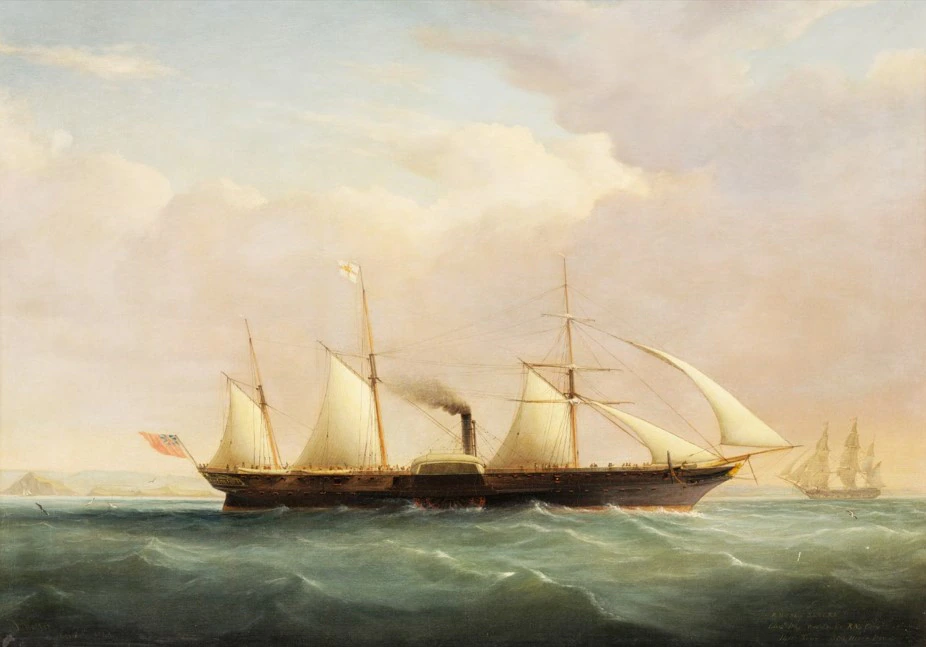
The museum’s latest exhibition, Voices of Resistance, which opened in April, explores how enslaved people in the 19th-century Caribbean helped refuel the postal ships that enabled enslavers to manage their plantations from afar.
The museum worked with the historian Anyaa Anim-Addo to review the files and holdings in its collections related to the movement of mail between Britain and the Caribbean in the 1800s, and the Royal Mail Steam Packet Company.
RMS Severn in the Bristol Channel, Joseph Walter, c. 1834 The Postal Museum
The focus was on “reading the files against the grain” to surface often-concealed histories related to African-Caribbean people, says Espin.
“There are very few written sources that demonstrate how this government-subsidised company exploited enslaved labour after the 1833 Slavery Abolition Act,” she says.
“It’s been important to observe the gaps in archives and think about the significance of silence… It’s important to be critical of museum records and practices, recognising how our work can conceal histories,” she adds.
One thing the museum has learned from this process is that “we might have inherited presumptions that we don’t have much material about a certain topic, but sometimes a small reference can open up a hidden history, inspiring content, conversation and creative responses,” says Hannah Clipson, the museum’s access and community engagement manager.
“We knew we had, for example, a group of around 100 letters that had been carried on mail ships from Jamaica to Britain. However, these had been purchased for the collection because of their rare postmarks and catalogued accordingly. The letters themselves weren’t the reason for the acquisition or the focus of the catalogue record. So, uncovering the contents of the letters, and what the letters could reveal about the experiences of enslaved people was unexpected.”
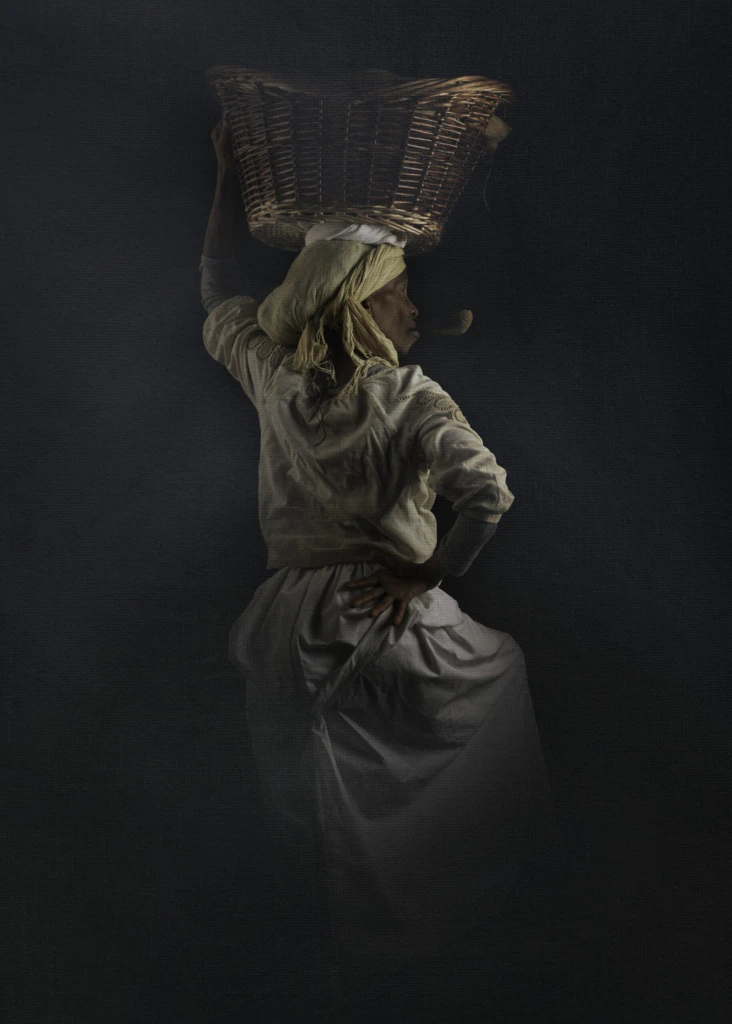
Narratives uncovered from the archives include the story of Nancy Brown, who stood up to illegal threats and poor treatment at the Jamaican sugar plantation on which she was enslaved. “Through working in a different way, it’s women’s stories that we have found – and specifically the stories of African Caribbean women,” says Clipson.
Backbone Strong, by Ama Dennis
Lasting memories
The Holocaust Centre North at Huddersfield University is another institution that is recalibrating its approach to archival material. The centre began as a friendship group and community archive established by Holocaust survivors in Leeds in the 1990s, who were then invited to share their first-hand testimonies with local schools.
With the last survivors entering their nineties, and the Nazi genocide starting to fade from living memory, the institution restructured in 2018 to become a museum.
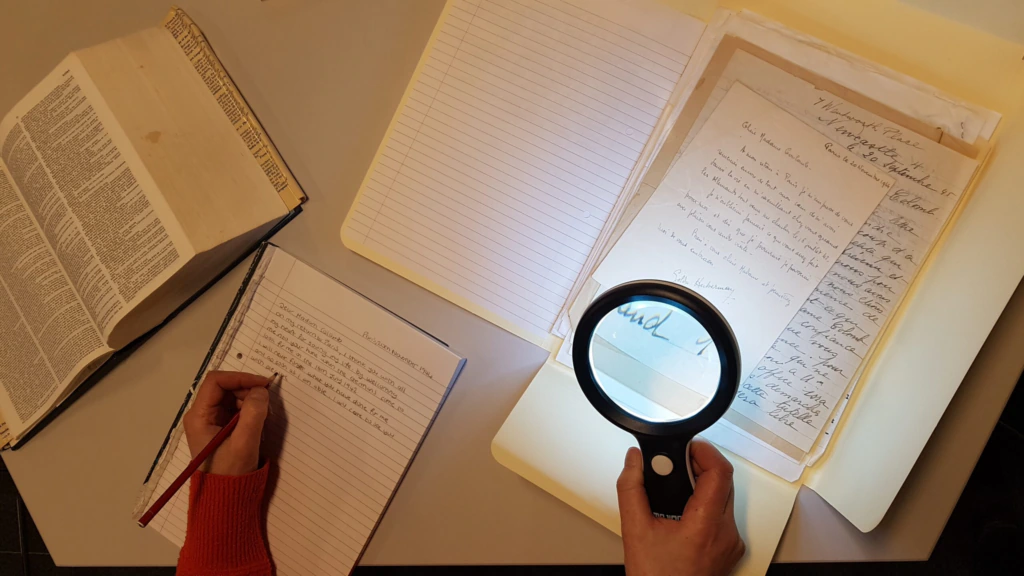
A translator-in-residence working on the archives at Holocaust Centre North
The pandemic offered the museum a chance to pause and think about its future, says director Alessandro Bucci. “The pandemic really was that division between the before and after. For us, it was a time used to think about how to introduce ourselves to the UK.”
What emerged was a new programme, Memorial Gestures, that focuses on interpreting the centre’s dense archival material – which mainly consists of oral histories, photographs and personal papers – through responses from creative practitioners.
This differs from the approach of other Holocaust organisations, which often keep such material alive through the use of, for example, digital surrogates and AI.
“There is so much that language fails to address, and I think nowhere more than the aftermath of trauma does that become evident,” says Bucci. “So, it became a real need for us to start thinking about contemporary art as a way to do that. It gives people a different way in to have an emotional connection with the stories and the people. It’s a different experience to reading a textual document.”
As part of Memorial Gestures, the centre hosts residencies from writers and artists, who explore the archives to produce new work. With much of its material written in foreign languages, one innovation brought in by the institution has been the role of translator-in-residence.
Bucci sees this role as an artistic residence. “It’s not word-by-word translation as most people think, but it’s almost offering a cultural translation.”
“The story we tell here is so impossibly multilingual,” says Andrew Key, who led on the Memorial Gestures programme. “And we all translate ourselves into different social settings or kinds of writing. So, I wanted to think about translation as an expanded cultural practice.”
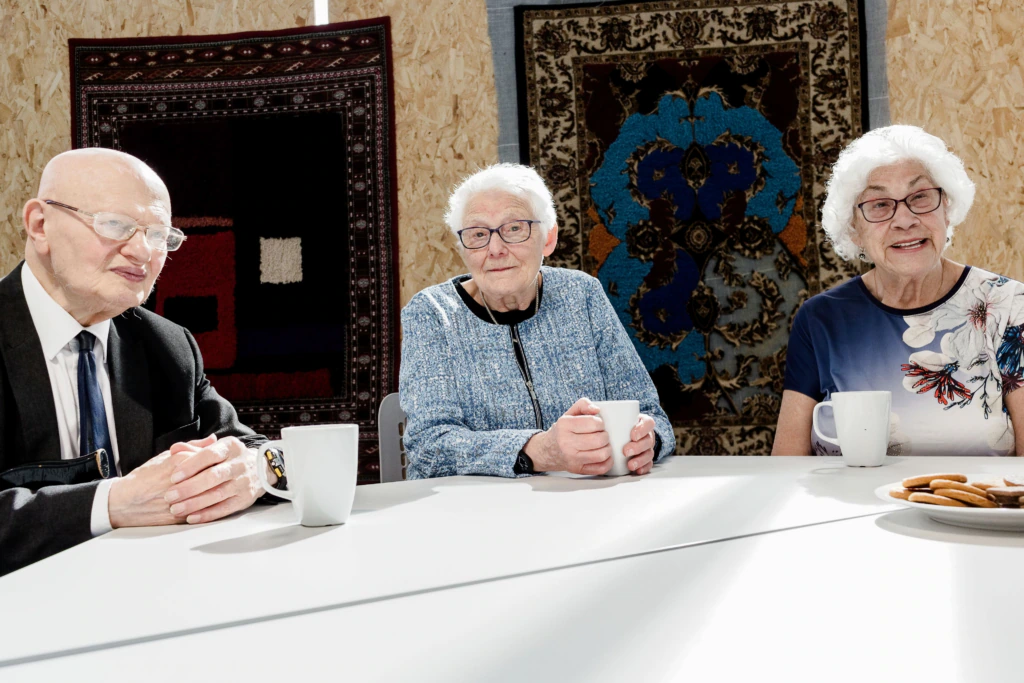
Holocaust survivors gather to share their memories at the Holocaust Centre North at Huddersfield University
Community-led practice
Work by Rey Conquer, the first translator, will be on display in an exhibition exploring the 14 residencies, opening at Sunny Bank Mills, near Leeds, in June. Conquer has also produced a book, Conversation Time, looking at letters from concentration camp internees, who often turned to formulaic cliches “that somehow managed to hide, but also show, the extremely intense emotion that’s going on”.
“It’s so overwhelming and hard to translate that experience into words,” says Key. “The book looks at the points where ordinary language fails.”
Community-led, socially engaged practice is another area of focus for the centre. As global conflicts fracture community relations in the UK, the centre has started considering how it can use its collections to bring people together. It is planning sessions to empower communities to create their own archives.
It’s about ensuring people “know that their history and what they’re doing is important, and they should save it”, says Bucci. “It’s not about ‘give us your things’, it’s about ‘keep your things and here’s some guidance and support on how to do it’.”
Like many archive institutions, digital is a key priority. The centre is expanding its online catalogue and aims to fully digitise its archive, with a collections browser launching later this year.
Much of this new approach is experimentation, Bucci says. “We’re at a kind of crossroads in the sector, and I think self-reflection on what it means to keep doing this work and how we keep doing it is really fruitful.”
It’s a way of thinking that will be much needed in the increasingly complex data landscape of the coming decade.
Archiving the war in Gaza
Smoke rising after Israeli bombing on the Gaza Strip Mohammed Ibrahim/Unsplash
When the war in Gaza broke out following the 7 October 2023 Hamas attacks on Israel, Ghada Damashk, an archivist and metadata librarian at the American University of Beirut, says she knew that social media would be key to documenting the Palestinian side of the escalating conflict.
“Things went wild on social media. There were millions of people posting,” she says. At the same time, tech giants like Meta began to crack down on Palestinian accounts.
“When we started to see this, we thought that we need to document the social media,” says Damashk.
Damashk got in touch with Jamila Ghaddar, a Lebanese feminist and archivist based in Canada, who is leading a wider project, Fighting Erasure, to safeguard Palestinian and Lebanese memory, history and heritage during the conflict. As part of Fighting Erasure, Damashk began using innovative open-source tools to archive social media in a structured way.
She preserves data from anyone in Gaza, and later Lebanon, with a connection to the conflict – as well as fake news and misinformation from both sides. The archive will be preserved in a digital repository for future researchers.
“Everything is documented,” she says. “It’s not my job to see if it’s true or not, I just take it. Maybe one day a researcher will decide to study what the spread of fake news was like during the war.”
The experience has transformed how Damashk sees the role of an archivist.
“This war has changed my view of my work,” she says. “Okay, we know archives are important, but witnessing how those in power are trying to erase specific archives, you understand it in a different way. To hide someone’s voice, you have to erase their archive.”
Social media is one of the only tools the people of Gaza have to combat this, says Damashk. “This is how people are documenting what they are going through – through an article, through poetry, through art, through song. The words they use are that ‘the world will forget what happened to us’. They don’t have anything else to fight back against the erasure.”
Climate action | It’s time for museums to take their place at the table
Cultural institutions across the UK are doing thoughtful work to tackle the climate crisis, with many individuals in the sector working hard to drive change
Advertisement
Join the Museums Association today to read this article
Over 11,000 museum professionals have already become members. Join to gain access to exclusive articles, free entry to museums and access to our members events.