When Fruitmarket in Edinburgh first opened its doors in 1974, its scope, extent and ambition were different to what they are now. During the first decade of its life, it hosted solo exhibitions by artists including Frank Auerbach, Mark Boyle, Richard Hamilton, David Hockney, Willem de Kooning, Eduardo Paolozzi and Frank Stella.
Group shows, meanwhile, often looked to Europe and especially the work of Dutch, Finnish and Polish Artists. The first woman to exhibit in the gallery was Jill Bruce (now Jill Smith) in 1975. It was 1979 before it held a solo exhibition by a woman artist.
In 1984, with new directorship and expanded gallery space, the gallery showed world-renowned artists such as Nancy Spero and Dan Graham, while also carving out space for Scottish artists. The late 1980s saw another new director, Fiona McLeod, and the initiation of the short-lived annual Open exhibition at the gallery for artists working in Scotland.
When Graham Murray took up directorship in 1992, a strong international flavour to the programme brought blockbusters by artists such as Yoko Ono and Jeff Koons, as well as landmark group shows by Chinese, Israeli, Japanese and Korean artists. Land art and the natural world was another thread, with the likes of Andy Goldsworthy and David Nash exhibiting.
Current director Fiona Bradley, who took the helm in 2003, continues to build on Fruitmarket’s historical strengths of Scottish and international contemporary art.
Concurrently, she has developed threads that interrogate the legacies of surrealism and minimalism, as well as offering women artists high-profile exhibitions. The addition of the Warehouse space in 2021 gave further scope for an ambitious programme.
Time to be strategic
More recently, Bradley “realised that in order to move into the future, we needed to bring the past with us”.
Advertisement
So, as Fruitmarket prepared to celebrate its 50th birthday in 2024, it commissioned artist Holly Davey to research its archive in what she has referred to as a “controlled rummage”.
As Bradley commented at the time: “We have been looking back to look forward, working with artists to breathe life into our archive.”
It was a brave move for a gallery to act so self-reflexively and to give an artist complete free reign.
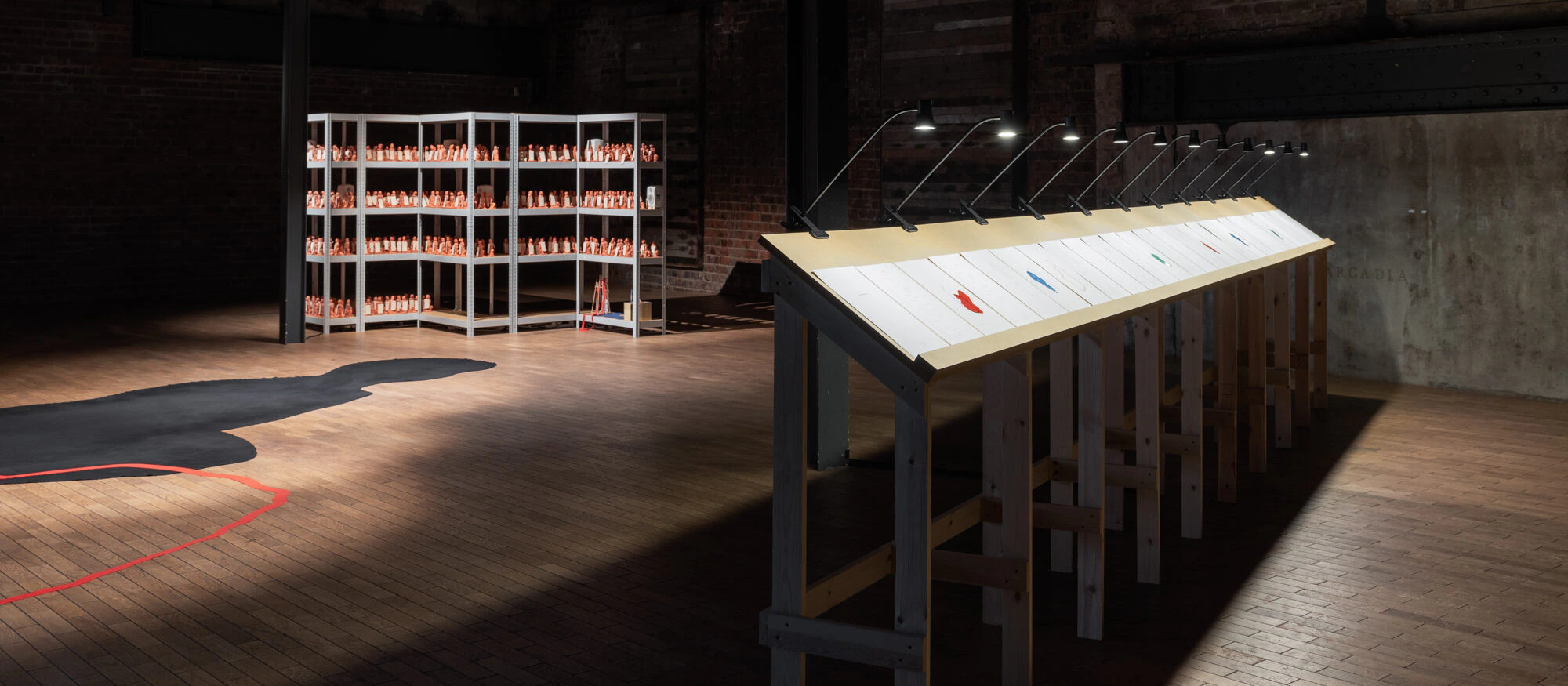
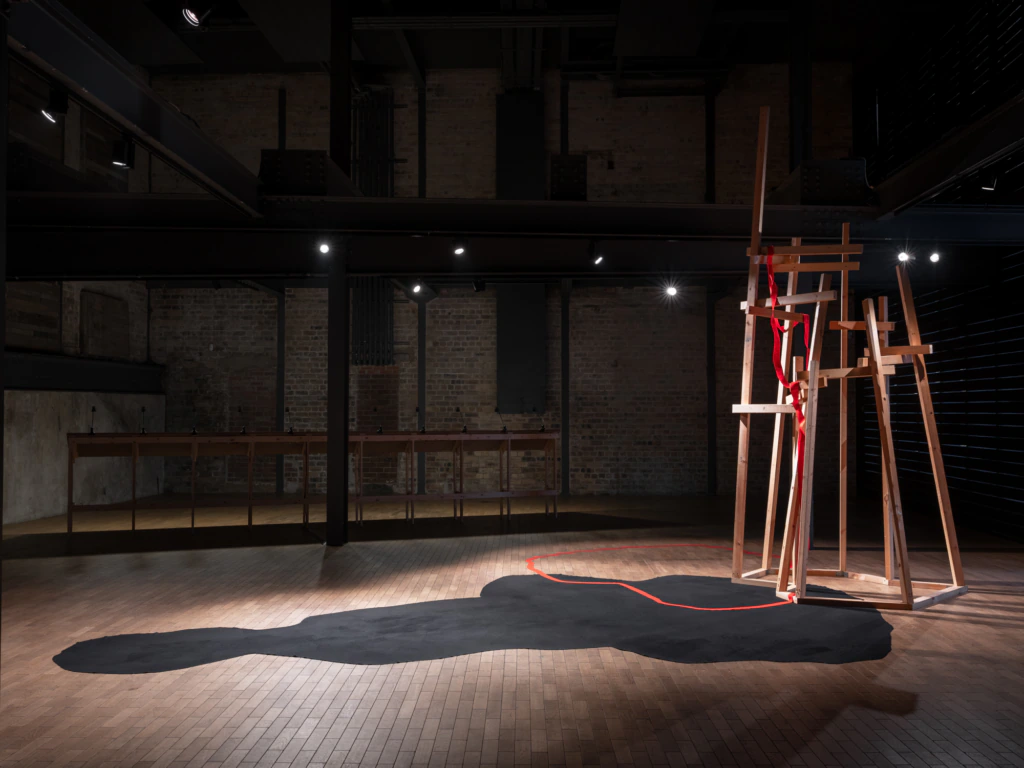
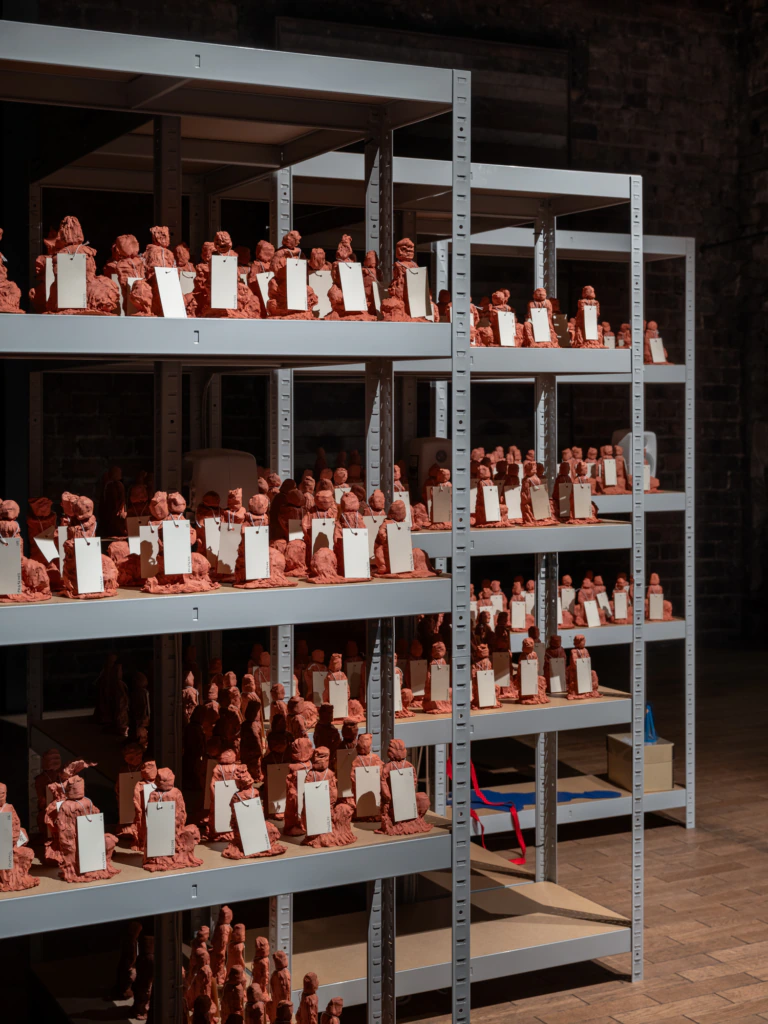
Davey’s work, The Unforgetting (19 October to 17 November 2024), was the result. The installation comprised sculptural works, drawings, a script and an audio work. Accompanying this was an artist talk and performance by Jill Smith.
Davey is known for making work that gives voice to the silent parts of archives, the gaps and omissions, and The Unforgetting was no different in that respect. At Fruitmarket, however, material was much more recent than Davey was used to – a living archive in many respects.
The artist’s own words in the script for The Unforgetting give a sense of the rigour and seriousness with which she approached this task: “Respectfully keeping you in your order of date, time, box number. I (the artist) put things back in their place. I look, I read, I study, I think, I make notes, I stare out the window… To understand your context is important.”
Advertisement
Yet, rather than drill down with preconceived ideas, Davey took a more open approach, asking the archive: “What do you want to show me?”.
What it showed her, what caught Davey’s eye, was the catalogue for an exhibition called Scottish Sculpture ’75, showing the work of 11 men, 10 of whom had studied at Edinburgh College of Art (ECA).
Wondering which women sculptors could have been in this show, Davey followed a thread, through collections and archives across the city, that led her to sculptor Ann Henderson (1921-76), an artist who haunts the exhibition.
Henderson taught sculpture at ECA from 1948 until her death. An influential teacher, she taught most of those male artists in the 1975 exhibition.
Therefore, while not included in Fruitmarket’s archive, Henderson is part of their history. To borrow from the historian Arlette Farge: “The archives do not necessarily tell the truth, but … they tell of the truth”, and that is what this project searched for.
Having tracked down Henderson’s influence, Davey turned to the sculptor’s own work and to Little Bather II in particular. This piece became the visual spark for everything else. Davey took her cue from it, weaving its shapes and shadows into a multisensory installation.
Advertisement
A host of terracotta figures made by Davey populated a bank of shelves in the Warehouse. Modelled on Henderson’s Little Bather II, they stood in for each of the women who exhibited at Fruitmarket across its 50-year history (all 354 of them), while an audio script named them one by one.
A silent gap of three seconds was included in the script for each of the 868 men shown in the gallery in the same period.
The recognition of individuals and the breaking of silence meant that The Unforgetting was not unlike Es Devlin’s Congregation (2024) in its conception. Just as Devlin’s large-scale choral installation showed portraits of 50 otherwise-faceless Londoners previously displaced from their homes, Davey’s work represented and named those forgotten women artists.
A place in history for women artists
The point was to look at who had been overlooked, to “re-see” and “re-hear about” the women who should be part of that history. Davey says the idea was to change the narrative and enable a different history to be heard.
The chorus of women Davey animated at the gallery was bold, tender and affective. And as the artist was clear at the time, it was an incomplete work, open to discovering and adding other women yet to be found.
What Fruitmarket takes from this process remains to be seen. A great deal has been done over the past 50 years to reclaim women artists and their work and, more recently, that of other marginalised groups. None of this is easy and much remains to be addressed.
As Davey explains: “These are difficult conversations to have, but I think it’s about being open and receptive to those conversations and being thoughtful about what we can learn. What are we observing? How can we use that information to make better decisions?”
Davey’s project is perhaps a prompt, a clarion call even, for galleries to be vigilant, to be self-reflexive and to recognise such things as an ongoing process with the potential to transform archive, event and exhibition programmes for the future.
Beth Williamson is an art historian, writer and researcher