
Andrew Bonacina
Chief curator at the Hepworth Wakefield
“This exhibition is not quite the one we planned to open in June 2020, which was twice postponed and rescheduled due to the pandemic. Rather than becoming dismayed by the delays, artist Sheila Hicks embraced the wait by continuing to develop ideas for the show, which carried on evolving.
There are practical reasons for the changes too, of course; objects we were due to borrow for the original dates were no longer available because of new museum timetables, so we had to think on our feet.
But that’s the way Hicks prefers to work across the different fields of fine art and craft and design. She rarely likes to be fixed to one idea and the constant evolution suited her thinking.
I first saw her small textile weaving works some 16 years ago and they seemed very personal and intimate. Later, I discovered the large-scale pieces she produced to engage with architecture by repurposing ‘found’ fabrics – old clothes and uniforms – as sculptural materials.
I think the malleability that textiles could offer her as a sculptor enabled her to change context so easily. She made designs for universities and office buildings and collaborated with producers such as the furniture and design company Knoll. She pushed the boundaries of how sculpture could be used and sculpture is, of course, at the heart of a lot of our thinking at the Hepworth Wakefield.
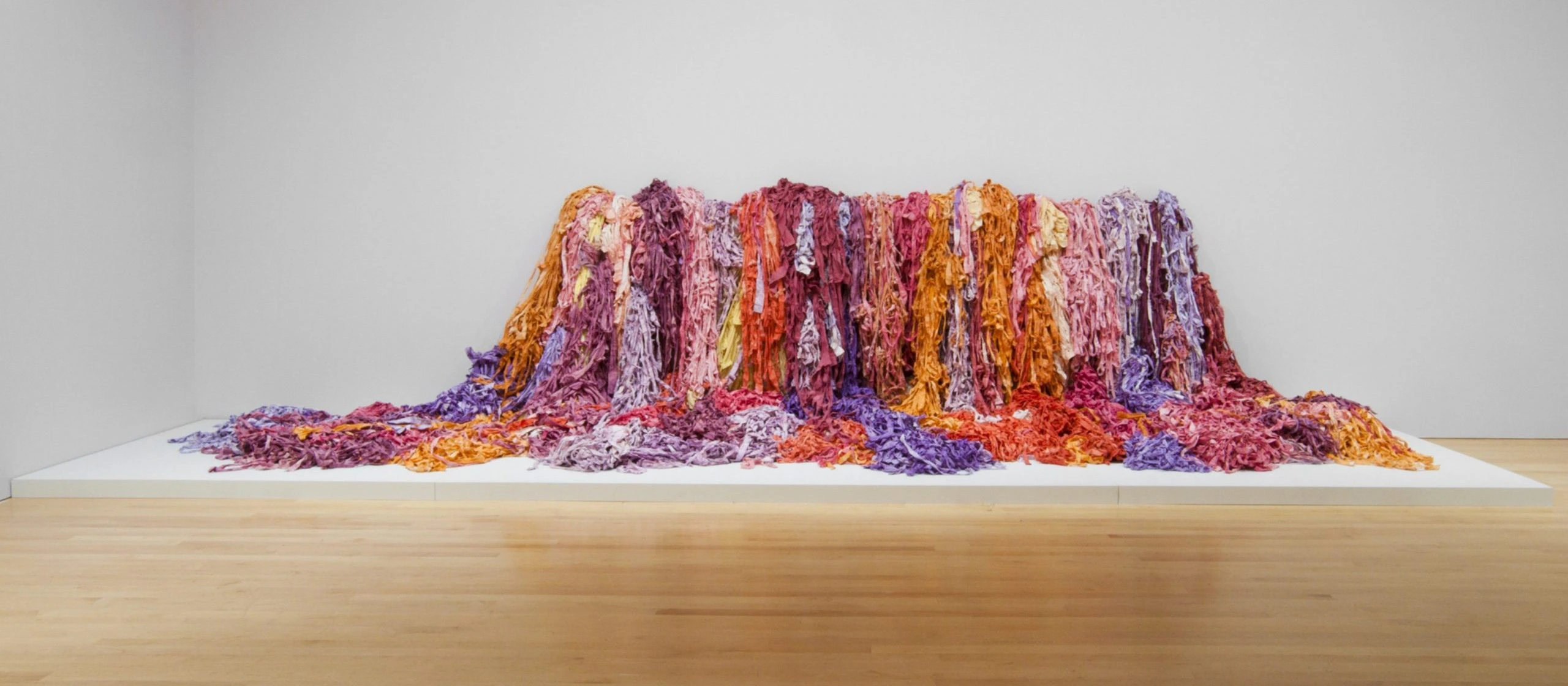
This work caused quite a stir when it was originally installed at the Biennial of Tapestry in Lausanne in 1977 and I think it encapsulates her interest in the narrative potential of textiles.
Advertisement
She acquired five tons of laundry from local hospitals, cut and dyed them into a spectrum of colours and brought in people to help her arrange the garments into sculptural mounds in the exhibition space.
Collaboration has always been important to Hicks and she has taken her innovative approach to textile production to workshops in India and Morocco, where she learned just as much from the artists and craftspeople in those countries as they did from her.
Half a century ago, Hicks gifted this piece to the Philadelphia Museum of Art in the US. The museum wasn’t sure how to classify the work at first, but it went on to lead many different lives.
Similarly, when it arrived here, we weren’t sure of how it should be installed. Hicks told us that when she came over, the look and context of the galleries helped her decide how and where the material would be draped.
The piece continues to evolve to this day, asking different questions of her each time she unpacks it from a crate. That open-endedness is really compelling.”
Interview by John Holt. Sheila Hicks: Off Grid is at the Hepworth Wakefield until 25 September