
David Green
Director, Florence Nightingale Museum, St Thomas’ Hospital, London
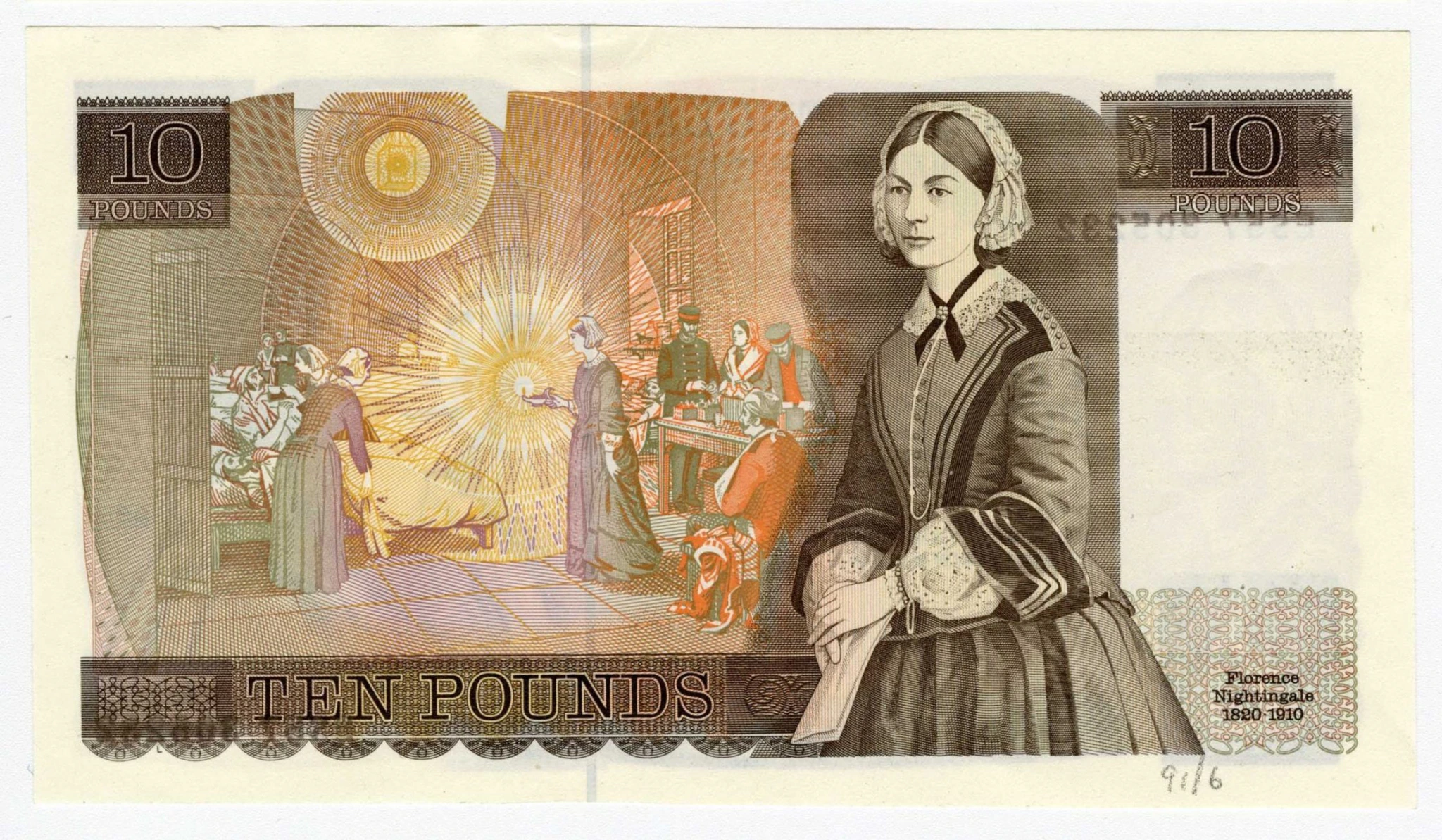
“There are some precious objects in our bicentenary exhibition, Nightingale in 200 Objects, People & Places, but I’ve chosen this one for nostalgic reasons as its sheer normality appeals to me. This banknote was issued in the year I was born and was in existence for a significant part of my life. I remember, for example, doing a project about Florence Nightingale when I was in the Cubs.
The most commonly printed image of Nightingale was being carried around in people’s pockets, which is easy access to history at its best. The trouble, of course, is that it is historically incorrect. Nightingale was known as the lady with the lamp after Henry Wadsworth Longfellow’s 1857 poem, and she’s shown here with a genie-style lantern and not the Turkish fanoos she would actually have used.
The mistake was made because the Crimean war (1853-56) in which Nightingale first came to prominence as a pioneer of nursing was the first fought by British soldiers with journalists reporting on the ground. But there were no artists or photographers pictorialising them.
This illustration shows her in a clean hospital setting, but we know that she found conditions in the Crimea beyond squalid when she first arrived there in 1854. Soldiers were treated on floors surrounded by rats, because poor administration had meant that beds sent over from Britain lay unclaimed on the docks.
A dead horse was found in the well from which everyone drank water. And though many soldiers died from wounds sustained on the battlefield, far greater numbers were killed by typhoid and cholera.
Advertisement
Nightingale understood that hygiene was essential, so she ordered a clean-up. As she wasn’t wanted on-site by the army doctors, she did her rounds at night because she knew that compassion and care would be beneficial to the injured, an unusual stand at that time. But that’s where general knowledge about her work ends. We even have to tell people that Scutari Hospital, where she worked, was in Turkey, some 300 miles away from where the British were fighting.
This exhibition also tells the story of her subsequent 50 years of campaigning, which included the establishment of a nursing school at St Thomas’ in London, which led to similar institutions being set up around the world. Nightingale also campaigned strongly on issues such as sanitation, prostitution laws and famine relief in India, which led to Gandhi describing her as one of his greatest inspirations.
But her biggest legacy was the use of statistical data and evidence-based care, as she gathered information and relied on her own observations rather than spur-of-the-moment presumptions. Today, we are faced with the coronavirus outbreak, with new facts regularly announced alongside advice to wash hands and sneeze into tissues. That’s similar to what Nightingale said all those years ago.”
Nightingale in 200 Objects, People & Places is at the Florence Nightingale Museum in the grounds of St Thomas’ Hospital, London, until 7 March 2021