When it comes to labelling objects in museums, a piece of informative text placed next to the work on display is the tried and tested formula. But curators and museum workers are beginning to think outside the white rectangular box and starting to label objects in innovative ways to increase engagement and accessibility.
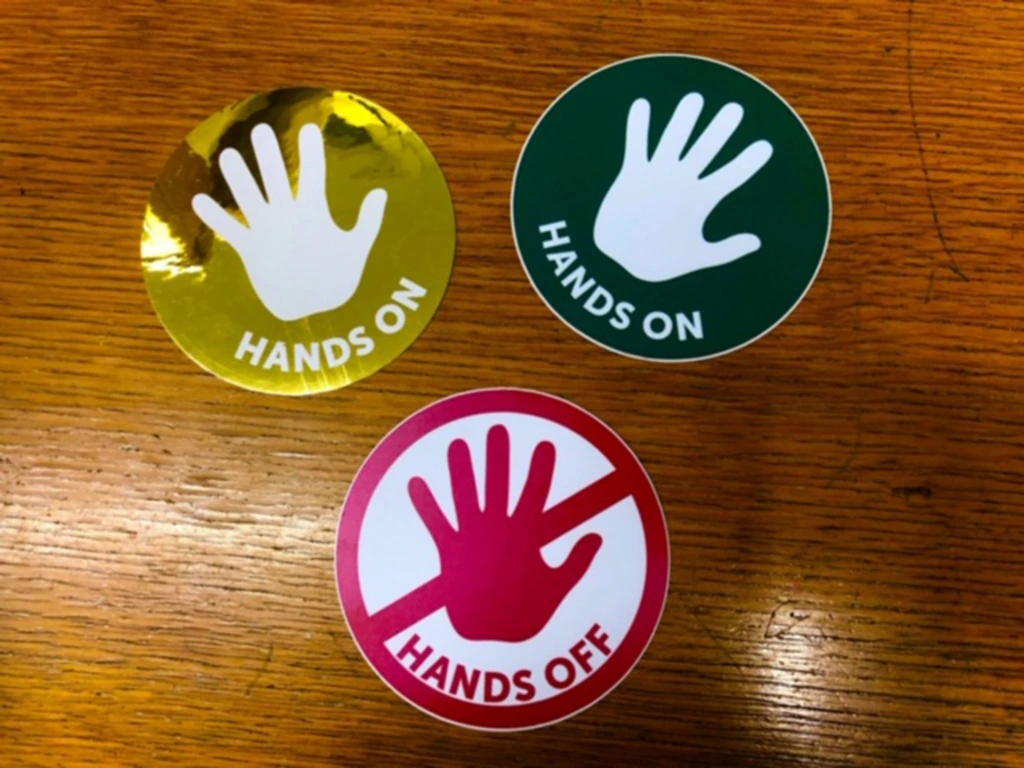
At Bolton Museum, Pierrette Squires, the collections and conservation officer, has created circular “hands on” and “hands off” labels to let visitors know whether they can touch exhibits. There are more invitations to engage than instructions to stay back, and Squires says that by visibly encouraging handling she wants to “reduce the stereotype that conservators are all about reducing access”.
Great care has also gone into label design at Bristol’s Glenside Hospital Museum. One of the objects on display is the Benham chair, which was designed in the 1890s to feel comfortable and be safe for patients with mental health issues. Museum visitors learn that the chair has no sharp corners and is too heavy to throw by reading information embroidered on to the cushion perched on its seat.
Francesa Willoughby-Keen, an artist doing a student placement at the museum, designed the bespoke label, which has been much admired. “We are keen not to make the museum too text heavy,” says Stella Mann, a curator at the Glenside Hospital Museum, Bristol.
Recent work pairing artists with trainee volunteers, including people with lived experience of mental illness and learning difficulties, has led to experimentation with audio labels, rhyming couplet labels and cardboard art labels.
Advertisement
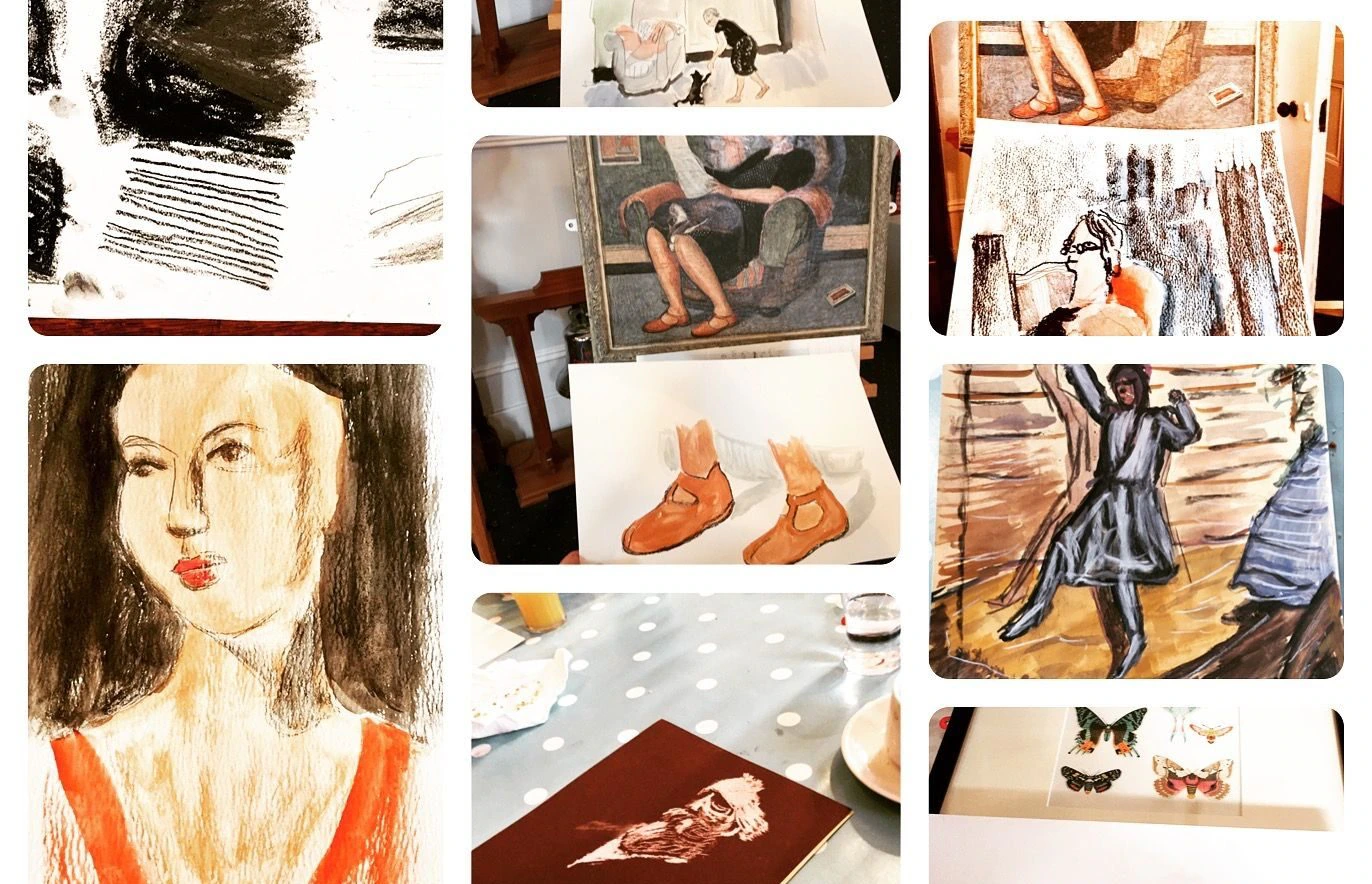
Exploring alternatives to text is also something that preoccupies Felicity Tattersall, an artist who recently ran a community engagement project around labelling in partnership with Falmouth Art Gallery. Four groups of people were presented with a piece of art from the gallery and asked to make labels for them. Tattersall says she tried as much as possible to get away from traditional labels.
One group, which comprised people with mental health issues, was initially shy. They were asked to create labels for a 19th-century oil painting titled Morning Gossip by Henry Tuke, which portrays two women chatting over a garden fence. To start with, the group wrote dialogue for the women, but then decided they wanted to perform their pieces as spokenword labels.
“The group came alive,” says Tattersall. “We ended up having a real laugh.” Towards the end of this project, Tattersall gave a talk to Falmouth Art Gallery’s more traditional core audience, and they found the project challenging as they favoured text-heavy labels.
“A good proportion of the audience wants lots of information and that’s fair enough,” says Tattersall. “I don’t want to alienate traditional audiences, but there is space for alternatives as well.”
At Manchester Art Gallery, labels are being used to start a conversation about outdated narratives. Clare Gannaway, the curator of contemporary art at the museum, says it is looking at redesigning permanent gallery spaces that haven’t changed for nearly 20 years.
“I don’t want to alienate traditional audiences, but there is space for alternatives as well.”
Advertisement
One gallery is currently showing work themed around the Grand Tour, which was a journey that members of 17th- and 18th-century upper class society would make to Europe to see and collect art. A traditional label in the gallery informs visitors that “Grand Tourists were led across Europe by tutors to study art, history and politics”. But there is also a fold out blackboard in the space asking how relevant the Grand Tour story is today.
The sign also lists topics the museum staff discussed, including euro-centrism, privilege and how the artworks got there. Gannaway says the museum plans to eventually change this gallery into one on migration. For now, labels provide a quick way to “immediately intervene in what’s already on display” and to prompt discussion. As museums seek innovative ways to engage visitors, new approaches to labelling objects are helping to transform traditional interpretation techniques.
Tilda Coleman is a freelance writer